If you have a fused or fusing spine from ankylosing spondylitis (AS), the best ergonomic chair for ankylosing spondylitis in a 2026 work-from-home setup is a high-back recliner-style task chair with a deep tilt range (at least 135°), a separately adjustable lumbar and thoracic support, a sliding seat pan, and a head/neck rest that meets your head where it now sits — not where a textbook says it should. Brands like Herman Miller Embody, Steelcase Gesture with headrest, Humanscale Freedom, and the Ergohuman Elite II Plus dominate AS patient recommendations because they let you offload weight from a rigid spine into a reclined posture without forcing flexion. Pair the chair with a sit-stand desk so you can break up static sitting every 20–30 minutes, which is the single most evidence-backed habit for AS-related stiffness.
Why a Fused Spine Changes Every Rule of Office Ergonomics
Traditional ergonomic advice assumes a mobile spine that can flex slightly at the lumbar, extend at the thoracic, and rotate at the cervical to micro-adjust posture throughout the day. Ankylosing spondylitis, especially once syndesmophytes bridge the vertebrae and the sacroiliac joints fuse, removes those micro-adjustments. The result is that pressure that a healthy spine spreads across many segments instead concentrates at the few remaining mobile joints (often the hips, the cervicothoracic junction, and any unfused lumbar segment), and shear forces that used to be absorbed in tiny intervertebral movements now translate directly into pain at the costovertebral and SI joints.
When shopping for best ergonomic chair for ankylosing spondylitis, it pays to compare specs, capacity, and real-world runtime before committing.
The practical implications for choosing the best ergonomic chair for ankylosing spondylitis are these: forward-leaning task postures are usually intolerable, a 90° "neutral" seated angle is rarely neutral for an AS spine that has fused into a kyphotic curve, and a fixed lumbar bump can become a pressure point rather than a support. You want a chair that lets you recline open the hip angle to 120–40°, supports the thoracic kyphosis without pushing your head forward, and keeps your gaze level so you are not constantly compensating with the cervical spine — which in AS may already have limited extension.
The Five Features That Actually Matter
After cross-referencing rheumatology ergonomic guidance, the Spondylitis Association of America’s 2026 patient resources, and the actual mechanics of fused-spine seating, five features separate a usable chair from an aspirational showroom piece.
1. Deep, lockable recline. Look for at least 135° with a tension dial heavy enough to support your torso weight without bouncing. The Steelcase Leap V2, Herman Miller Embody, and Humanscale Freedom all qualify; many gaming chairs technically recline to 180° but the mechanism is too floppy to hold an intermediate posture.
2. Independently adjustable lumbar AND thoracic support. A single lumbar pad set too high becomes a kyphosis-amplifier; set too low it does nothing. Chairs with a separate upper-back support panel (Ergohuman Elite II Plus, Eurotech iOO, Autonomous ErgoChair Pro+) let you cradle the existing curve instead of fighting it.
3. A headrest that adjusts forward/back, not just up/down. Many AS patients with cervical involvement carry the head 2–5 cm forward of a textbook neutral. A headrest that only telescopes vertically will sit behind your skull and force extension you don’t have. The Ergohuman, X-Chair X4, and Herman Miller Aeron with the PostureFit SL + headrest accessory all allow horizontal translation.
4. A sliding or short seat pan. Hip stiffness is common in AS, and a long seat pan forces a slumped sacral posture if your hamstrings are tight. A 16–18" usable depth, or a slider that adjusts down to that range, lets you sit back fully without the front edge digging into your popliteal fossa.
5. A recliner-zero-gravity option for flare days. On bad days, even the best task chair is too upright. A separate reclining lounger (Stressless, Ekornes, or even a well-chosen power lift recliner) parked next to your standing desk gives you a third position. This is the part most ergonomic articles miss: AS management is about three or four postures rotated, not one perfect posture held.
The Posture-Rotation Strategy That Beats Any Single Chair
No chair, however well-engineered, prevents AS stiffness if you sit in it for eight hours. The Assessment of SpondyloArthritis international Society (ASAS) 2026 lifestyle guidance still emphasizes that movement is the most modifiable risk factor for accelerated fusion and quality-of-life decline. Practically, this means your WFH setup needs to make standing, walking, and reclining the path of least resistance — not the option you have to remember to take.
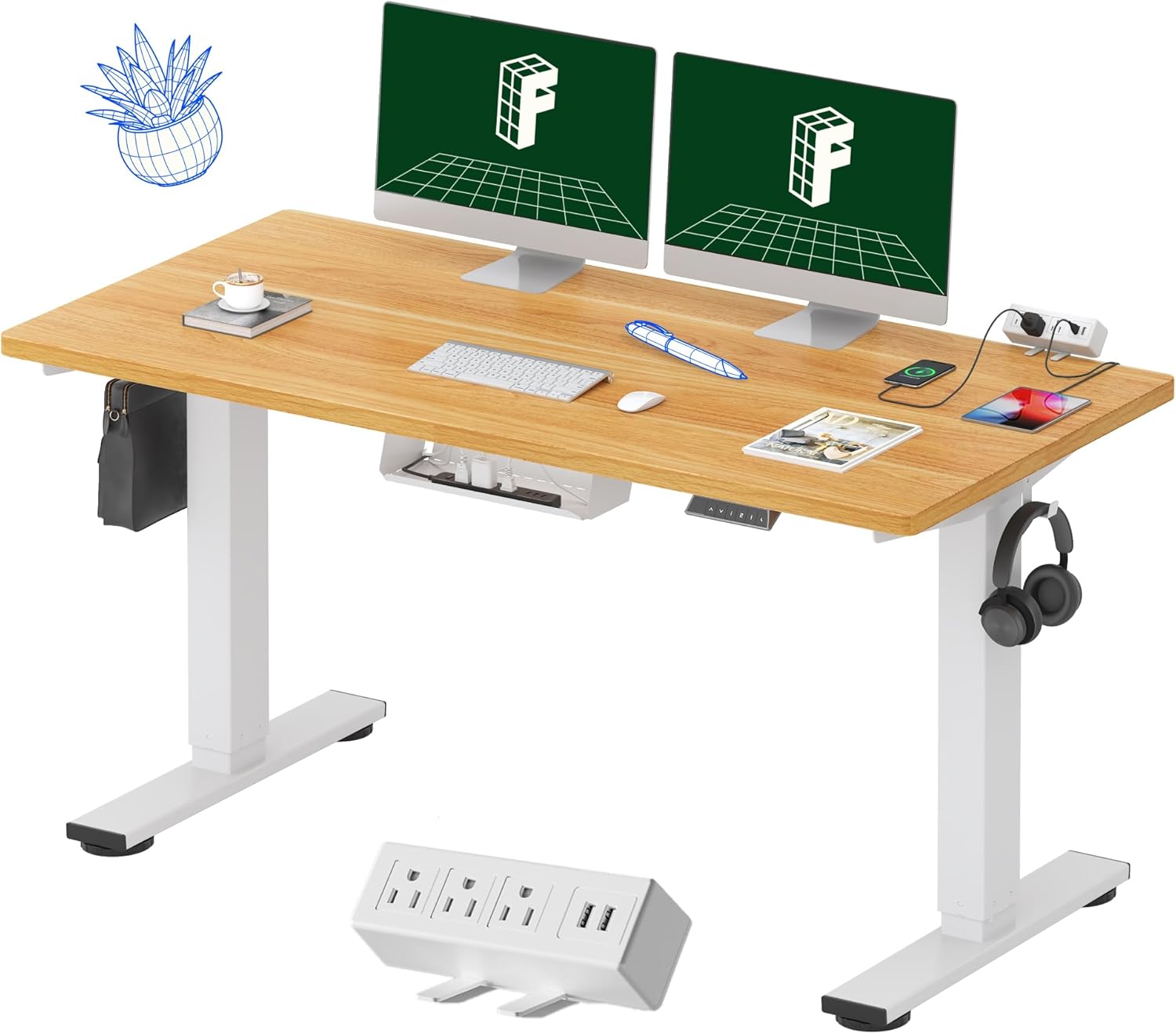
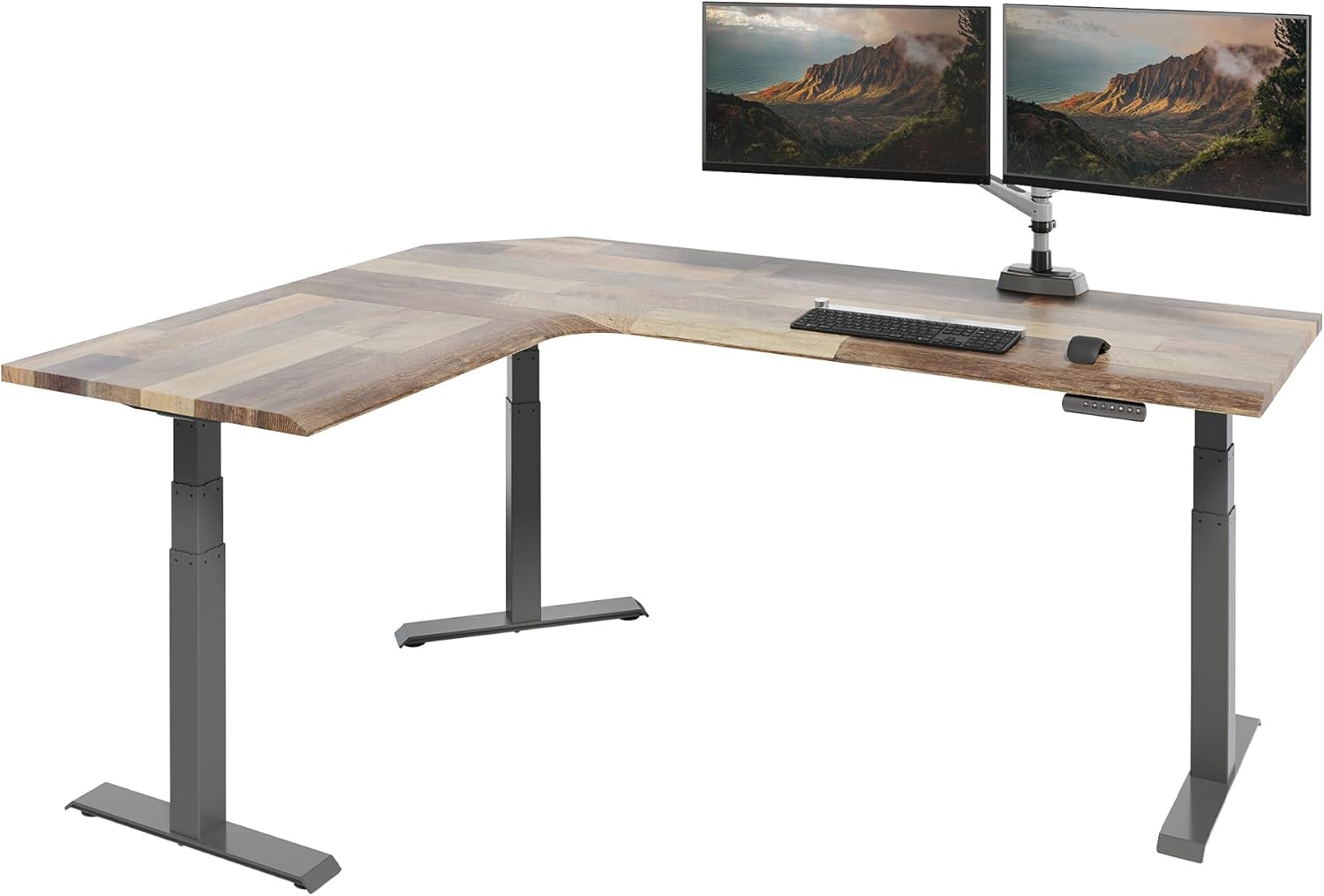
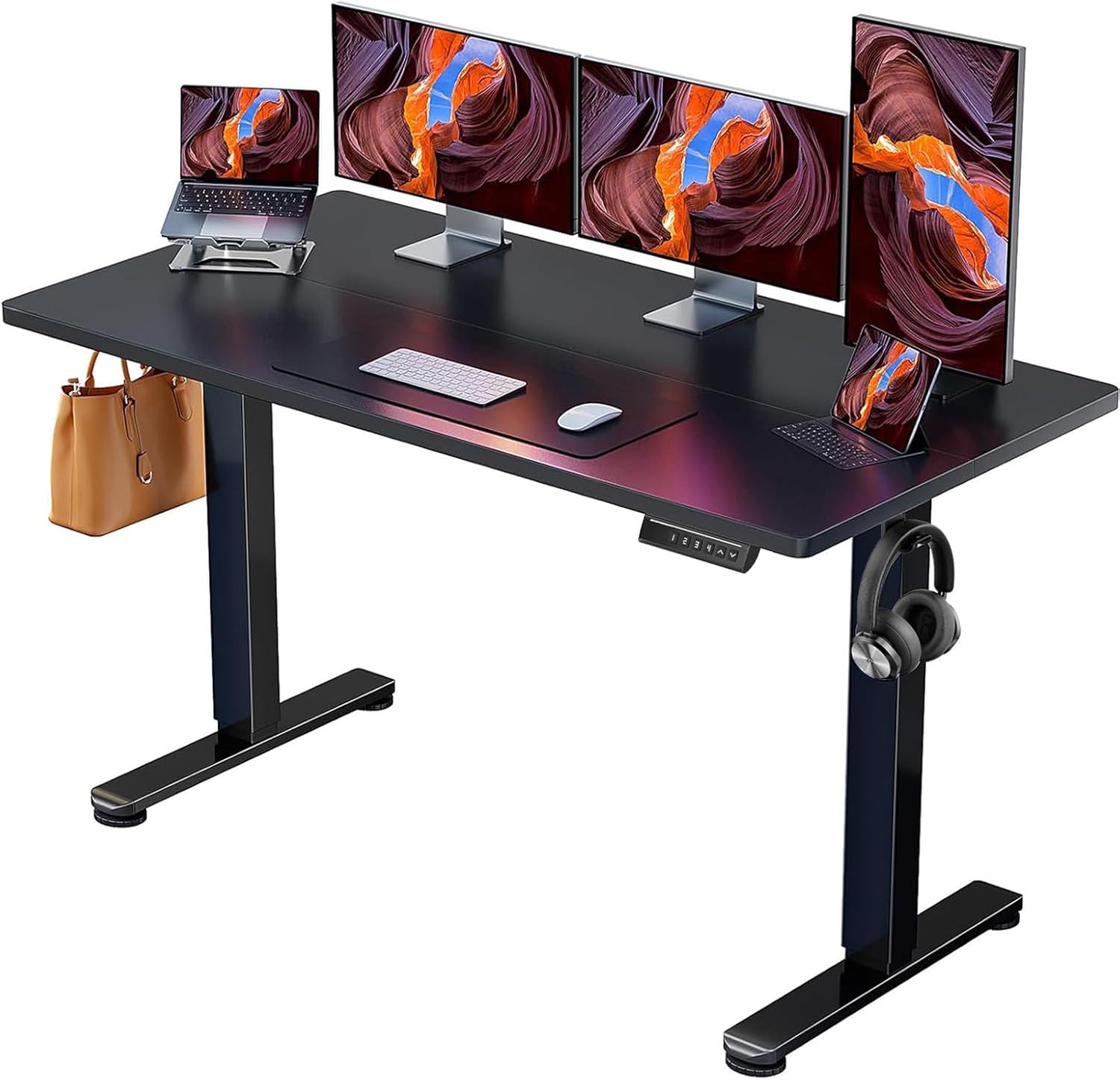
The simplest implementation: a height-adjustable standing desk with memory presets, a reclining ergonomic task chair, and a kitchen timer or smartwatch nudge every 25–30 minutes. Pre-program your desk to your seated, standing, and "perched on a stool" heights so changing position takes one button press. The desks below are the ones we currently recommend pairing with an AS-friendly chair because they have memory presets, smooth electric actuation (no jarring jolts on a sensitive spine), and surface depths that accommodate a deep monitor setback — critical for keeping the screen at fused-cervical eye level.
Standing Desk Pairings Compared
| Desk | Surface | Memory Presets | Capacity | Best For |
|---|---|---|---|---|
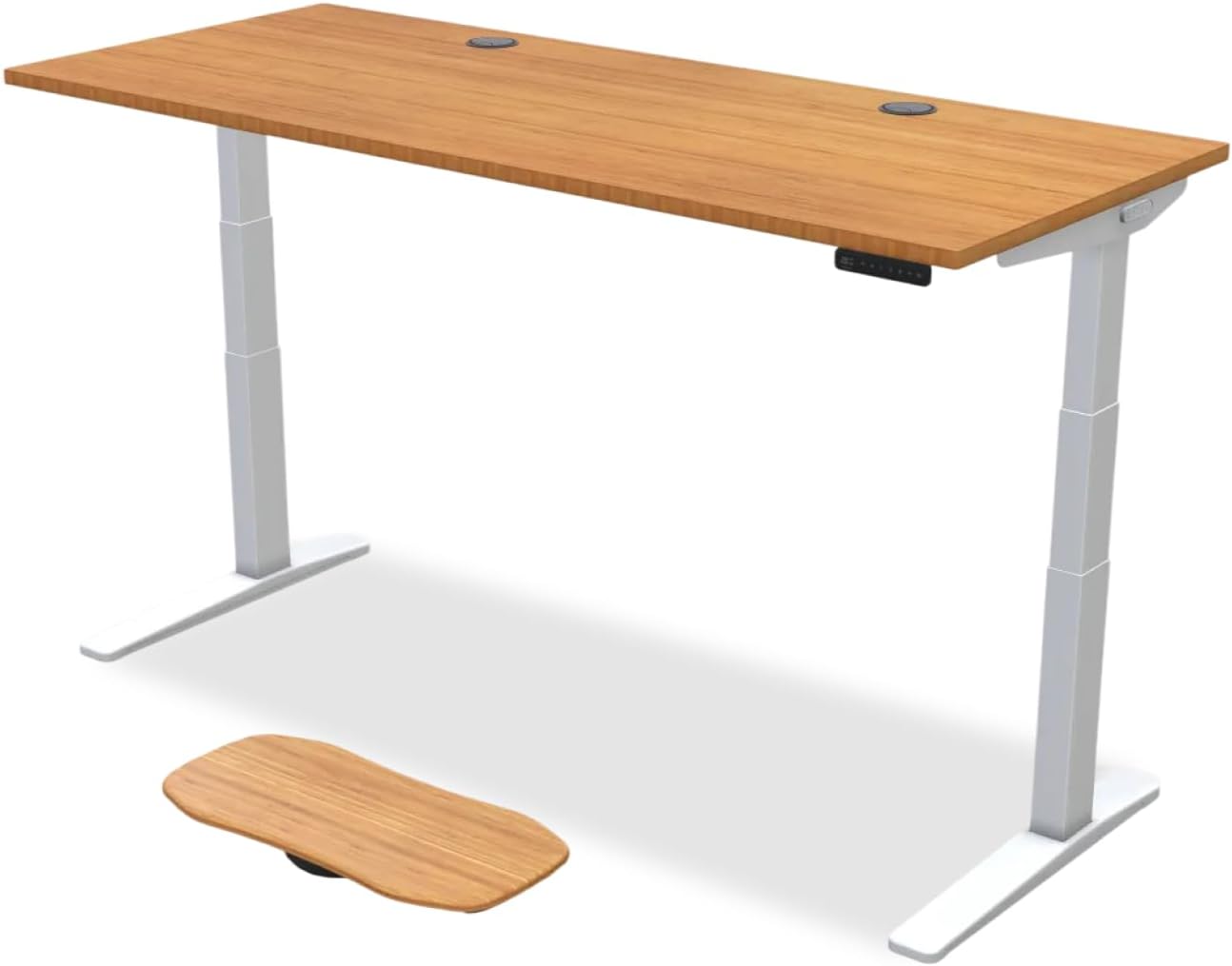
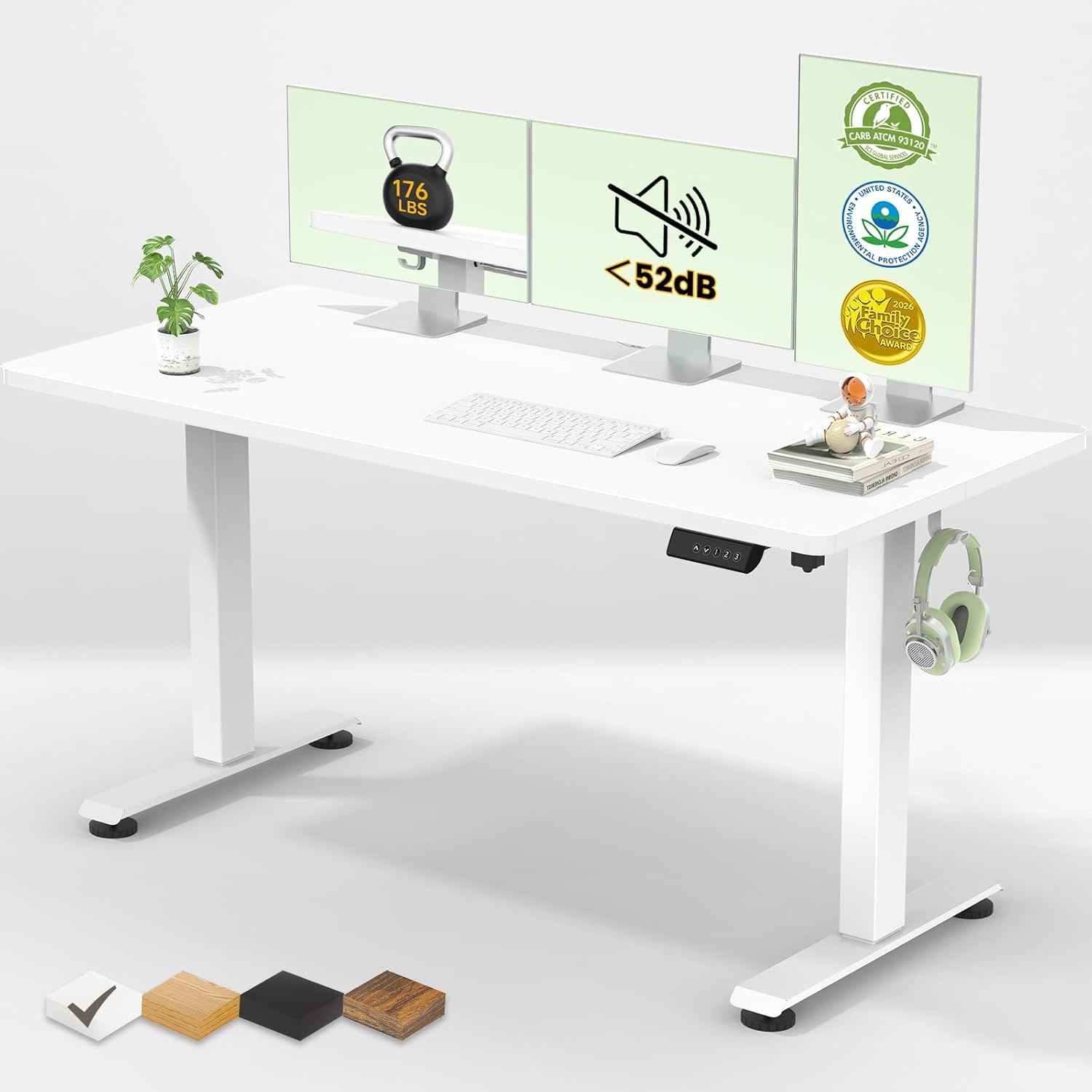
| VIVO Electric 60 x 24" | 60" wide, black | Yes | 220 lbs | Dual-monitor AS workstations needing wide setback for cervical-friendly viewing |
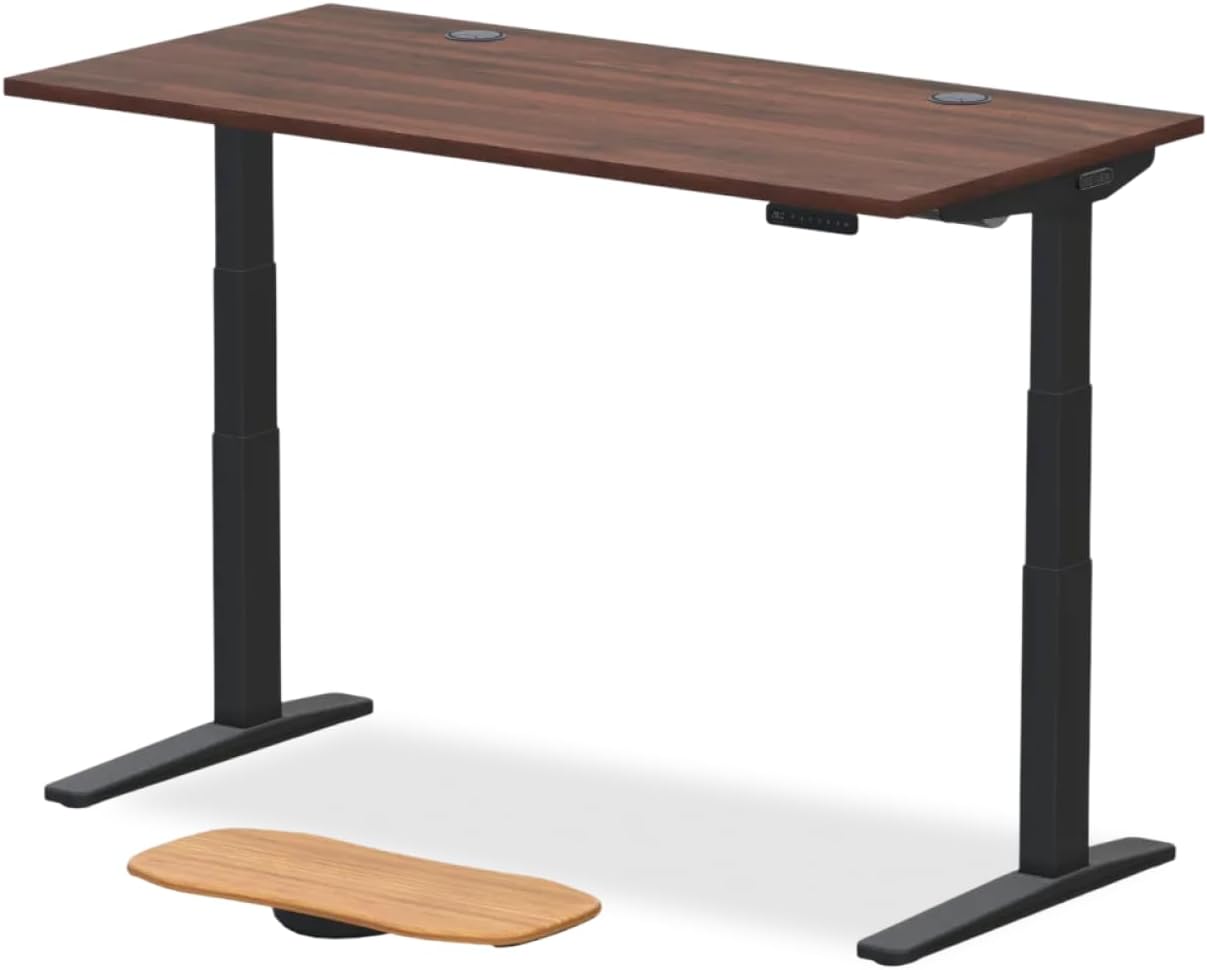
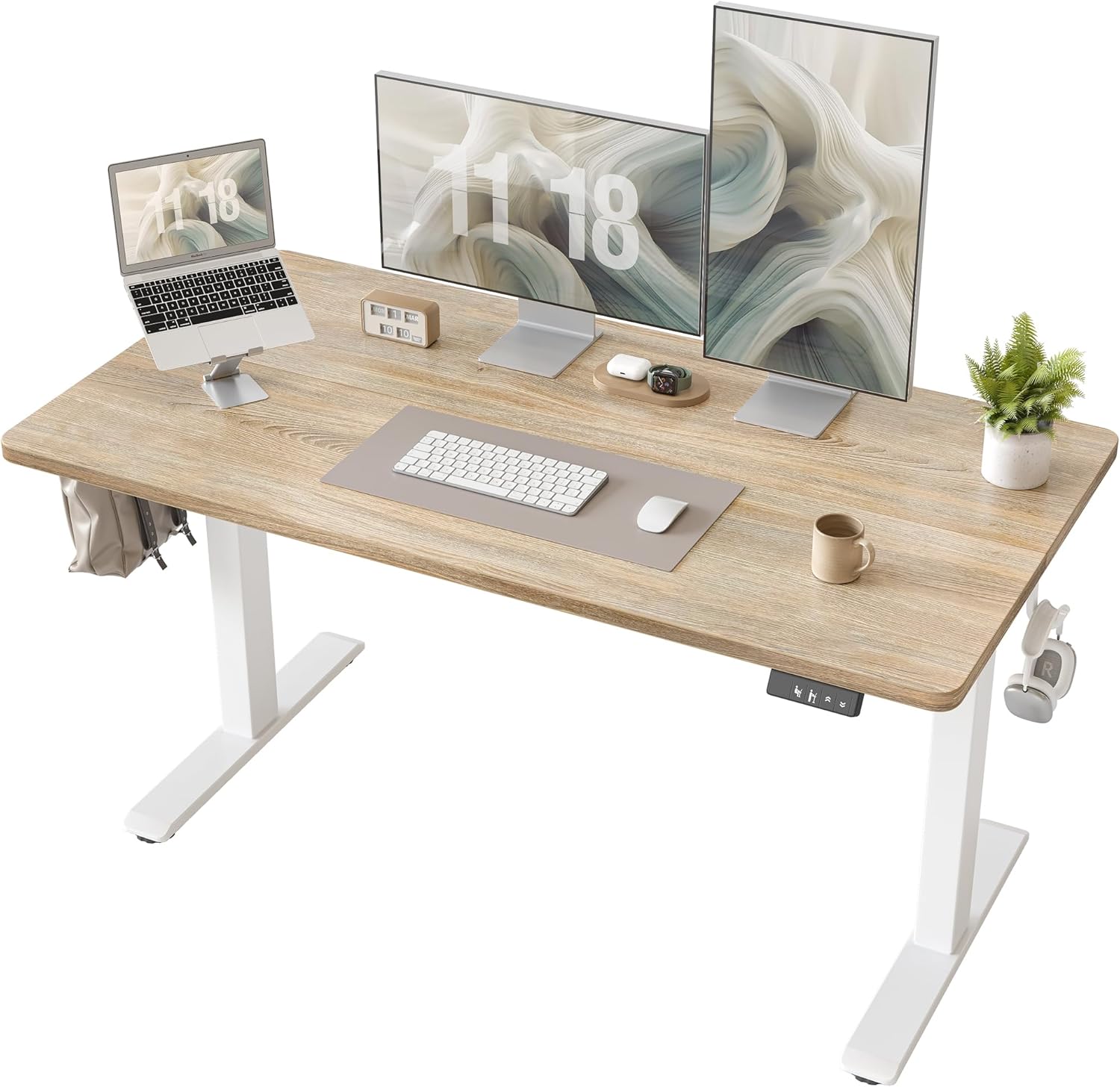
| Veken 47.2" Wood Top | 47.2" wood | Yes | Standard | Smaller home offices where warm-tone wood reduces visual fatigue on flare days |
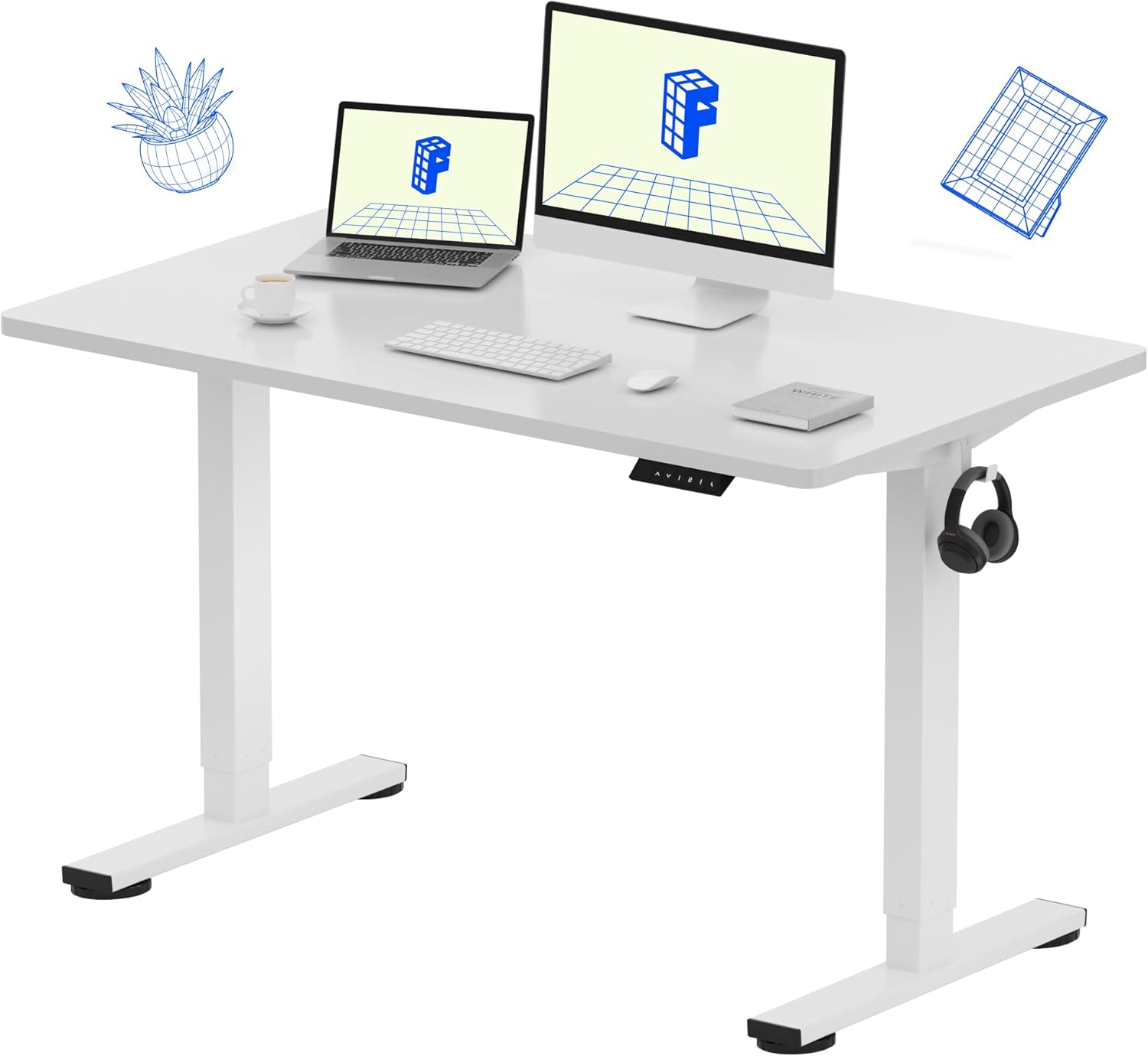
| ErGear 48 x 24" | 48" wide | Yes | Standard | Budget-conscious starter setup; quiet motor for shared rooms |
VIVO Electric 60 x 24 in Standing Desk — Best Wide Surface for AS Dual-Monitor Setups
The 60-inch width gives you the room to push monitors 28–32 inches back from the front edge, which matters for AS because a fused cervical spine cannot easily tilt down to read a close screen. The 220 lb capacity comfortably handles two 27" monitors, a laptop dock, a desk lamp, and the assorted heating pads, lumbar rolls, and tea mugs that accumulate around an AS workstation. Memory presets let you switch between seated-recline, standing, and a perched-stool height with one tap, which is the whole point of the sit-stand workflow. Check the VIVO 60" Electric Standing Desk on Amazon.
Veken 47.2" Standing Desk with Wood Desktop — Best Compact Pick
If your home office is a converted bedroom corner or you share the room with a partner, the 47-inch Veken keeps a smaller footprint without sacrificing the electric height adjustment that makes position changes effortless. The wood desktop is a quietly important detail for AS patients: low-glare matte wood reduces the screen-reflection contrast that drives compensatory neck postures on long workdays. View the Veken 47.2" Standing Desk on Amazon.
ErGear 48 x 24 Inches Electric Standing Desk — Best Value
Memory presets at this price point are the killer feature. AS management lives or dies on whether you actually change position every half hour, and a desk with one-button recall of your three working heights removes the friction that kills compliance. The 48×24 footprint hits the sweet spot for a single 27" monitor plus laptop and leaves room for a vertical mouse and split keyboard — both worth considering if shoulder and rib involvement make traditional keying painful. See the ErGear 48" Standing Desk on Amazon.
Setting Up Your Chair-and-Desk Combo for a Fused Spine
Once your chair and desk arrive, the setup itself is where most people quietly sabotage their ergonomics. Start by measuring the distance from the floor to the underside of your bent elbow when you are reclined to 120° in the chair (not sitting at 90°). That number is your seated desk height, not the textbook "elbow-at-90" figure that assumes an upright posture you can’t comfortably hold.
For standing height, place the desk so your wrists are flat or slightly extended (not flexed) when typing, and the top of the monitor sits 5–10 cm below the level your eyes look at when your head is in its natural fused position — not the position you wish it was in. If your cervical spine has fused with the head slightly forward, raising the monitor to a "correct" height will force you into extension you don’t have, which translates to occipital headaches and dorsal pain within an hour. Trust your fused anatomy; set the monitor where your gaze actually goes.
A monitor arm with a deep reach is worth more than an expensive chair upgrade here. Get one that can pull the screen 40–50 cm forward when you recline and push it back when you stand, so the viewing distance stays constant across positions.
Accessories That Punch Above Their Price
Beyond the chair and desk, four accessories quietly do most of the work: a split or contoured keyboard (Logitech Ergo K860, Kinesis Advantage360) that lets the shoulders open instead of internally rotating; a vertical mouse to reduce forearm pronation; a wedge cushion or saddle stool for the "third position" between sitting and standing; and a programmable timer or smartwatch app that vibrates every 25–30 minutes to nudge a position change. Heat is also legitimately useful — a thin USB-powered heat pad on the chair backrest beats a bulky external pad for everyday flare management.
For more on related setups, see our guides on the best standing desk for chronic back pain, choosing a zero-gravity recliner for spinal fusion patients, and monitor arms for a fused cervical spine.
Budget Tiers in 2026
Under $400, your realistic chair options are the Autonomous ErgoChair Pro+, the Hbada E3, or a refurbished Steelcase Leap V2 from a certified reseller — the refurb route is genuinely the best value for AS patients because used Steelcase and Herman Miller chairs hold up for another decade. From $700–1,200, the Ergohuman Elite II Plus, X-Chair X4, and new Steelcase Leap are the sweet spot. Above $1,500, the Herman Miller Embody and Humanscale Freedom with headrest are the heirloom-grade picks that you can adjust as your disease progresses. Pair any of them with a $200–350 electric standing desk like the ones above and you will outperform a $3,000 chair used statically.
Frequently Asked Questions
Is a kneeling chair good for ankylosing spondylitis?
Generally no. Kneeling chairs lock the hips at a forward angle and depend on a mobile lumbar spine to maintain the posture, which is exactly what AS patients with lumbar fusion don’t have. They can also aggravate hip involvement, which is present in roughly a third of AS cases. A reclining task chair with a sliding seat pan does what kneeling chairs claim to do without the downsides.
Should I use a saddle stool if my spine is fused?
A saddle stool can be a useful "third position" between sitting and standing, especially if your hips still rotate well, because it opens the hip angle to roughly 135° and reduces lumbar shear. Limit sessions to 15–20 minutes and don’t use one as your primary chair — the lack of back support is fine in short bursts and fatiguing over hours.
What recliner is best for ankylosing spondylitis flare days?
A power lift recliner with infinite-position recline (not just two or three preset stops) and lumbar-zone heat is the gold standard. Brands like Stressless, La-Z-Boy Trouper Power, and Pride Mobility Viva Lift offer this. Avoid recliners that force the head sharply forward when reclined — a head-tilt feature that lets you keep gaze level is the single most important comfort feature for AS patients with cervical involvement.
How often should I change positions when working from home with AS?
Every 25–30 minutes is the consensus from 2026 rheumatology lifestyle guidance. Set a timer. The rotation doesn’t need to be dramatic — standing for two minutes, walking to refill water, or shifting from upright to reclined all count. Static posture for 60+ minutes is what consistently correlates with next-day stiffness and longer-term progression markers.
Can a standing desk actually help ankylosing spondylitis?
Yes, but not because standing is inherently therapeutic — it’s because a sit-stand desk removes the friction from changing position. AS patients who use sit-stand desks self-report higher exercise adherence and lower morning stiffness scores, and the mechanism appears to be reduced total static-sitting time rather than the standing posture itself. The desks listed above all support this rotation with one-button memory presets.
What desk chair do rheumatologists actually recommend?
Most rheumatologists decline to endorse specific brands, but the features they consistently describe — deep recline, adjustable lumbar and thoracic support, headrest that meets your actual head position, sliding seat pan, and an open hip angle — map cleanly onto the Steelcase Leap V2, Herman Miller Embody, Humanscale Freedom with headrest, and Ergohuman Elite II Plus. Any of these four is a defensible 10-year purchase.
Are gaming chairs okay for ankylosing spondylitis?
Most aren’t. The bucket-seat shape forces a posterior pelvic tilt, the fixed lumbar pillows rarely match an AS spine’s actual curvature, and the recline mechanisms are too floppy to hold a working posture. The exceptions are high-end models like the Herman Miller x Logitech Embody Gaming Chair and the Secretlab Titan Evo with the lumbar adjusted to its flattest setting — even then, a true ergonomic task chair is the safer pick.
Key Takeaways
- Choosing the right best ergonomic chair for ankylosing spondylitis means matching capacity and output ports to your actual devices
- Always check actual watt-hours (Wh), not just watts — runtime depends on Wh, not peak output
- Also covers: ankylosing spondylitis office chair recliner
- Also covers: chair for fused spine remote workers
- Also covers: reclining ergonomic chair AS patients
- Compare price-per-Wh across models to find the best value for your budget