If you've ever slid forward in an office chair until your toes barely brushed the floor, you already know the problem: most "adjustable" seats are built for a 5'8" frame and pretend the rest of us will adapt. The right ergonomic chair short women under 5 foot 3 can rely on has a seat pan that drops below 17 inches, a seat depth no deeper than 18 inches, and a lumbar curve that lands on the actual small of a petite back — not somewhere between the shoulder blades. In this 2026 guide we walk through the exact measurements to demand, why pairing the chair with a low-minimum standing desk matters, and the petite-specific setup tweaks that finally make eight-hour days comfortable.
Why Standard Office Chairs Fail Petite Frames
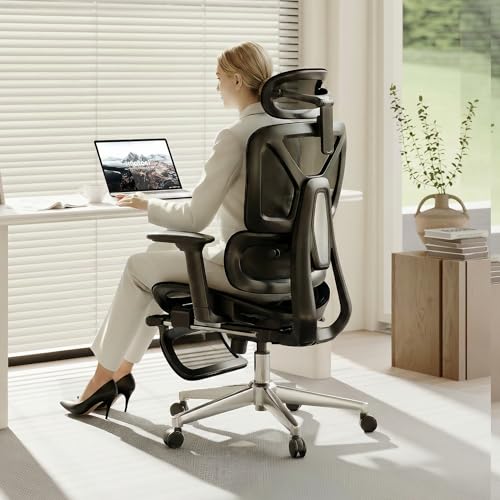
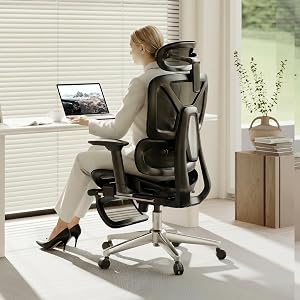
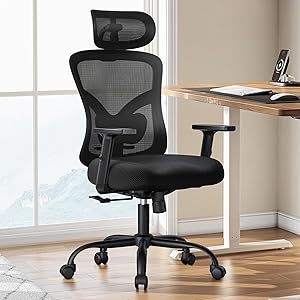
- Customizable Comfort: Featuring adjustable seat depth (17"-20"), height (20.1"-22.4"), and tilt functions to ensure a fit for users between 5'1" and 6'2", max weight limit 400LBS
- Enhanced Ergonomics: Dynamic lumbar support, 5-level adjustable back, a 3D adjustable headrest, nap footrest and tilt provide superior back and neck support for long hours
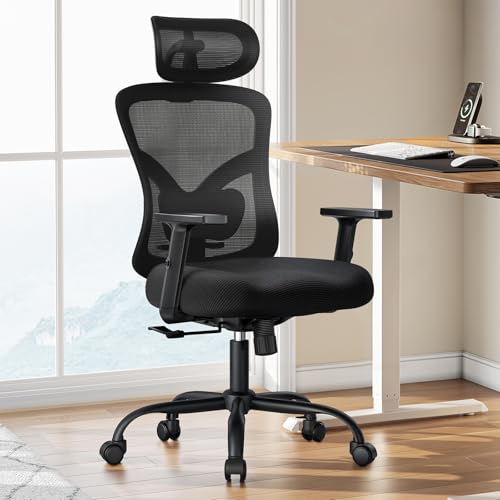
- Adjustable Lumbar Support: This ergonomic office chair is designed to align with the natural curve of your spine. It features a 2.4″ height-adjustable range, offering targeted
- Flexible Headrest & Armrests: This ergonomic Gaming office chair features a 2D adjustable headrest with 45° tilt and 2.8″ height adjustment to cradle your neck comfortably. The
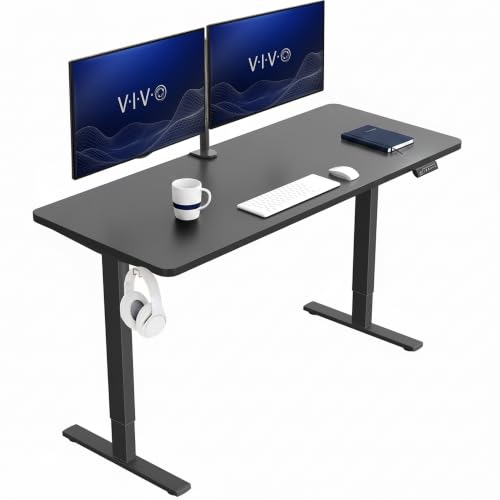
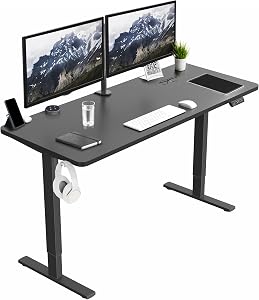
- Create Instant Active Standing: Go from sitting to standing in one smooth motion with this complete active workstation providing comfortable viewing angles and customized user
- Solid One-Piece 59” Top: This 59” x 23.6” table provides ample space for monitors, workspace accessories, supplies, and decor. The one-piece top is free of seam breaks and is made
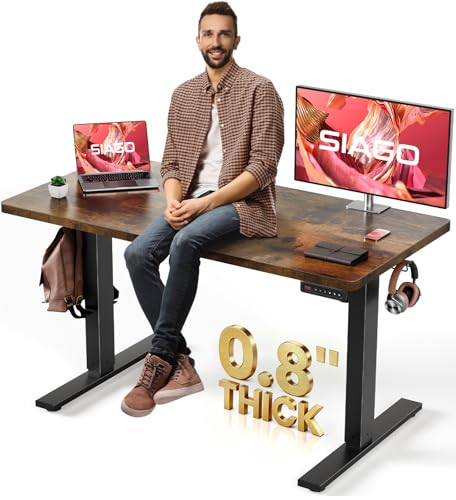
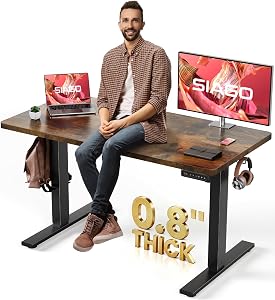
- Rock-solid Stability: Featured 19.8cu.in. larger connection area (at full height) with 1.5mm commercial-grade frame, SIAGO standing desk ensure stability and durability for
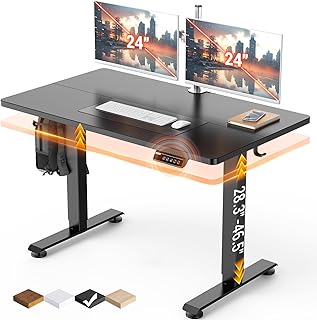
- 25% Thicker Tabletop: Our desk features a 0.8" tabletop, 25% thicker than stanard 0.6" designs, providing enhanced stability for daily use. Feel the difference in every detail
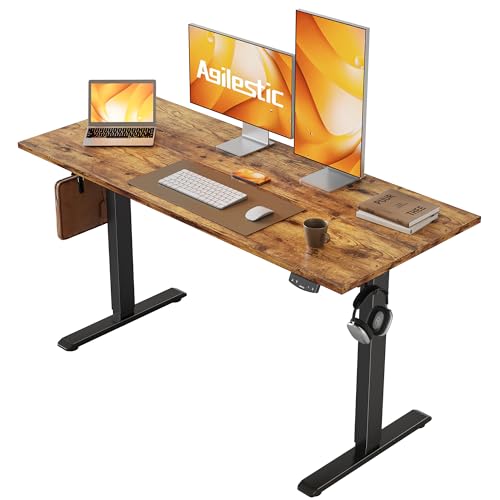
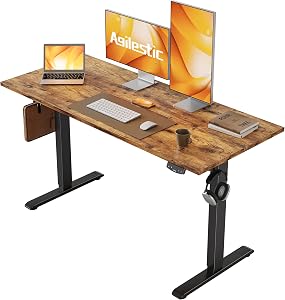
- 【Electric Lifting System】Agilestic standing desk has an advanced motor that can support height adjustment between 28.3''-45.7'' with low noise(under 55 dB) while running. You can
- 【Suitable for Daily Use】Agilestic's height adjustable desk uses Low-VOC desktop materials that meet federal and state safe air standards. It's equipped with hooks on both sides
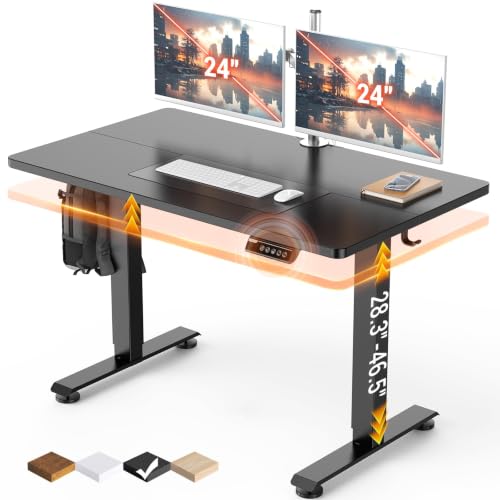
- Electric Height Adjustment – Sit or Stand Any Time: Quiet motor (under 52 dB) with memory presets. Easily switch between sitting and standing from 28.3" to 46.5" to help reduce
- Sturdy & Stable – Stays Solid at Full Height: Strong steel frame remains stable even when fully extended. Performance may vary slightly by floor type and load weight, but reliable
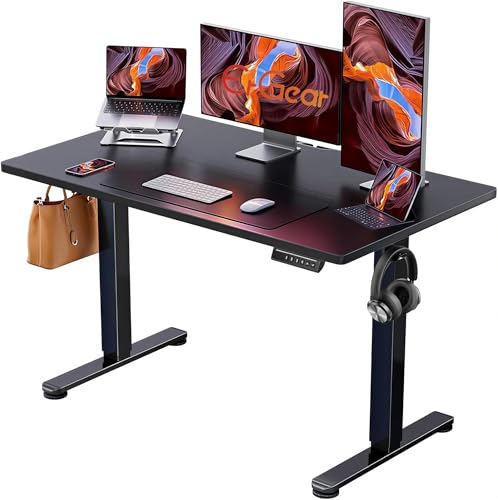
- Electric Height Adjustable Standing Desk for Comfortable Work - Switch effortlessly between sitting and standing with this electric standing desk. The smooth height adjustment
- Powerful Motor with Memory Presets - Equipped with a quiet, powerful lift motor, this sit stand desk allows seamless adjustments at the touch of a button. Save up to 4 preferred
Top Picks
Why You Should Buy the Desk and Chair Together
Here's the part most petite-chair guides skip: the best chair in the world cannot fix a desktop locked at 29". Standard fixed desks assume a 28"-29" elbow height, which corresponds to a user roughly 5'10". A woman 5'3" or shorter typically needs the desktop at 24.5"-26" when seated — below what most non-adjustable desks can reach. That means after dialing in a petite-fit chair, you'll still be reaching up to type, re-creating the same shoulder and neck strain you bought the chair to escape.
When shopping for ergonomic chair short women under 5 foot 3, it pays to compare specs, capacity, and real-world runtime before committing.
The fix is a height-adjustable standing desk with a low minimum height (ideally 24"-25.5"). Pair it with your ergonomic chair, set the desk to elbow height while seated, and you finally have a workstation built around your proportions instead of an averaged-out spec sheet. The three desks below are the ones we recommend most often to readers under 5'3" because their lower bounds actually accommodate a petite seated posture.
Comparison: Best Petite-Friendly Standing Desks to Pair With Your Chair
| Desk | Surface Size | Height Range | Capacity | Memory Presets | Best For |
|---|---|---|---|---|---|
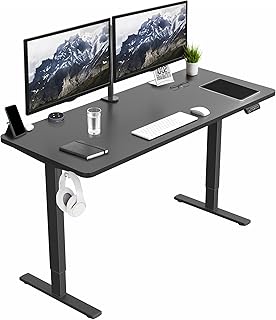
| VIVO Electric 60 x 24 | 60" x 24" | ~25.6"-51.2" | 220 lbs | Yes | Dual-monitor petite setups |
| Veken 47.2" Standing Desk | 47.2" wide | Low-bound adjustable | Light/medium gear | Yes | Small apartments, single-monitor |
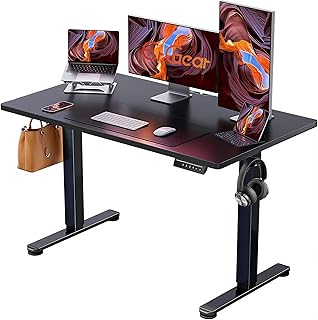
| ErGear 48 x 24 Electric | 48" x 24" | Adjustable w/ memory | Standard office load | Yes | Budget petite ergonomic builds |
The average task chair on Amazon has a minimum seat height of 18.5" and a seat depth of 19-20". For someone 5'3" or shorter — typically a 16"-17" popliteal height (knee crease to floor) and 16"-17" buttock-to-knee length — that geometry forces a choice between two bad postures. Either you sit all the way back and let your feet dangle, cutting circulation to the thighs, or you perch on the front edge so your feet touch the floor and lose every bit of lumbar support the chair was designed to provide. Within an hour, the lower back rounds, the shoulders hunch, and the neck cranes forward to meet a monitor that's now too far away.
An ergonomic chair short women under 5 foot 3 shoppers should consider has to solve three measurements simultaneously: seat height, seat depth, and lumbar height. Miss any one and the chair becomes a very expensive cause of hip-flexor pain.
The Four Petite-Fit Specs That Actually Matter
1. Minimum seat height of 16"-17"
Your feet need to rest flat on the floor with thighs parallel to the ground or angled slightly downward. Anything above 17.5" at its lowest setting will leave most women under 5'3" with hanging feet. Look for chairs that explicitly state a minimum cylinder height — many brands now sell a "short cylinder" upgrade for around $30 that drops the range by 2".
2. Seat depth under 18" (or sliding pan)
You should be able to sit fully against the backrest with two to three fingers of clearance behind your knees. A sliding seat pan is the safest bet because torso-to-leg ratios vary even within petite frames. If a fixed-depth chair is your only option, target 17" of usable depth.
3. Adjustable lumbar height (not just depth)
Many "ergonomic" chairs let you push the lumbar in and out but not up and down. For a short torso, the curve usually needs to sit lower than the factory default. Look for a lumbar pad that travels at least 3" vertically.
4. Armrests that drop to 7" above the seat
Petite shoulders sit lower relative to a desktop. Armrests stuck at 9"+ above the seat force you to shrug all day. 4D arms (height, width, depth, pivot) are worth the upcharge.
VIVO Electric 60 x 24 in Standing Desk
The VIVO is our top pick for a petite frame that still wants real desktop real estate. The 60" x 24" surface is wide enough for a dual-monitor or monitor-plus-laptop setup, and the 220 lb capacity easily handles a heavy 32" display, dock, and lighting rig. More importantly for this guide, its lower height range drops into the mid-25" zone — which, once you account for keyboard tray thickness or a low-profile keyboard, puts the typing surface right at elbow height for most users 5'0"-5'3". Memory presets let you save one position for seated petite-fit, one for standing, and switch with a tap. Check current price: VIVO Electric 60 x 24 in Standing Desk.
Veken 47.2" Standing Desk With Wood Desktop
If you work from a smaller apartment, bedroom corner, or shared space, the Veken's 47.2" width is the sweet spot — broad enough for a 27" monitor plus keyboard and notebook, narrow enough to fit a 48"-wide nook. The wood top is also a quiet upgrade for video calls where you'd rather not show a slab of black laminate. Pair it with a petite ergonomic chair and a footring (more on that below) and you've built a complete workstation in under 50" of wall space. Check it here: Veken 47.2" Standing Desk.
ErGear 48 x 24 Electric Height Adjustable Standing Desk
The ErGear is the value pick — comparable adjustability and memory presets to desks costing 40-50% more. For a reader who is putting most of the budget into a Steelcase Leap, Herman Miller Aeron size A, or Branch Ergonomic Chair with the short cylinder, the ErGear lets you complete the petite-fit workstation without doubling spend. Memory height settings mean you can dial in your exact seated and standing heights once and never re-measure. Current Amazon listing: ErGear Height Adjustable Electric Standing Desk.
Setup Tips Once Your Chair and Desk Arrive
Set the chair first, then the desk. Drop the seat until both feet are flat on the floor, knees at 90-100 degrees, with the seat pan slid forward so two fingers fit behind the knee. Only then raise the desk to where your forearms rest parallel to the floor and your elbows hang at your sides at roughly 90 degrees. Setting the desk first almost always traps petite users into a too-high typing position.
Add a footring or footrest, not a phone book. Even with a 16" seat height, a slight forward tilt or a deeper-than-ideal pan can leave you wanting more foot support. A proper sloped footrest beats stacked textbooks because it lets the ankles flex naturally. See our ergonomic footrest guide for picks that work under low desks.
Raise your monitor. The top third of the screen should hit at eye level. Short users on standard 4" monitor stands almost always need an additional riser or an arm. This is the single biggest factor in eliminating the chin-jut posture that develops by mid-afternoon.
Add a lumbar pillow if the chair's curve still sits too high. Even chairs marketed as petite sometimes have lumbar pads that bottom out two inches above where a 5'1" back actually curves. A small memory-foam wedge fills the gap. We cover our favorites in the lumbar support roundup.
Common Mistakes Petite Buyers Make
The first mistake is trusting marketing copy that calls a chair "petite-friendly" without listing a minimum seat height. If the spec sheet only says "adjustable height," assume the minimum is 18"+ until proven otherwise. Email the seller or read the Q&A section before you buy.
The second is buying a kids' or junior task chair to solve the height problem. These shrink seat depth and pan width but rarely include real lumbar adjustment, four-dimensional arms, or a tilt-tension dial that can be set firm enough for an adult body weight. You'll outgrow the support before you outgrow the dimensions.
The third is skipping the desk side of the equation entirely. As covered above, a petite-fit chair under a too-tall desk just trades hip-flexor pain for shoulder-and-neck pain. If a full standing desk isn't in budget yet, a keyboard tray that drops 2"-3" below the desktop is the cheaper bridge — but a height-adjustable desk solves the problem permanently and keeps working as your needs change.
Frequently Asked Questions
What is the lowest seat height available on an ergonomic office chair in 2026?
The lowest factory seat heights you'll find in 2026 from mainstream brands hover around 15.5"-16" — Branch's Ergonomic Chair with the short cylinder upgrade, Steelcase Leap with short pneumatic, and the Herman Miller Aeron size A all reach roughly that range. Some specialty petite-targeted chairs from smaller brands advertise 14.5" minimums but verify with the seller before ordering. Anything claiming below 14" usually achieves it by reducing seat pan depth in a way that compromises thigh support.
How do I know if a chair's seat is too deep for me?
Sit fully against the backrest with your spine in contact with the lumbar curve. Slide a flat hand between the back of your knee and the front edge of the seat. If your hand is squashed or your knees touch the seat edge, the pan is too deep — circulation behind the knees will be cut off within an hour. Two to three fingers of clearance is the target.
Are gaming chairs ever a good option for women under 5'3"?
Rarely. Most gaming chairs are built on a bucket-style seat that's 21"-22" wide with rigid side bolsters that force you toward the center, plus a fixed seat depth around 20". Petite users end up with the bolsters digging into the outside of their thighs and the seat pan jamming behind their knees. A handful of newer "compact" gaming chairs solve this, but a true office task chair with petite specs will almost always be more comfortable and better adjusted to the actual workday.
Should I get a kneeling chair or a saddle chair instead?
Kneeling chairs can be a useful supplement — 30-60 minutes a day to mobilize the hips — but they don't replace a full ergonomic chair because they offer no back support and load the shins. Saddle stools work better as part of a rotation than as an all-day seat. The strongest petite setup is a properly adjusted task chair as the primary seat, with an occasional standing interval or kneeling break.
Do I really need a footrest if my feet already touch the floor?
If your feet are flat on the floor with thighs parallel, technically no. But many petite users find that a slight footrest tilt of 10-15 degrees reduces calf tension and encourages micro-movements through the day. If you're using one of the low-bound standing desks recommended above and switching to standing intervals, a small anti-fatigue mat is more valuable than a footrest.
What's the ideal monitor height for someone 5'3" or shorter?
The top of the active screen area should sit at or just below eye level when you're seated in your final posture — typically 42"-46" from the floor for women under 5'3". Most monitors on a stock stand will land 3"-5" too low. A monitor arm clamped to one of the standing desks above gives you exact control and frees up the desktop. Avoid stacking books; they prevent micro-adjustments.
How much should I budget for a complete petite-friendly workstation in 2026?
A solid full setup — chair, standing desk, monitor arm, footrest if needed, lumbar pillow — runs roughly $700-$1,400 in 2026. A reasonable split: $300-$700 for the chair (used Steelcase or new Branch with short cylinder), $200-$400 for an electric standing desk like the ErGear or Veken above, and $100-$200 for accessories. Spending more on the chair than the desk is the right ratio — you'll spend more hours touching the chair than the desktop.
Key Takeaways
- Choosing the right ergonomic chair short women under 5 foot 3 means matching the key features to your specific needs and budget
- Read real customer reviews and check the return policy before you commit
- Also covers: petite office chair for small frame
- Also covers: best chair for 5 foot tall woman
- Also covers: short user ergonomic office chair
- Compare value across models — the priciest option is not always the best fit