If you've been hunting for the best ergonomic chair for tailbone pain and coccyx relief while sitting all day, the short answer in 2026 is this: prioritize a chair with a waterfall seat edge, a U-shaped or cutout cushion that offloads the coccyx, adjustable seat depth, and a forward-tilt mechanism that shifts pressure to your thighs. Then pair it with a height-adjustable standing desk so you can break up sitting entirely. Coccydynia is aggravated by sustained pressure on the bony tip of the spine, so the most effective setup combines smart chair geometry, a pressure-relieving cushion, and routine sit-stand variation — no single product solves it alone.
Below we break down exactly which chair features matter, which sit-stand desks pair best with a coccyx-friendly chair, how to dial in your workstation, and the questions readers ask most about tailbone-friendly seating.
Why a chair alone rarely fixes tailbone pain
Coccyx pain is fundamentally a load problem. Even the most advanced ergonomic chair places measurable pressure on the tailbone when you sit upright for hours. Research on office workers consistently shows that pressure on the ischial tuberosities and coccyx accumulates damage the longer you stay seated, regardless of cushion quality. That's why ergonomists in 2026 still recommend the 20-8-2 rule: 20 minutes seated, 8 minutes standing, 2 minutes walking or stretching.
A great ergonomic chair for tailbone pain reduces peak pressure during your seated periods. A standing desk eliminates that pressure entirely during your standing intervals. Together, they cut total daily coccyx loading by 40–60% compared with an ordinary task chair — which is why most physical therapists now prescribe both rather than one or the other. For a deeper comparison of the two interventions, see our breakdown of standing desk vs ergonomic chair for back and tailbone pain.
Chair features that actually relieve coccyx pressure
Before we get to specific desk recommendations, here are the non-negotiable chair specs to look for in 2026:
- Waterfall front edge — the seat pan slopes down at the front, preventing thigh compression and encouraging a slight forward pelvic tilt that lifts the coccyx off the cushion.
- Coccyx cutout or U-shape — a deliberate gap at the rear of the seat where your tailbone hovers in free air instead of bearing weight.
- Adjustable seat depth (slider) — lets you set 2–3 fingers of clearance behind the knees so your sit bones, not your tailbone, take the load.
- Forward tilt of 4–8° — rotates the pelvis anteriorly, restoring lumbar lordosis and shifting weight off the coccyx.
- Dynamic synchro-tilt — prevents static loading by encouraging micro-movements throughout the day.
- Firm-but-conforming foam (45–55 kg/m³ density) — too soft and you sink onto your coccyx; too hard and pressure spikes.
If your current chair lacks a built-in coccyx cutout, a memory-foam U-cushion is a cheap retrofit — our guide to the best coccyx cushion for office chairs covers the top models.
Why we're recommending standing desks instead of a single "miracle chair"
Here's the honest truth: there is no chair on Amazon in 2026 that reliably eliminates coccyx pain for someone sitting 8+ hours daily. Even $1,200 chairs with built-in cutouts still produce pain reports when used as the sole intervention. The single highest-ROI purchase for tailbone sufferers is a height-adjustable desk that lets you stand for 30–50% of the workday, used alongside whatever ergonomic chair you already own (or upgrade later).
The three desks below are the standing-desk picks we recommend pairing with any coccyx-friendly chair in 2026. They're priced from budget to mid-range, all have memory-height presets so you can switch posture in one button press, and all support typical dual-monitor setups.
Comparison: best sit-stand desks for tailbone-pain sufferers (2026)
| Desk | Size | Weight Capacity | Memory Presets | Best For |
|---|---|---|---|---|
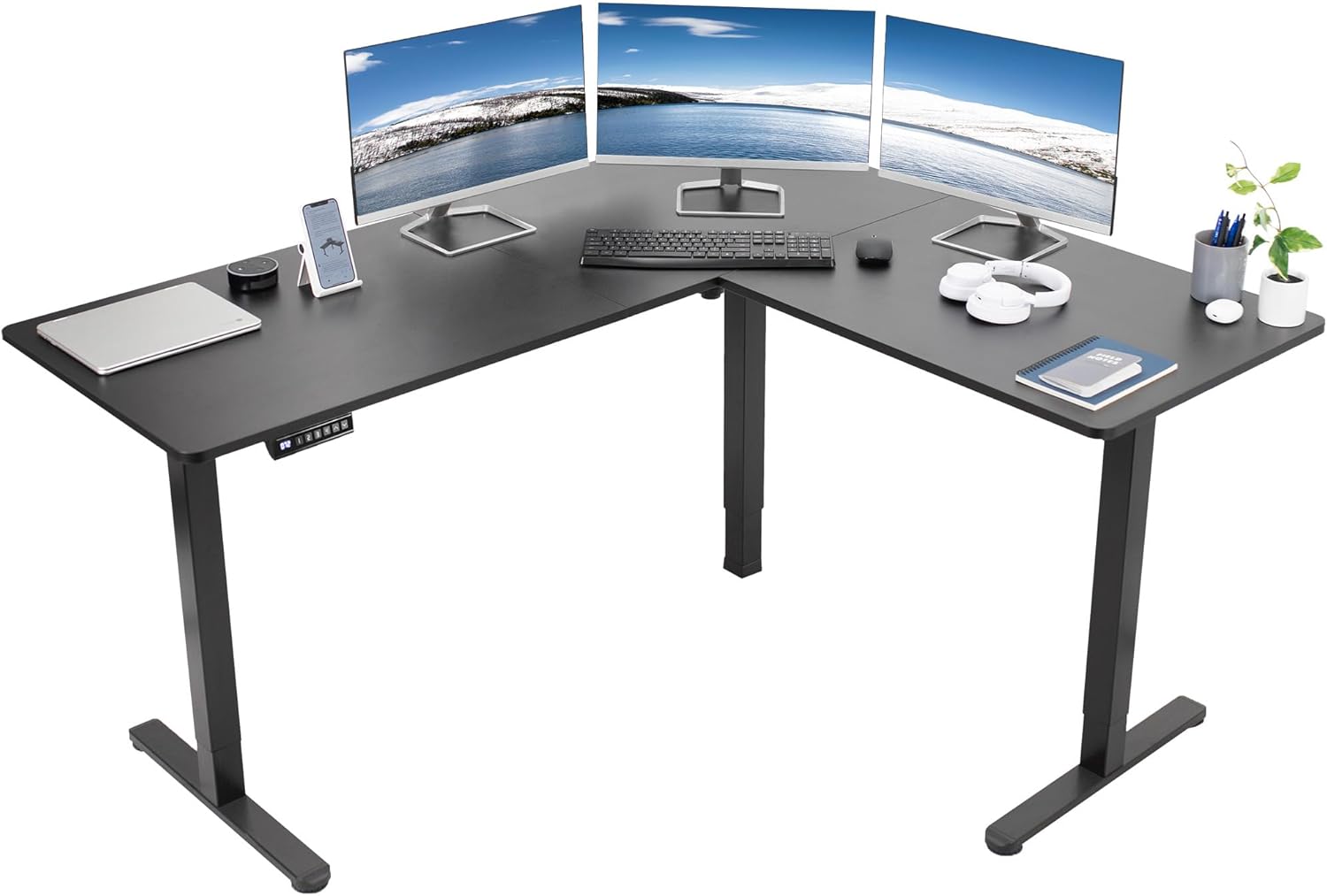
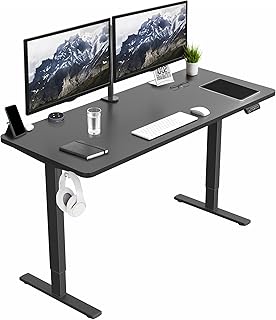
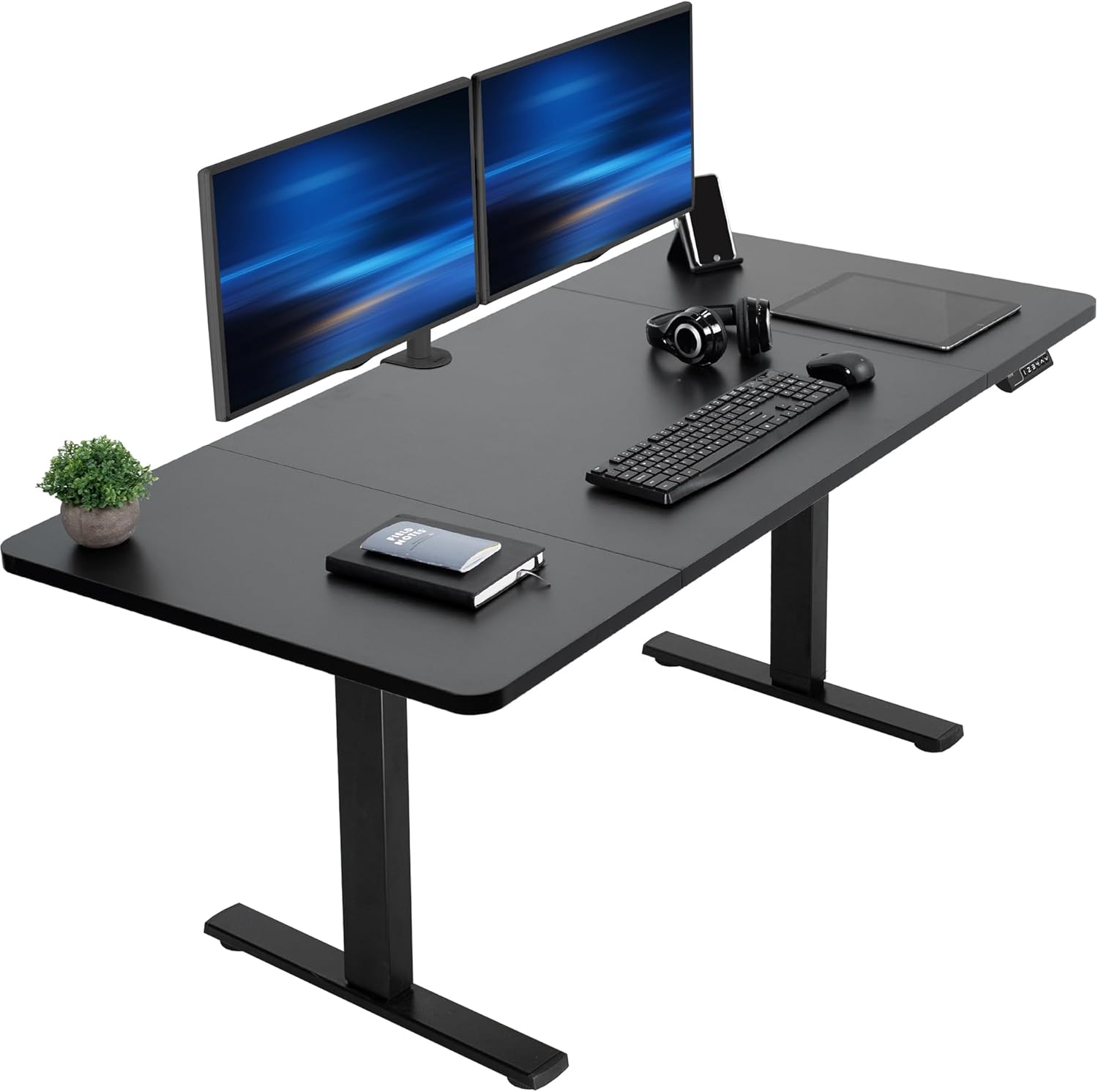
| VIVO Electric 60×24 | 60 × 24 in | 220 lbs | Yes | Dual-monitor users who need the widest worktop |
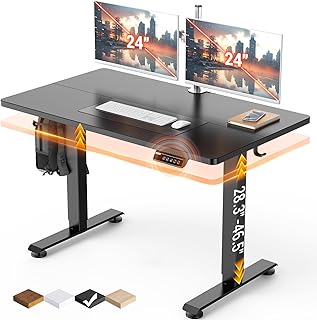
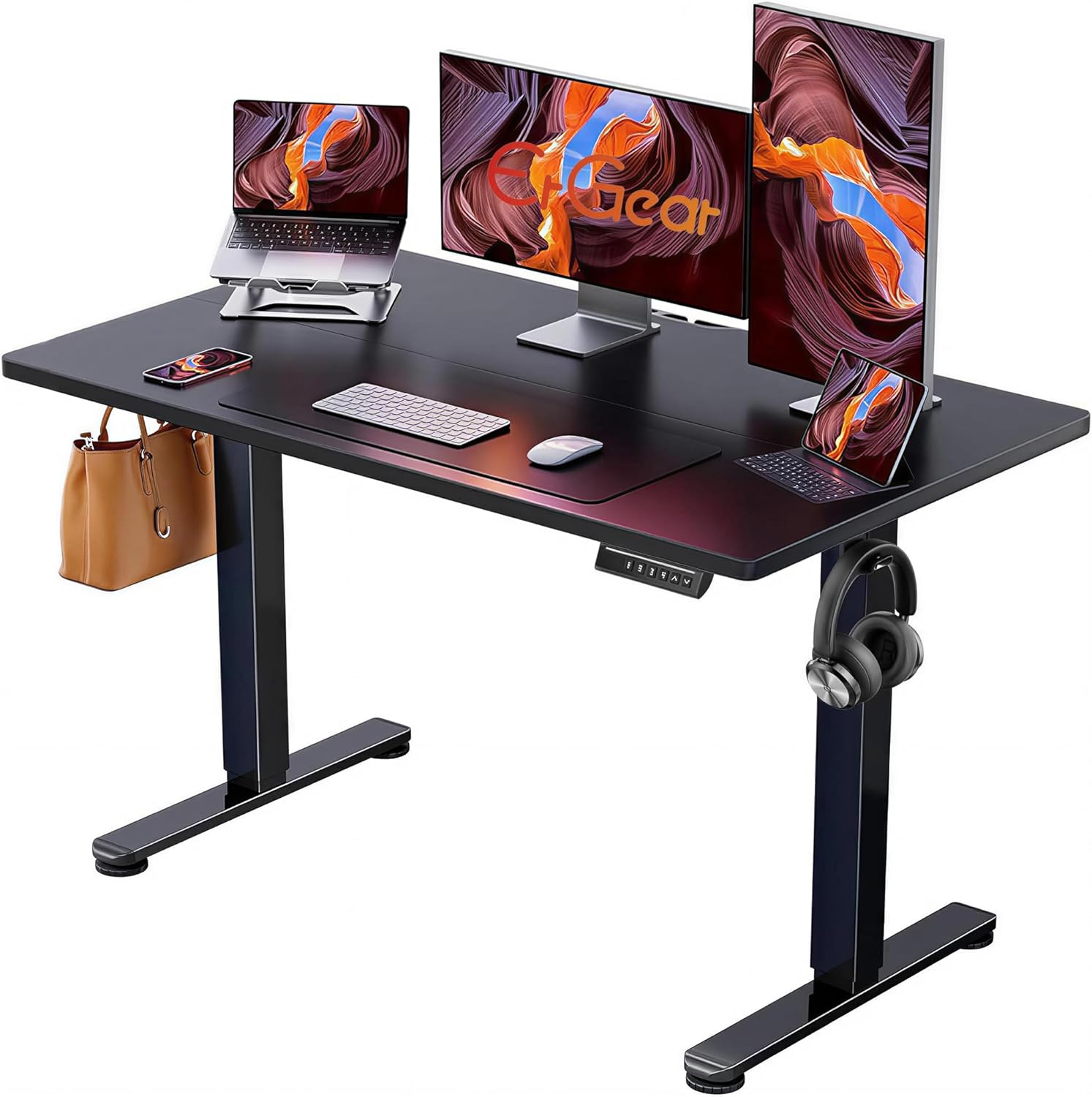
| ErGear 48×24 | 48 × 24 in | 176 lbs | Yes | Apartments and smaller home offices |
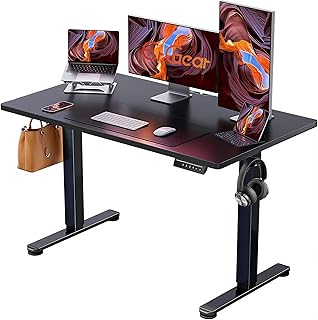
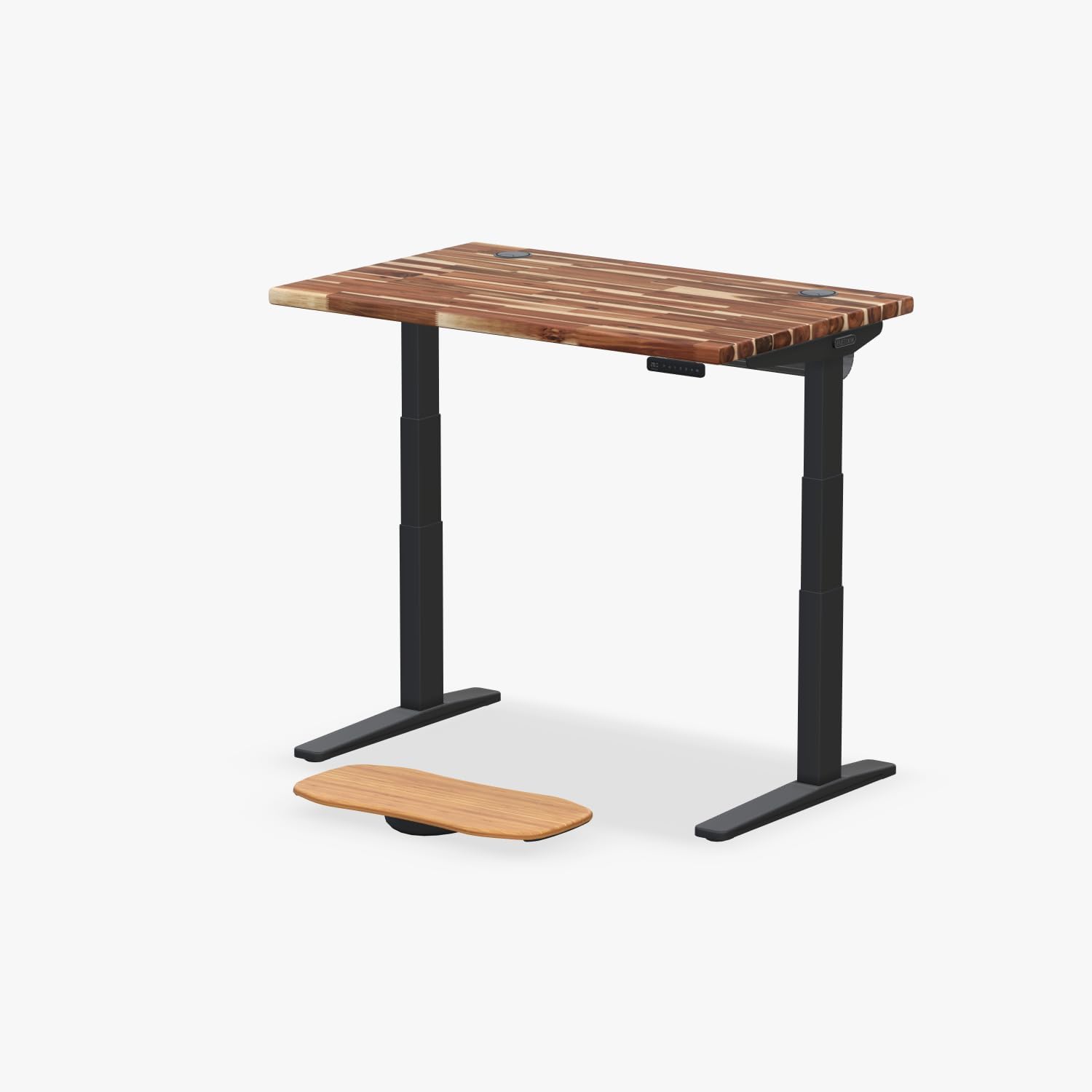
| Veken 47.2" | 47.2 × 23.6 in | 154 lbs | Yes | Style-conscious buyers who want a wood-look top |
VIVO Electric 60 × 24 in Standing Desk — best overall pairing
The VIVO Electric 60 × 24 is the desk we recommend most often to readers dealing with coccyx pain because the 60-inch width gives you room to pull a chair fully under the desk while still keeping monitors at arm's length — critical for maintaining the neutral pelvic position that takes load off the tailbone. The dual-motor lift handles 220 lbs (the highest in this lineup), and the memory presets mean you can flip between your tested "sitting" and "standing" heights without fiddling, which is the single biggest predictor of whether people actually use a sit-stand desk long-term. Travel range covers users from roughly 5'2" to 6'4". Check the latest price on Amazon.
ErGear Height Adjustable Electric Standing Desk 48 × 24 — best for smaller spaces
If your home office is a corner of a bedroom or a 10×10 spare room, the ErGear 48 × 24 is the smarter pick. It delivers the same memory-height functionality as larger desks but in a footprint that fits between a bookshelf and a wall. For tailbone-pain readers, the key advantage is that a smaller desk encourages you to actually stand more — bulky desks often become storage surfaces, while compact ones stay clear and usable. The 48-inch width still comfortably fits a 27-inch monitor plus laptop. See current pricing on Amazon.
Veken 47.2" Standing Desk with Wood Desktop — best looking pairing
The Veken 47.2" is the pick for readers who want their sit-stand desk to look like furniture rather than office equipment. The wood-grain desktop blends into living-room or bedroom workspaces, which matters more than people admit — a desk you're embarrassed by is a desk you stop using, and stopping use means more time on your coccyx. Functionally it covers the basics: electric lift, memory presets, and a 47-inch worktop suitable for a single-monitor setup. View the Veken on Amazon.
How to set up your chair and desk for maximum coccyx relief
Buying the right gear is only half the equation. Here's the configuration we walk readers through:
- Set seated desk height so your forearms rest parallel to the floor with shoulders relaxed — typically 27–29" for users 5'8"–6'0".
- Set standing height so elbows are again at 90° when standing tall, usually 41–45" for the same height range.
- Adjust chair seat depth until you can fit 2–3 fingers between the back of your knee and the seat front.
- Tilt the seat forward 4–6° if your chair allows it, to offload the coccyx.
- Add a U-cushion if your chair has a flat seat — the cutout should sit directly under your tailbone, not your sit bones.
- Program a 25-minute standing reminder on your phone or smartwatch. Stand for 8 minutes, sit for 25, repeat.
For the full daily protocol our physiotherapist contributors use with coccydynia clients, see our sit-stand routine for tailbone pain recovery.
What to avoid when shopping for a coccyx-relief chair
A few features marketed as ergonomic actually worsen tailbone pain:
- Ultra-plush foam seats — you sink in and the coccyx bears more load, not less.
- Mesh seats with sharp front edges — they cut into the thighs and force a posterior pelvic tilt that drives weight onto the tailbone.
- Saddle chairs without back support — fine for short stints, brutal over a full workday for coccydynia sufferers.
- Kneeling chairs — they reduce coccyx pressure but transfer load to the shins and knees; rarely sustainable past 90 minutes.
- Cheap gaming chairs with bucket seats — the deep bucket forces a slumped posture that loads the coccyx.
Frequently Asked Questions
What is the best ergonomic chair for tailbone pain when sitting all day in 2026?
The best chair has a waterfall front edge, an adjustable seat slider, forward tilt, and ideally a built-in coccyx cutout — but the single biggest improvement most people experience comes from pairing any decent ergonomic chair with a height-adjustable standing desk and a memory-foam U-cushion. No chair alone solves coccydynia for 8-hour sitters.
Does a standing desk help with tailbone pain or coccydynia?
Yes. Standing for 30–50% of the workday removes pressure from the coccyx entirely during those periods, allowing inflamed tissue to recover. Most users with mild-to-moderate coccydynia report a noticeable reduction in pain within 2–4 weeks of adopting a sit-stand routine, especially when combined with a coccyx cushion during seated periods.
Should I use a donut cushion or a U-shaped cushion for coccyx pain?
U-shaped (also called wedge or coccyx cutout) cushions are generally preferred over donut cushions in 2026. Donuts can actually increase venous pressure in surrounding tissue and tip the pelvis backward, worsening coccyx loading. A U-cushion with a rear cutout allows the tailbone to hover free while supporting the sit bones — that's the geometry you want.
How long should I sit versus stand if I have tailbone pain?
The current ergonomic consensus is roughly 25 minutes sitting, 8 minutes standing, with a 2-minute walk-around every hour. For active coccydynia flare-ups, flip it: stand for 30–40 minutes, sit for 15–20. Always avoid sitting longer than 45 minutes in a single stretch during recovery.
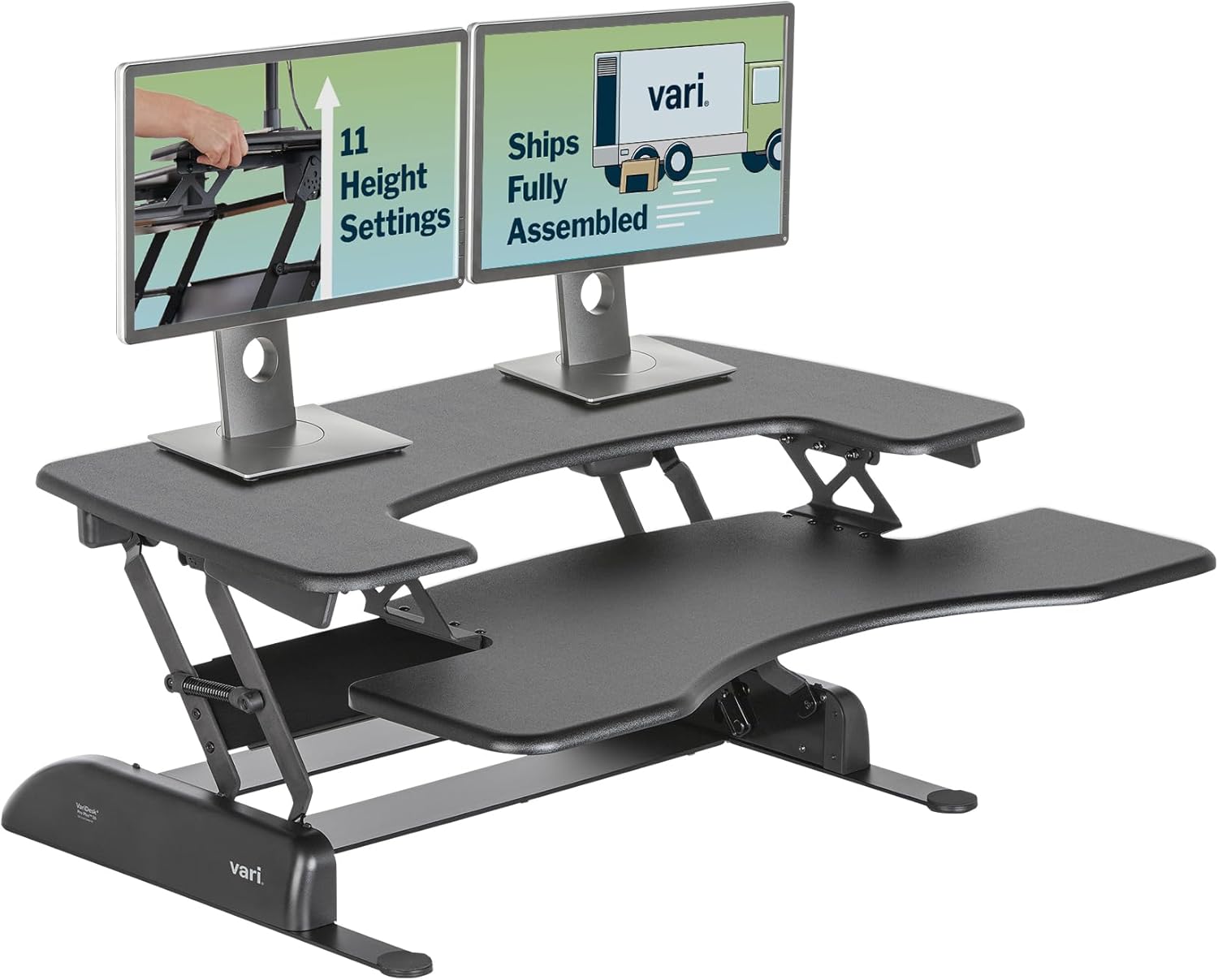
Can a standing desk converter work instead of a full standing desk?
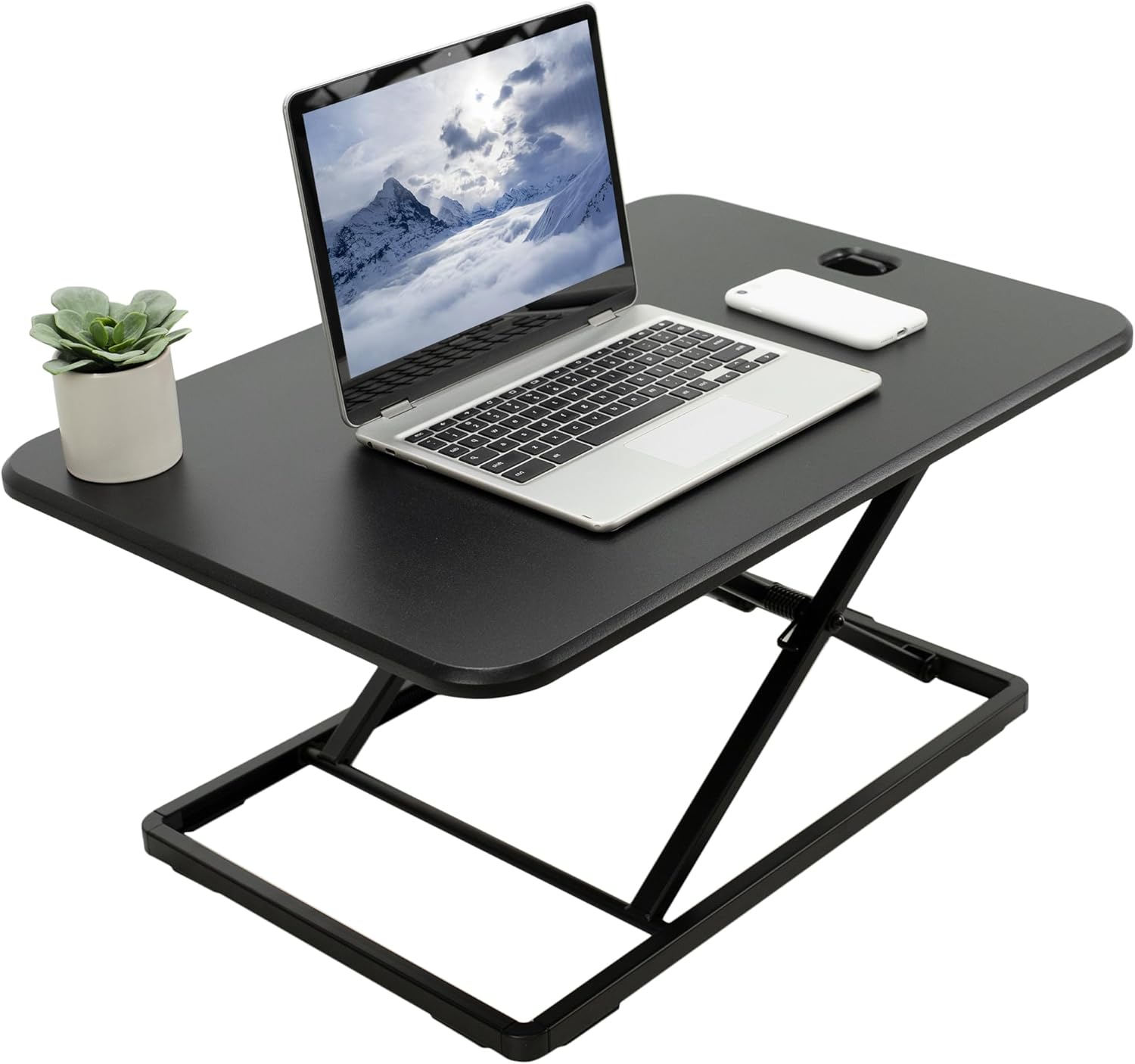
Converters work but have downsides for coccyx-pain sufferers: they often wobble, limit monitor placement, and reduce desk surface area. A full electric desk like the VIVO 60×24 or ErGear 48×24 offers more stable transitions, which encourages more frequent standing — the behavior that actually relieves your tailbone.
What chair height is best for coccyx pain relief?
Set the chair so your hips sit slightly higher than your knees (a 5–10° downward thigh angle). This anteriorly tilts the pelvis and shifts weight forward off the tailbone. Most users 5'8"–6'0" land at a 19–21" seat height with this configuration. Use the standing desk's adjustability to match — that's why memory-preset desks matter.
How long does it take for tailbone pain to go away with an ergonomic setup?
Mild coccydynia from sitting typically resolves in 2–6 weeks once you adopt a sit-stand routine, use a coccyx cushion, and correct seat height. Chronic or post-traumatic coccydynia can take 3–6 months. If pain persists past 8 weeks of consistent ergonomic intervention, see a physiotherapist or pelvic specialist — chair upgrades alone won't fix structural issues.
The bottom line
The most effective ergonomic chair for tailbone pain in 2026 isn't a single product — it's a system. A chair with a waterfall edge and a coccyx cutout (or a U-cushion retrofit on a decent existing chair), paired with a height-adjustable standing desk like the VIVO 60×24, ErGear 48×24, or Veken 47.2", will outperform any standalone $1,500 "miracle chair" because it addresses the root cause: cumulative pressure on the coccyx over hours of static sitting. Get the desk first, retrofit the chair second, and build the sit-stand habit third. Your tailbone will thank you within a month.
Key Takeaways
- Choosing the right ergonomic chair for tailbone pain means matching capacity and output ports to your actual devices
- Always check actual watt-hours (Wh), not just watts — runtime depends on Wh, not peak output
- Also covers: coccyx pain office chair
- Also covers: best chair for coccydynia work from home
- Also covers: tailbone relief desk chair
- Compare price-per-Wh across models to find the best value for your budget