Searching for the best monitor arm asus pg32ucdm oled owners can actually trust with a 16-pound, 32-inch QD-OLED panel? You need a heavy-duty arm rated for at least 20 lbs, full VESA 100x100 support, and enough rear clearance to accommodate the curved OLED chassis and its ventilation grille. The PG32UCDM’s deep back panel and recessed VESA pattern eliminate many slim, low-profile arms from contention. Below, we break down which specs matter, compare three sturdy standing desks that give your arm a stable foundation, and walk through the selection criteria your 2026 build needs to avoid sag, wobble, and panel damage.
What makes a monitor arm right for the ASUS PG32UCDM?
The PG32UCDM is a flagship 32-inch 4K QD-OLED gaming monitor with a panel-only weight of roughly 16.3 lbs (7.4 kg). That sounds light until you realize most budget gas-spring arms are rated for 4.4–17.6 lbs, putting this monitor right at the upper threshold or beyond it. An arm running at maximum capacity will droop within weeks, especially in tilted positions. Aim for a 22 lb (10 kg) or higher weight rating with a quality gas piston so you have headroom.
When shopping for best monitor arm asus pg32ucdm oled, it pays to compare specs, capacity, and real-world runtime before committing.
VESA is the second checkpoint. The PG32UCDM uses a standard 100x100 mm VESA pattern, but the recessed mounting area is approximately 8–10 mm deep, which means some thick arm plates won’t seat flush. Look for arms shipped with M4 screw extensions, or confirm that the mounting plate has “recessed VESA compatible” or “curved monitor compatible” language in the spec sheet.
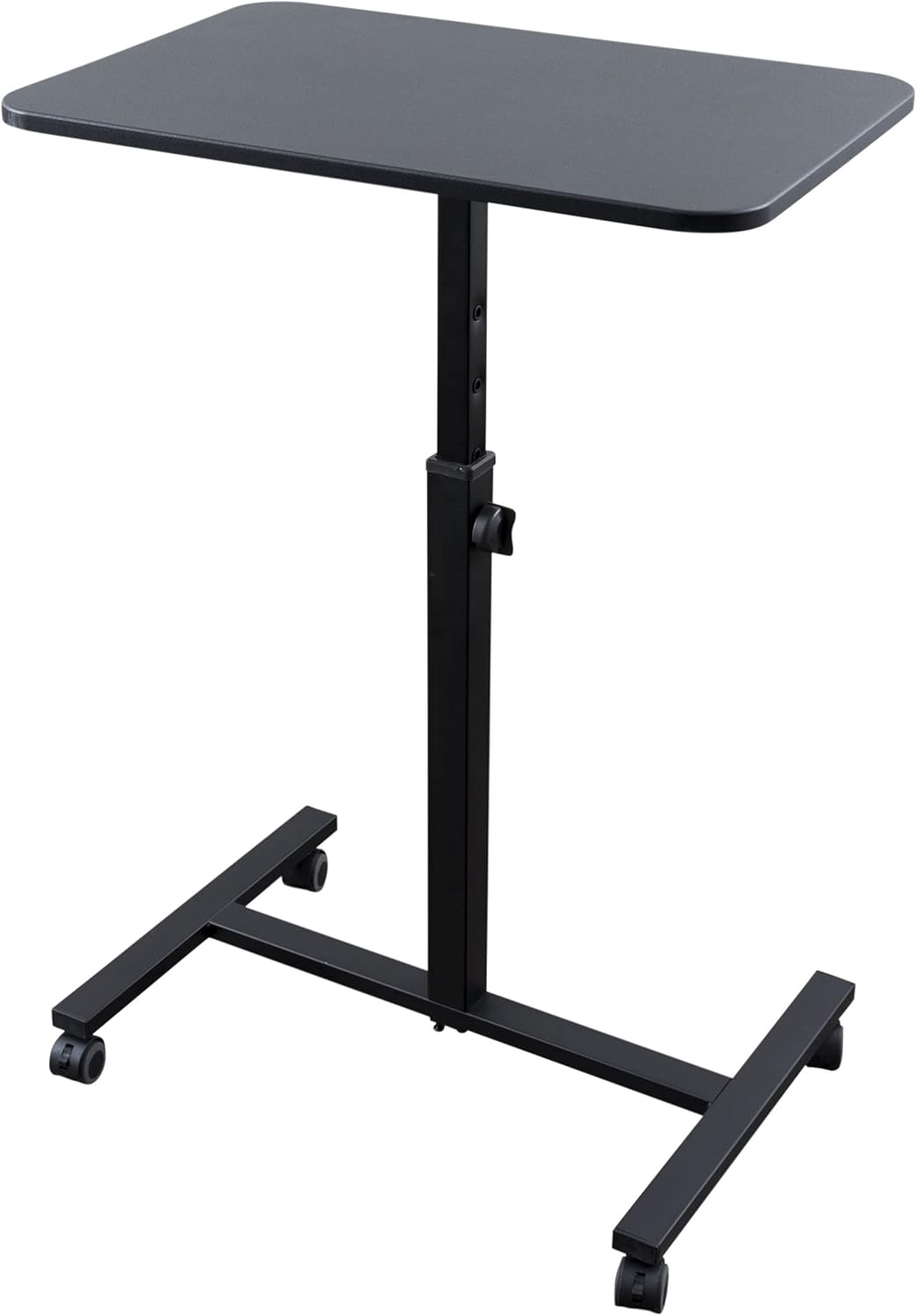
Clearance is the third — and most overlooked — requirement. The OLED’s rear cooling shroud bulges outward, so any arm whose mount plate doesn’t pull the monitor at least 25–30 mm off the post will scrape, scratch, or block the heat vent. Always check the “mount-to-panel offset” before you buy.
Why your desk matters as much as your arm
A premium monitor arm bolted to a flimsy desktop is a $250 mistake. The clamp transfers all that 16 lbs of leverage into a single 25–40 mm strip of the desk edge. If the desktop is hollow-core particle board, MDF without reinforcement, or a thin laminate top, every keyboard input vibrates the panel and the clamp will eventually dent the surface.
For a 32-inch OLED arm setup, you want:
- Desktop thickness: at least 18 mm (3/4 in) of solid wood, MDF, or bamboo. Most C-clamps fit desks 10–60 mm thick, but thinner panels flex.
- Frame stability: a steel dual-motor frame with cross-brace or wide foot pads. Single-column lift desks shake noticeably with a heavy monitor extended forward.
- Width: 47 inches minimum for a single PG32UCDM build; 55+ inches if you plan to add a secondary display or stream deck.
- Weight capacity: a lifted load rating of 175 lbs+ for safety margin. A 32-inch OLED, arm, PC, and peripherals can easily reach 80–100 lbs.
Below we’ve picked three standing desks that meet these criteria and will serve as solid mounting surfaces for whichever heavy-duty monitor arm you choose for the PG32UCDM.
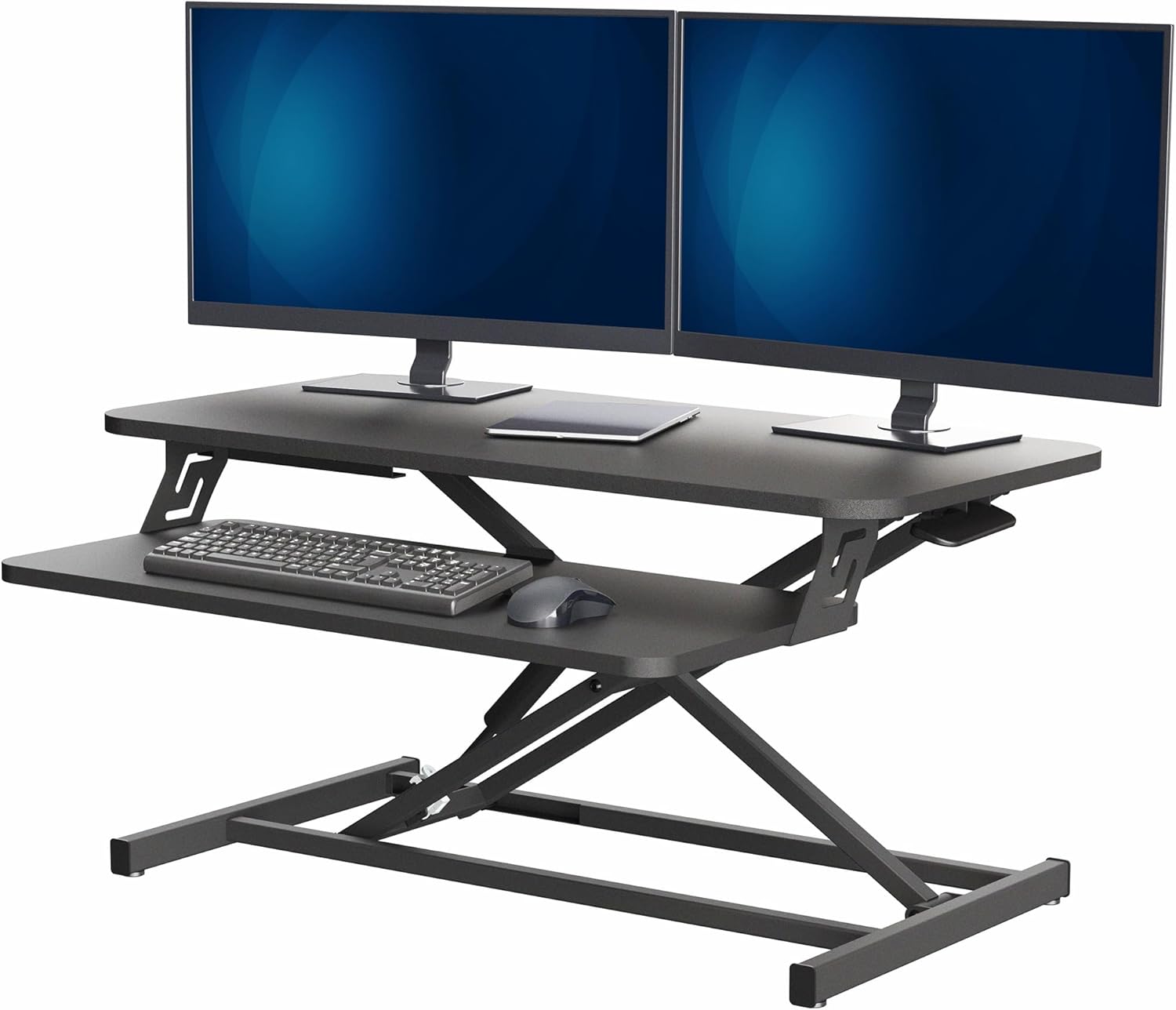
Comparison table: Best desks to pair with a heavy-duty monitor arm
| Desk | Surface size | Weight capacity | Desktop material | Best for |
|---|---|---|---|---|
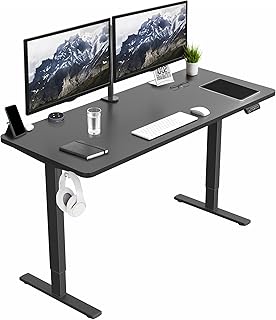
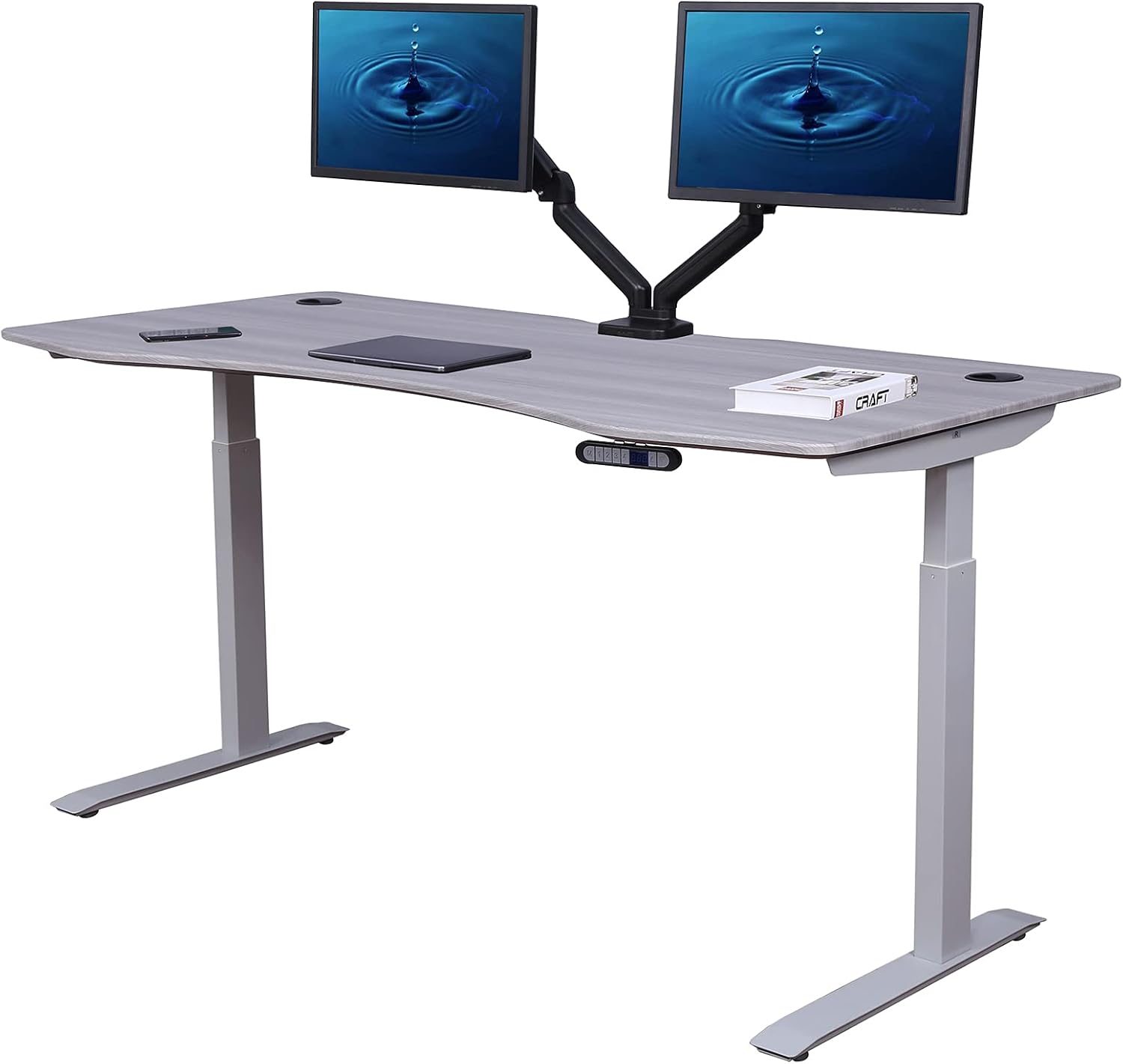
| VIVO Electric 60 x 24 | 60 x 24 in | 220 lbs | MDF laminate | Wide multi-monitor builds |
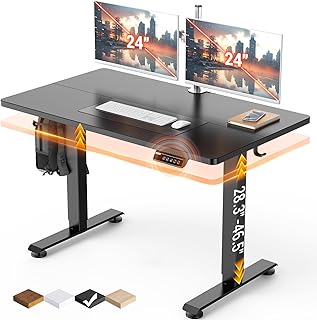
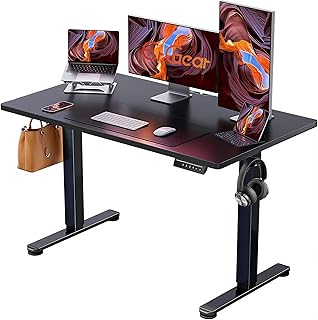
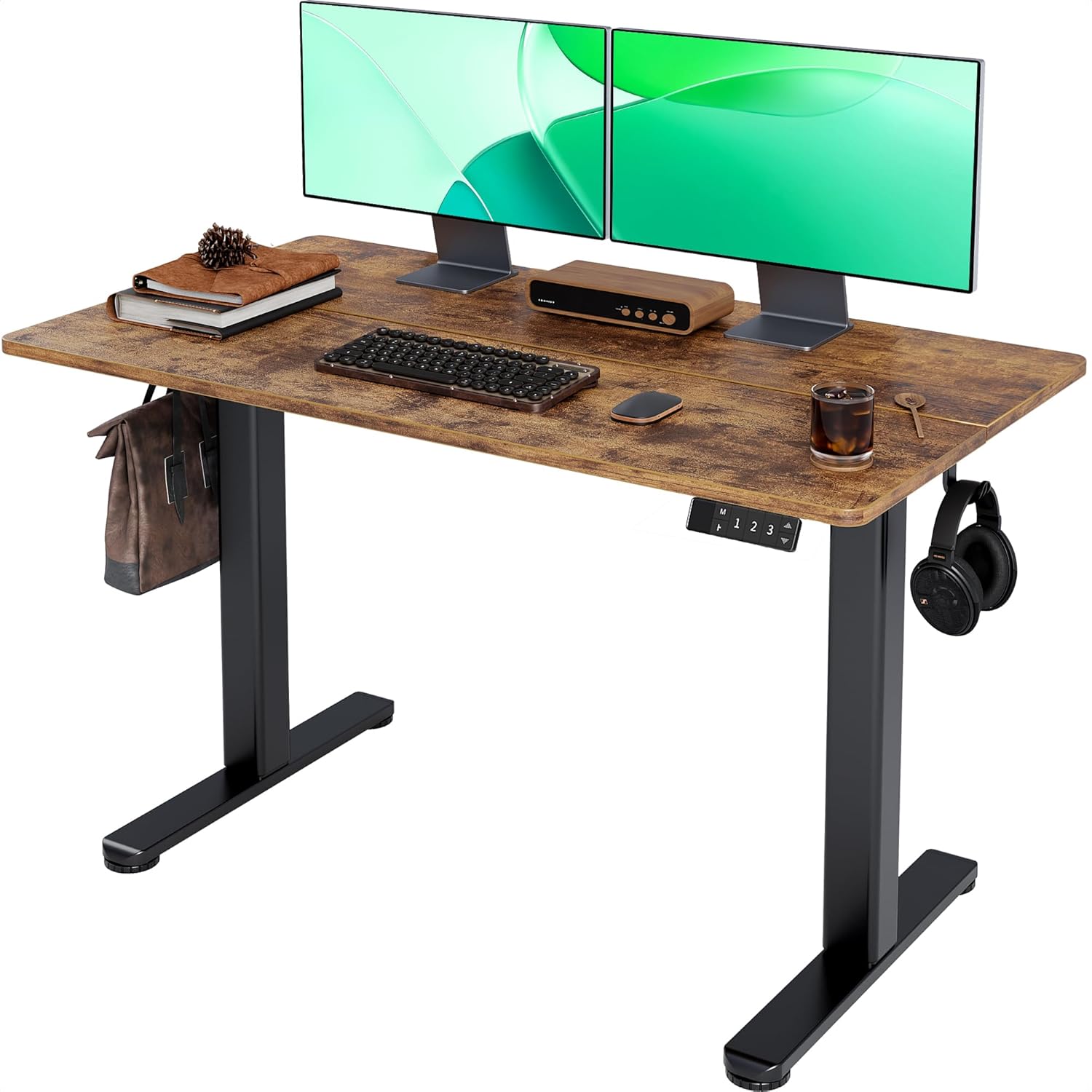
| ErGear 48 x 24 | 48 x 24 in | 176 lbs | Engineered wood | Single-monitor PG32UCDM rigs |
| Veken 47.2” Wood | 47.2 x 23.6 in | 154 lbs | Solid wood-look top | Aesthetic-first home offices |
Top desk picks to pair with the best monitor arm asus pg32ucdm oled buyers can install
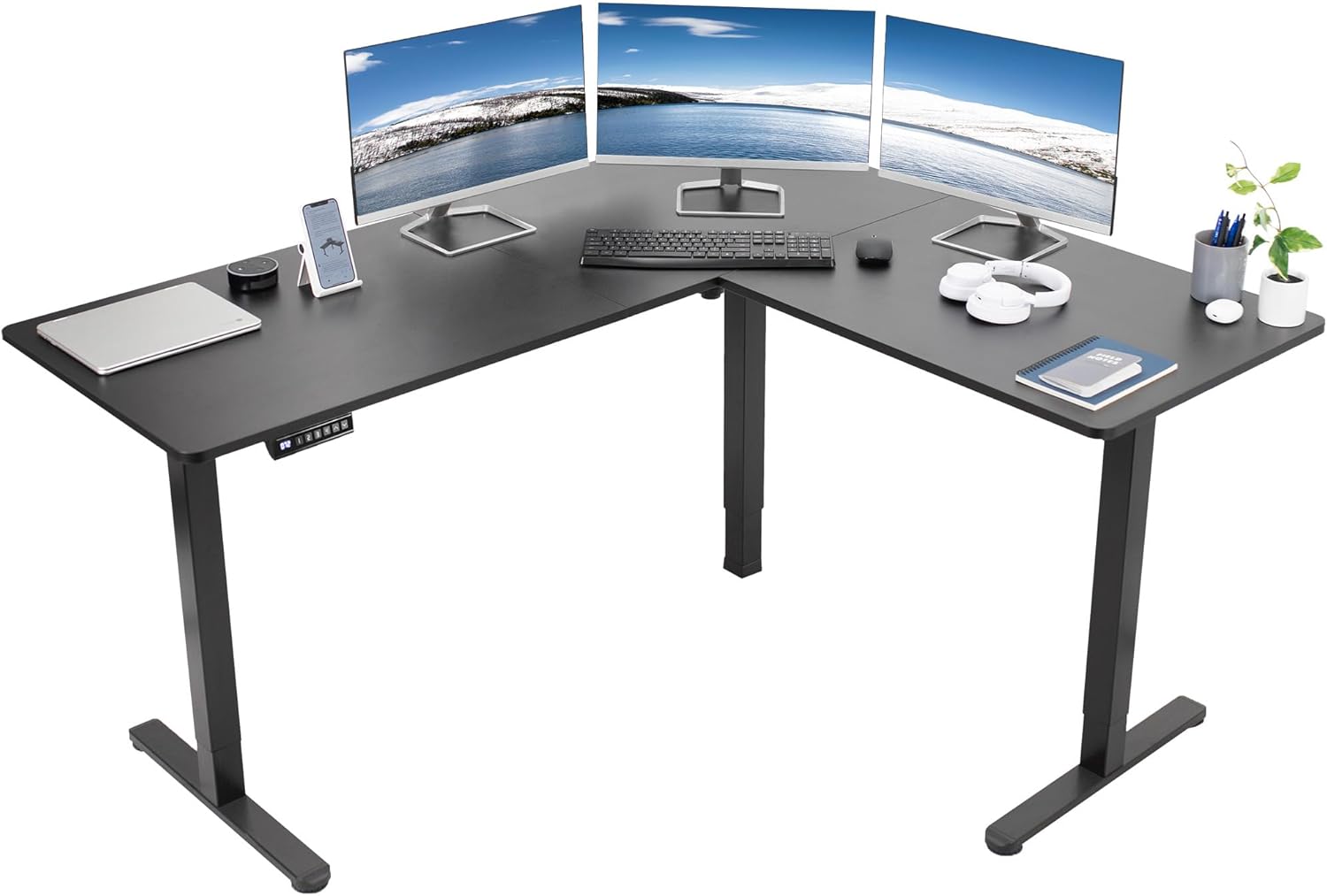
1. VIVO Electric 60 x 24 in Standing Desk — Best wide foundation for a 32” OLED arm
If you’re running the PG32UCDM as the centerpiece of a productivity or streaming battlestation, the 60-inch VIVO gives your monitor arm enough real estate to swing through its full range without the panel ever hanging over the desk edge. The 220 lb lifted weight rating is the highest in this lineup, and the dual-motor steel frame keeps wobble in check even at the desk’s upper height limit — the make-or-break test for any heavy OLED. The wide-format MDF laminate top is rigid enough to anchor most C-clamp mounts without sagging at the load point. Memory presets let you snap between sit and stand without recalibrating arm tension.
Check the VIVO 60 x 24 Electric Standing Desk on Amazon
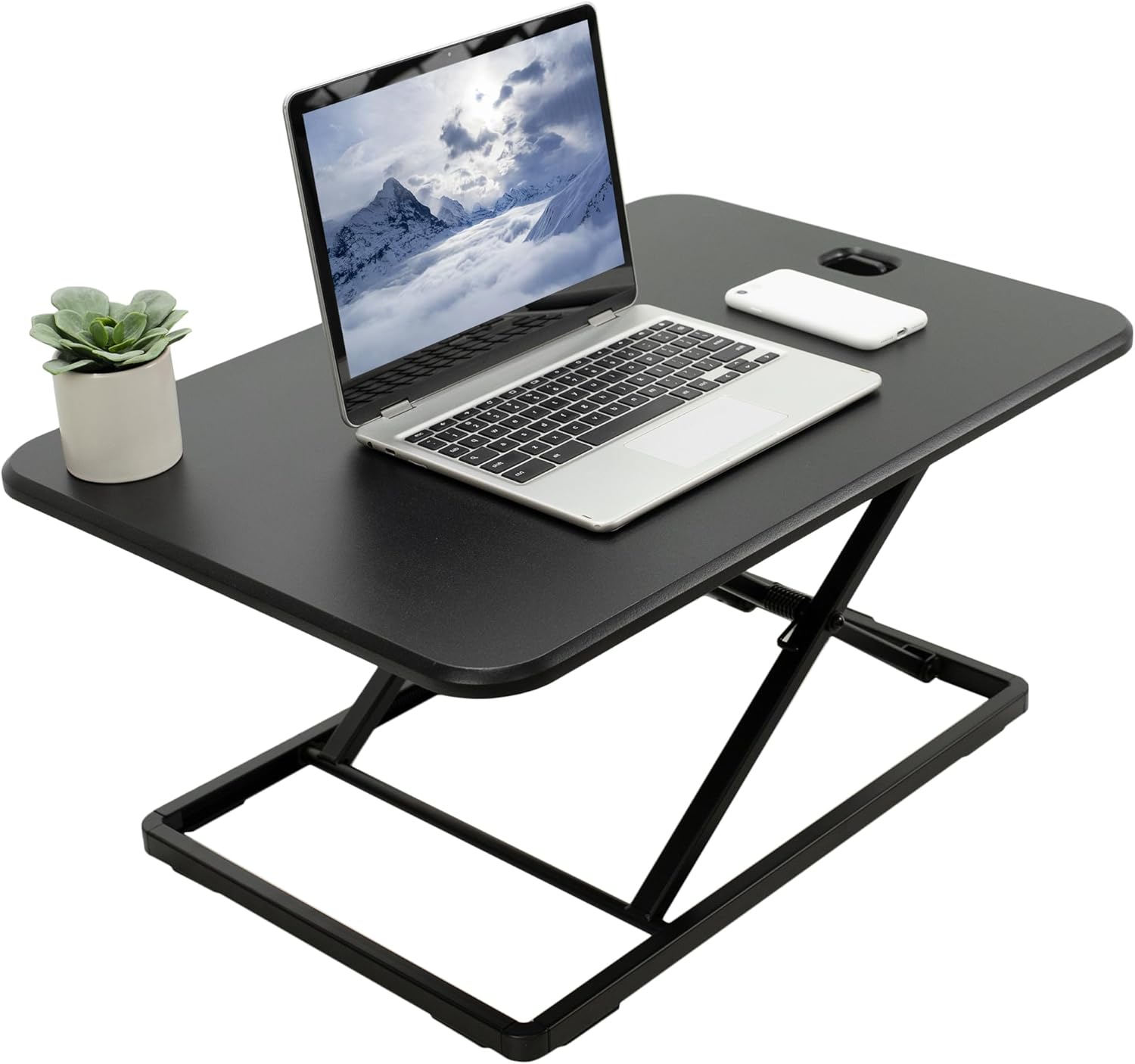
2. ErGear 48 x 24 Electric Standing Desk — Best mid-size match for single-monitor builds
For a clean, single-display PG32UCDM setup, the ErGear 48 x 24 hits the sweet spot. The 48-inch width centers the 32-inch monitor with breathing room for a keyboard tray, mic boom, and headphone stand. Memory height adjustment with four presets means you can dial in arm-friendly seated and standing positions and never fight your gas spring again. The 176 lb capacity comfortably swallows the PG32UCDM (16 lbs), a high-end PC tower (40–60 lbs), and the rest of your peripherals. The engineered wood top is dense enough to seat a quality C-clamp without dimpling and accepts grommet-mount arms cleanly.
Check the ErGear 48 x 24 Standing Desk on Amazon
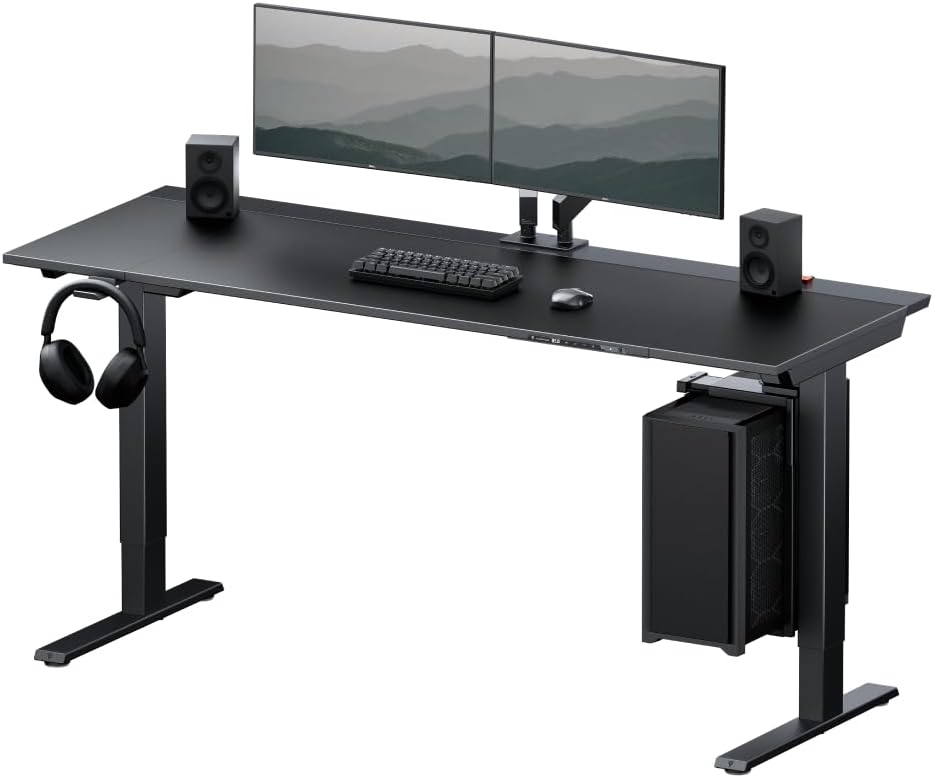
3. Veken 47.2” Standing Desk with Wood Desktop — Best looking foundation for the OLED
An OLED panel is a visual centerpiece, and the Veken 47.2” lets it shine on top of a warm wood-look surface that looks far more premium than its price tag. It’s sized almost identically to the ErGear option, but the wood-style finish reads better in on-camera content and adds visual contrast to the matte-black PG32UCDM. The 154 lb capacity is enough for a focused gaming or design setup — just keep an under-desk PC mounted to a CPU sling rather than on the desktop to reserve capacity for your monitor arm’s load. Best paired with an arm that uses a soft rubber clamp pad to protect the desktop finish.
Check the Veken 47.2” Wood Standing Desk on Amazon
Monitor arm selection criteria for the PG32UCDM in 2026
Once your desk is sorted, narrow the monitor arm search by these non-negotiable specs:
- Weight capacity 20 lbs minimum, ideally 22–33 lbs. The PG32UCDM weighs 16.3 lbs, and you want the arm to operate at 60–80 % of its rated load so the gas spring lasts.
- Pole-mount or heavy gas spring design. Lightweight aluminum dual-pivot arms (the “$45 Amazon special” category) will droop within months under a 32” OLED.
- Forward reach of 18 inches or more. A 32-inch monitor should sit 28–32 inches from your eyes; if your desk is only 24 inches deep, the arm needs reach.
- Cable management channels sized for the PG32UCDM’s thick DisplayPort 2.1 / HDMI 2.1 cables — those cables don’t flex tightly.
- VESA spacer included. Recessed VESA patterns on premium OLEDs need 5–10 mm spacers to mount cleanly.
- Tilt range of -5° to +15° minimum, with smooth, gas-assisted (not friction-only) tilt that won’t creep over time.
Pair the right arm with one of the desks above and your PG32UCDM will float effortlessly, freeing 8–10 inches of desk depth for keyboard, controller, or wrist rest space — the entire point of mounting it.
Cable management considerations for an OLED build
The PG32UCDM’s 240 Hz DisplayPort 2.1 cable is stiffer than typical DP cables, so any monitor arm with tight clip-style channels will tug on the connector over time. Pick an arm with hook-style or open-channel routing, and bundle the cable loosely with reusable Velcro ties before clipping it into the arm. Run the cable down the back of the desk leg and into a tray. The standing desks above all have steel leg uprights that accept magnetic or screw-in cable trays.
For a tidy setup, check our guide to under-desk cable management for sit-stand setups and the companion piece on choosing a CPU mount for a standing desk so the additional weight of your tower doesn’t cut into your monitor arm’s working budget.
Setup tips for mounting a heavy OLED safely
- Always seat the monitor on the desk while attaching VESA screws — never lift it freehand onto a pre-mounted arm bracket.
- Pre-tension the gas spring to about 70 % of its max before attaching the panel. Final tuning is much easier with the load installed.
- Use the soft rubber or felt clamp pads. Premium desktops will dent under direct steel pressure within weeks.
- Re-check clamp torque after 72 hours. Wood and MDF tops compress slightly under load.
- Keep the OLED panel out of direct sunlight regardless of arm position — UV accelerates burn-in.
For broader desk planning, see our 2026 standing desk buyer’s guide with full sizing math for 32-inch and ultrawide displays.
Frequently Asked Questions
Can a standard monitor arm hold the ASUS PG32UCDM OLED safely?
Only if it’s rated for at least 20 lbs and supports the recessed VESA 100x100 mount. The PG32UCDM weighs 16.3 lbs without its stand, which puts it above the safe operating zone for most sub-$80 arms. Stick to heavy-duty gas-spring or pole-mount arms with documented 22 lb+ ratings to avoid droop, sag, or sudden panel drop after a few months of use.
What VESA pattern does the ASUS PG32UCDM use, and does it need spacers?
The PG32UCDM uses a 100x100 mm VESA pattern that sits in a recessed cavity roughly 8–10 mm deep. Many arms ship with M4 spacer screws or short standoffs to clear the recess; if yours doesn’t, you can buy a VESA spacer kit for under $10. Skipping the spacer can prevent the screws from biting fully into the threaded inserts — a risk you do not want with a 16 lb OLED.
How much desk clearance do I need behind the PG32UCDM for a monitor arm?
Plan on at least 4 inches (10 cm) of clearance from the back of the panel to the wall or any obstruction. The OLED’s cooling vent sits along the rear, and the arm needs room to swivel through its full range without pinning the panel. A 24-inch deep desk pushed against a wall is workable but tight; a 30-inch deep desk is ideal.
Is a clamp mount or grommet mount better for a 32-inch OLED?
Clamp mounts are easier to install and reposition, and they work on every desk in our comparison above. Grommet mounts are slightly more stable for very heavy panels but require drilling a hole through your desktop — an irreversible commitment most users won’t want to make on a premium wood top like the Veken. For the PG32UCDM, a quality clamp on a thick MDF or wood desktop is the sweet spot.
Will a 47-inch desk be wide enough for a single PG32UCDM on a monitor arm?
Yes. The PG32UCDM is roughly 28 inches wide, which leaves 9–10 inches of clear space on either side on a 47-inch desk. That’s enough for a keyboard, mouse, and a small accessory like a stream deck or controller stand. If you want a second monitor or a large light bar, go with the 60-inch VIVO.
Do I need a monitor arm with USB pass-through for the PG32UCDM?
It’s nice to have but not required, since the monitor already includes a USB hub on its rear panel. Arm-integrated USB ports are convenient if your desk pushes the monitor far back, but you’ll pay $40–$60 more for the feature. Most PG32UCDM owners find the monitor’s own ports sufficient.
How heavy can my desktop tower be if I’m also mounting a 32-inch OLED on an arm?
Calculate based on the desk’s lifted capacity. With the ErGear 48 x 24 (176 lb capacity), the OLED and arm consume roughly 25–30 lbs of capacity, leaving ~145 lbs for your PC, monitor, peripherals, and any forward leverage forces. The VIVO 60 x 24’s 220 lb rating gives more headroom for builds with heavy custom-loop towers or multiple displays. Always factor in a 20 % safety margin so motor lifts don’t stall.
Key Takeaways
- Choosing the right best monitor arm asus pg32ucdm oled means matching capacity and output ports to your actual devices
- Always check actual watt-hours (Wh), not just watts — runtime depends on Wh, not peak output
- Also covers: asus rog swift oled 32 monitor arm
- Also covers: pg32ucdm vesa mount compatible arm
- Also covers: heavy duty monitor arm 32 inch oled
- Compare price-per-Wh across models to find the best value for your budget