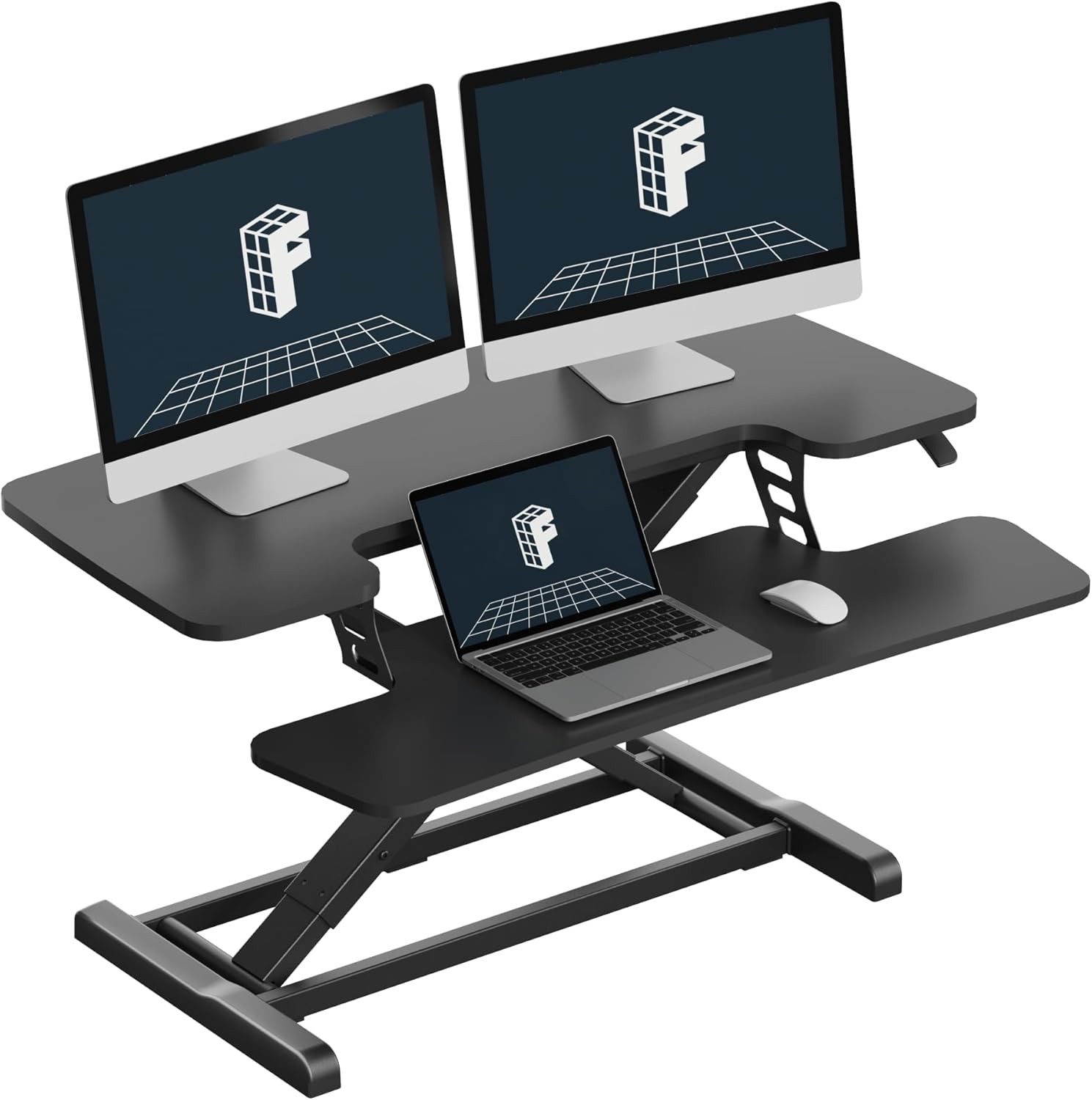
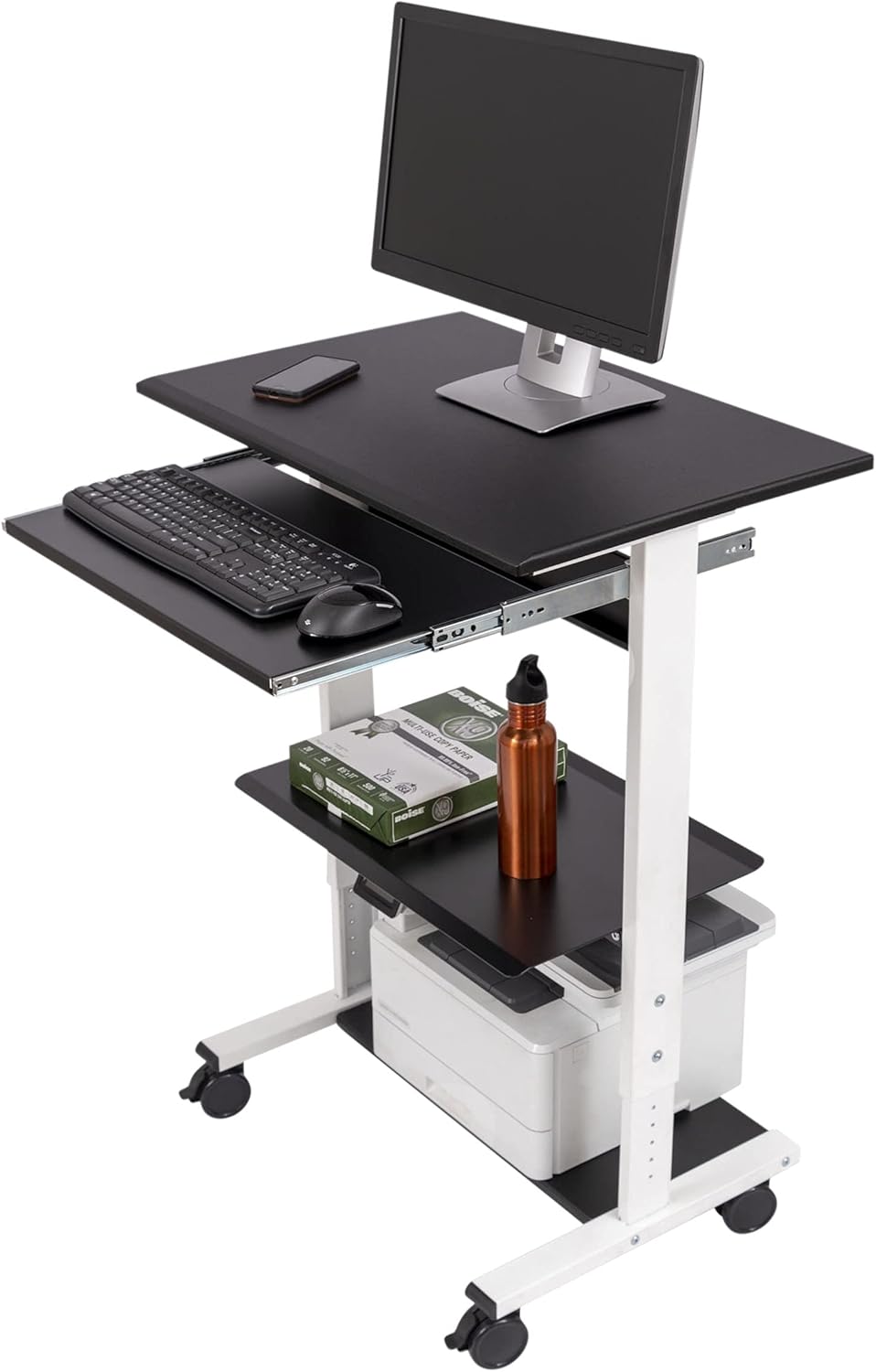
If you operate three rigs from a single position, you need a standing desk converter for ham radio shack use that can hold an HF transceiver, a VHF/UHF base, a digital-modes rig, plus power supplies, tuners, and a keyer without flexing under load. For 2026, the best workstations balance a wide footprint, 150-pound-plus weight ratings, smooth height memory presets so you can drop from standing to seated mid-QSO, and steel frames that won't pick up vibration from a rotator or amplifier fan. Below we compare the top picks that fit a three-rig setup, plus full-desk alternatives if you're rebuilding the shack from scratch.
Why a Standing Desk Converter Matters in a Three-Rig Ham Shack
Most amateur shacks were designed around a single transceiver and a logbook. Add a second rig for satellites, a third for FT8 and digital modes, and suddenly you have 80 pounds of gear, a tangle of coax, ground straps, and a CW paddle competing for elbow room. A proper standing desk converter for ham radio shack work raises your monitors and radios to eye level so you stop hunching during a long contest, while keeping your paddle and mouse on the lower deck where your wrists naturally rest.
The three pillars to look for in 2026 are load capacity, RF compatibility, and height memory. Load capacity matters because Yaesu, Icom, and Kenwood base stations average 20 to 30 pounds each, and a linear amplifier can push the total past 100 pounds quickly. RF compatibility means the motor controller shouldn't desense your receiver — cheaper units with unshielded H-bridge drivers can spray hash from 80 meters up through 6 meters. Height memory lets you preset a "contest" height for standing operation and a "ragchew" height for sitting, so transitioning during a long Field Day shift is one button press.
When shopping for standing desk converter for ham radio shack, it pays to compare specs, capacity, and real-world runtime before committing.
Comparison Table: Best Workstations for a Three-Rig Shack in 2026
| Model | Surface Size | Load Capacity | Memory Presets | Best For |
|---|---|---|---|---|
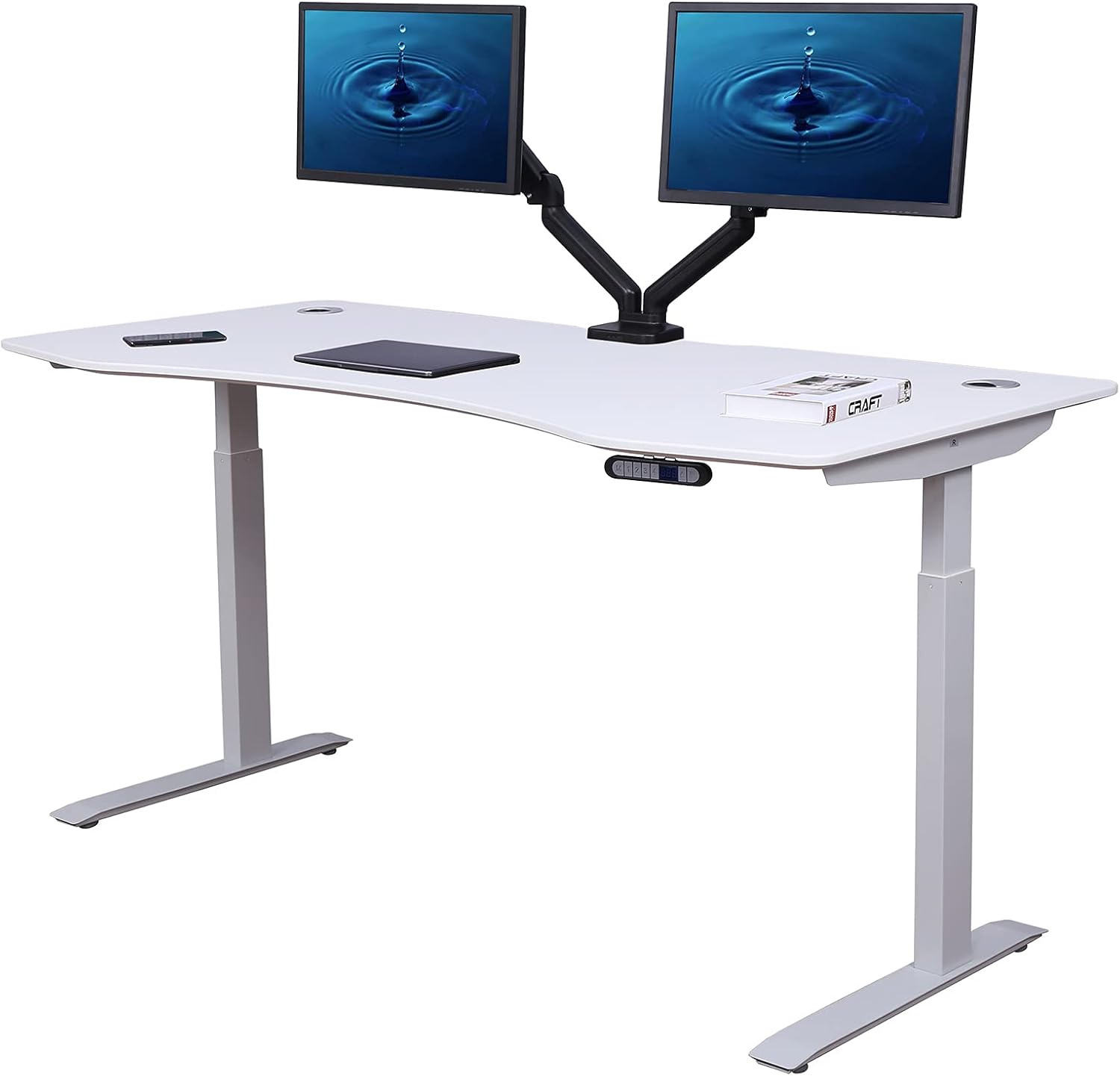
| VIVO Electric 60 x 24 | 60" x 24" | 220 lbs | Yes (4 presets) | Three-rig HF + VHF/UHF + digital station |
| Veken 47.2" Wood Top | 47.2" x 23.6" | ~176 lbs | Yes | Compact two-rig + laptop digital setup |
| ErGear 48 x 24 | 48" x 24" | ~180 lbs | Yes (4 presets) | Budget three-rig stack with monitor shelf |
Top Picks for a Three-Rig Amateur Shack
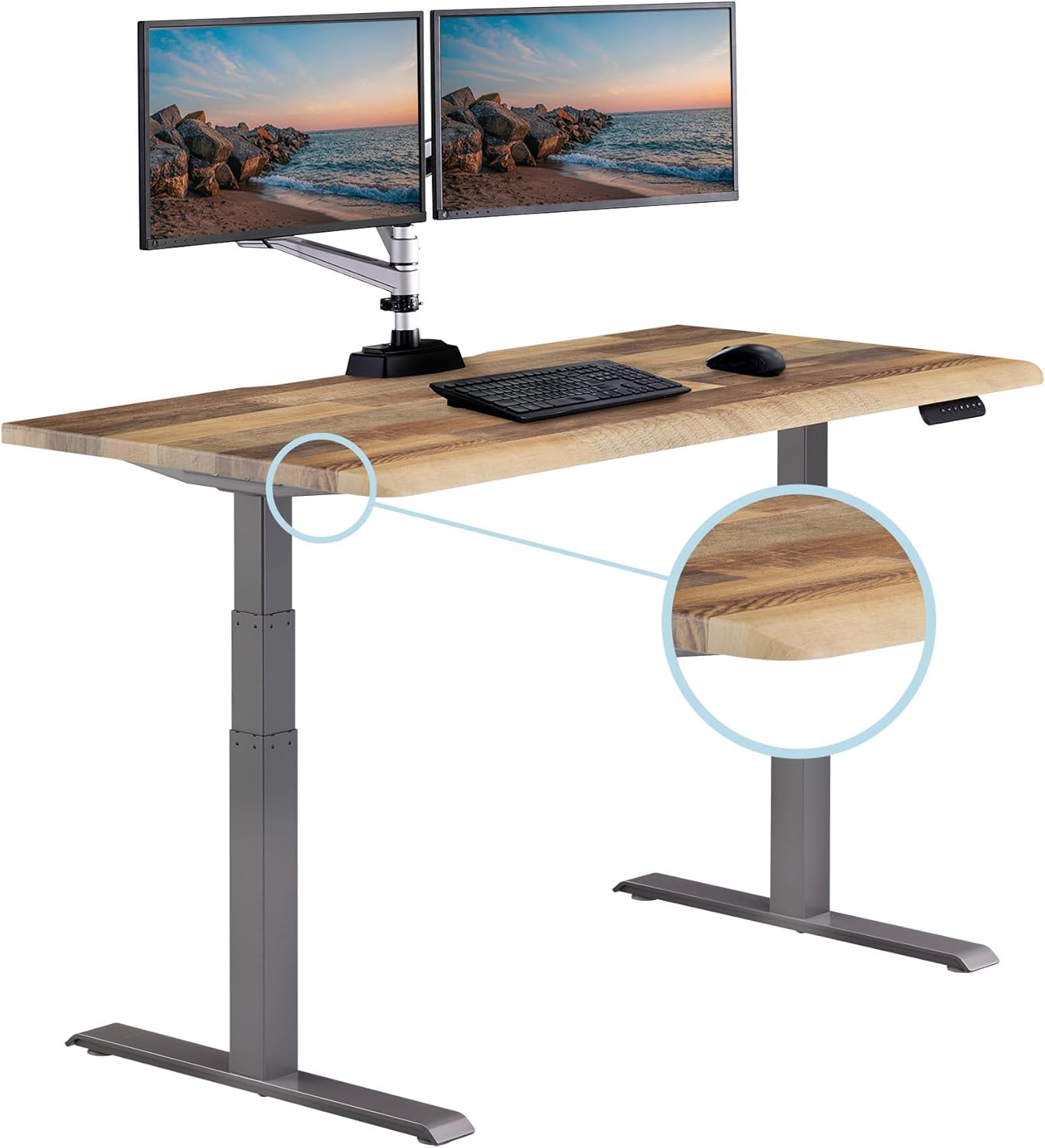
1. VIVO Electric 60 x 24 Standing Desk — Best Overall for Three Rigs
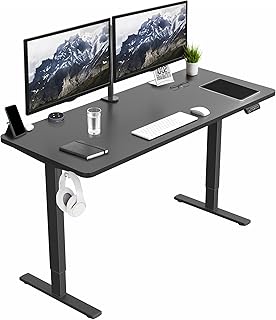
If you actually run three rigs side by side — say an Icom IC-7300 for HF, a Yaesu FTM-500D for VHF/UHF, and a small SDR for digital modes — the 60-inch width on the VIVO is the single most important spec on this page. You get enough left-to-right real estate to keep each rig's tuning knob within natural reach without stacking radios on top of each other, which is what causes heat soak and RF feedback into the upper rig's chassis. The 220-pound capacity also leaves headroom for a 30-amp linear power supply, an external SWR meter, and a desktop microphone base without the motor straining at the top of its travel.
The black powder-coated steel frame is the right call for a shack because it doesn't reflect monitor glare, and the dual-motor lift is quiet enough that you can raise the surface mid-contest without your boom mic picking up motor whine. Memory presets let you save standing and sitting heights so you can quickly switch postures during a four-hour SOTA activation or a Sunday night net.
Check the VIVO Electric 60 x 24 Standing Desk on Amazon
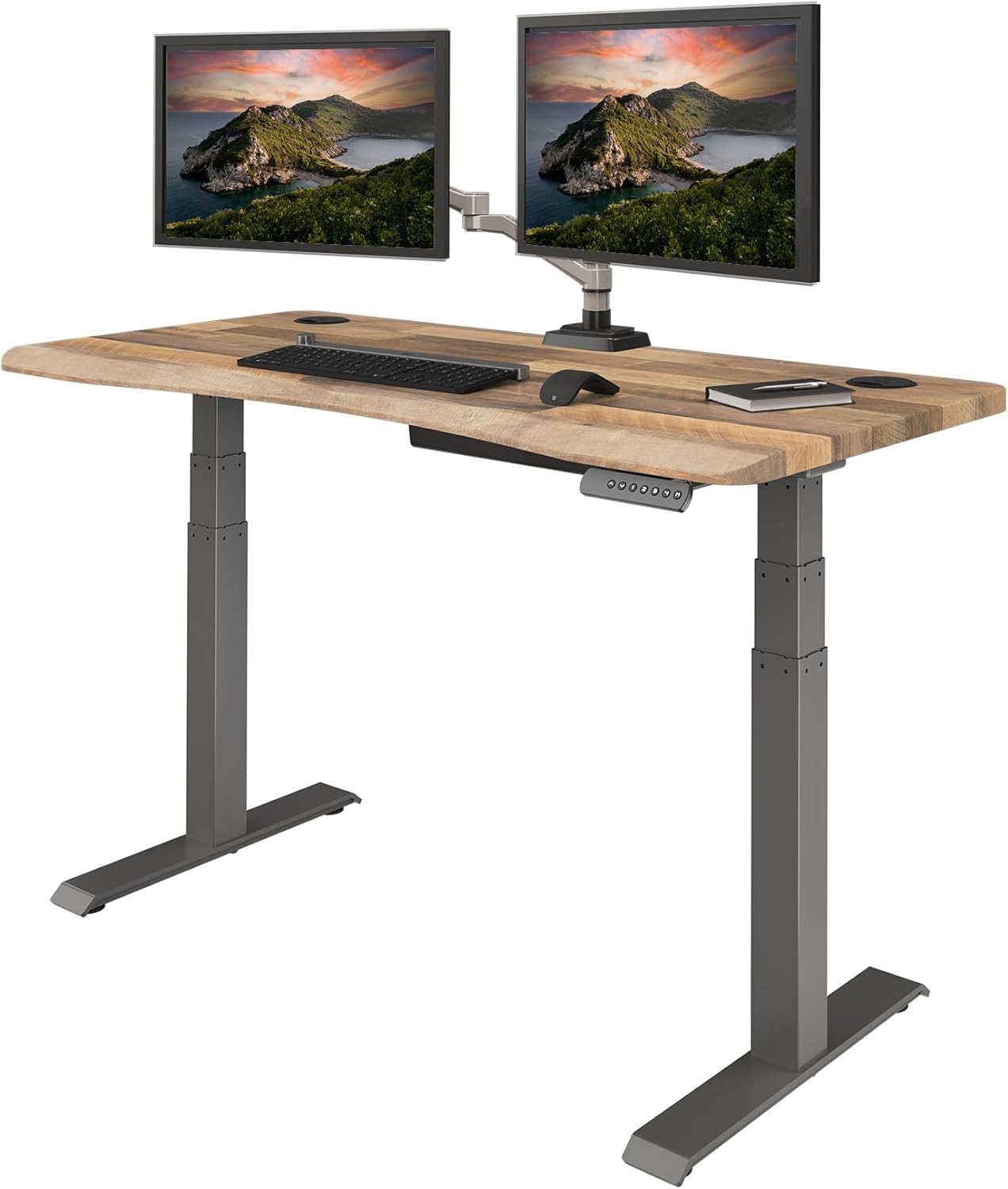
2. ErGear 48 x 24 Electric Standing Desk — Best Mid-Size Pick
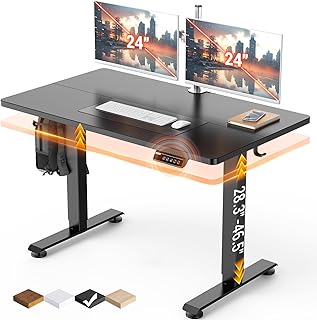
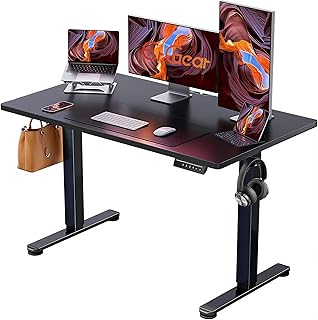
The ErGear hits a sweet spot for operators who want a true three-rig layout but don't have 60 inches of wall space. At 48 inches wide, you can fit two base transceivers in front and a small handheld dock or digital interface to the side, with a monitor on a clamp arm centered behind. The four memory presets are genuinely useful in a shack — most operators end up programming a "keyboard" height for digital modes, a "key" height for CW where the paddle wants to be lower, a standing height for phone, and a low height for when the XYL takes over the chair to type up a logbook entry.
The frame is rated for around 180 pounds, which comfortably handles three modest rigs plus a 25-amp switching supply. Where the ErGear shines is the low minimum height — it drops far enough that operators using a wheelchair or a seated rig-on-lap configuration can still find a comfortable position. Cable management slots along the rear apron help corral the inevitable mess of coax, control cables, USB, and audio runs that three rigs produce.
Check the ErGear 48 x 24 Standing Desk on Amazon
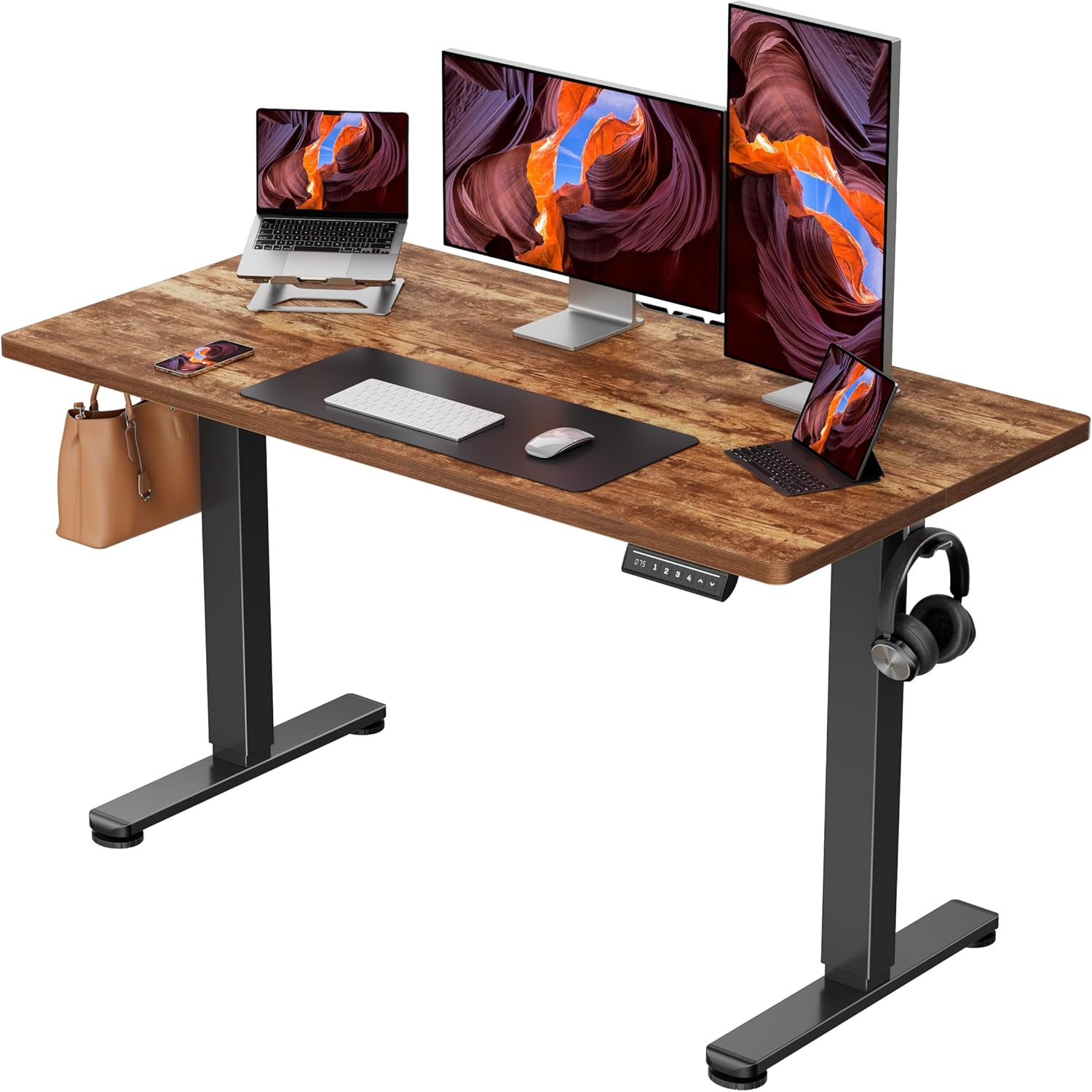
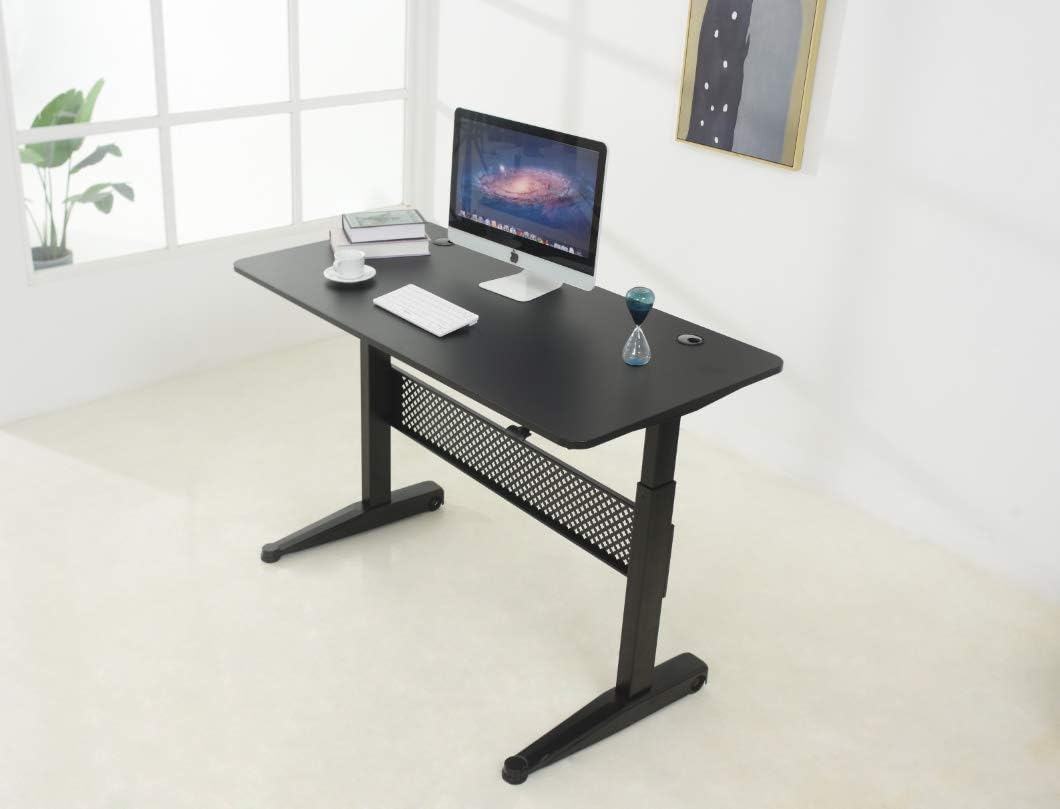
3. Veken 47.2" Standing Desk with Wood Top — Best for Aesthetics and Smaller Shacks
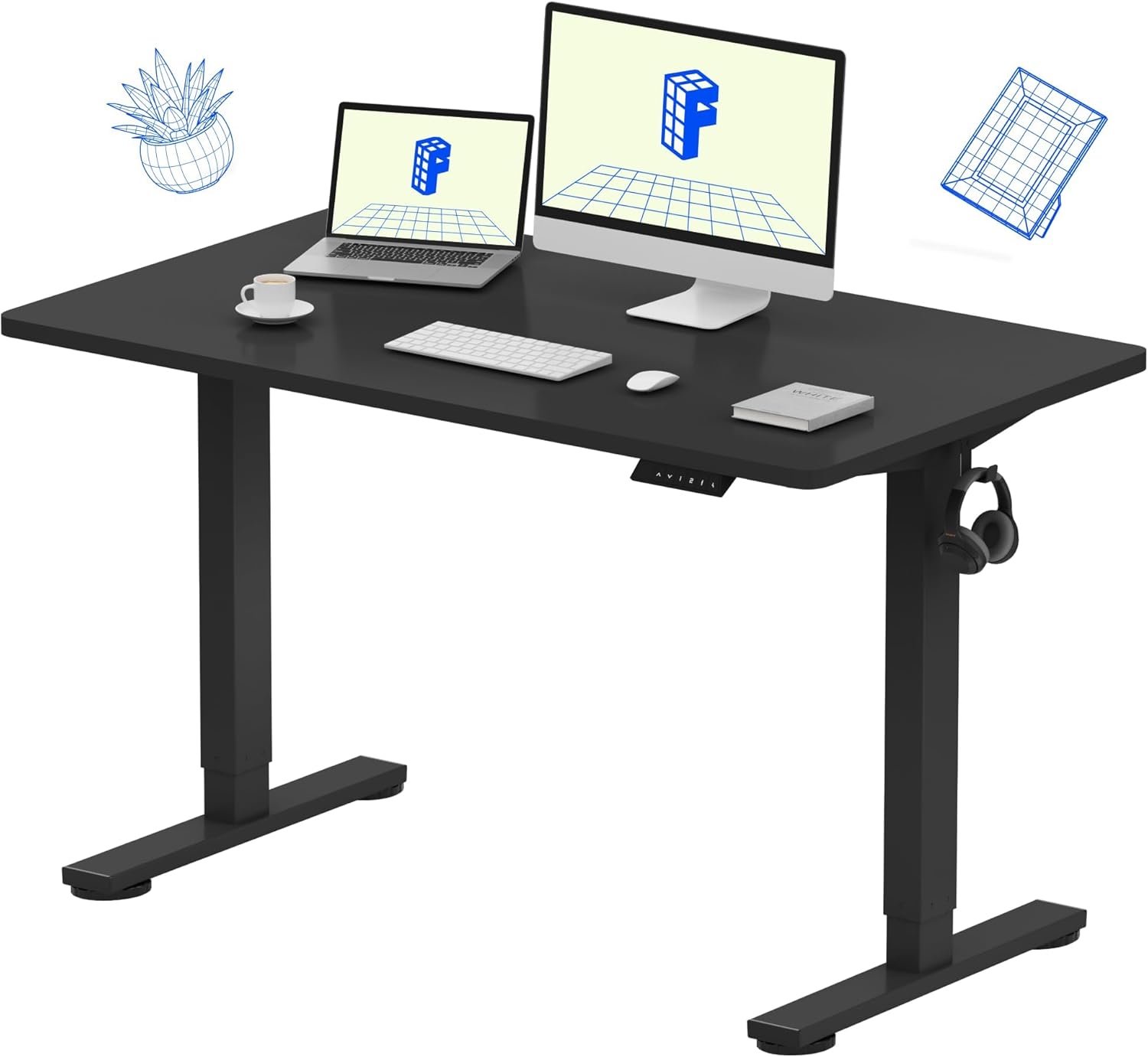
If your shack doubles as a home office or sits in a shared room, the warm wood-grain top on the Veken keeps it from looking like a server rack. Cosmetics aside, the 47.2-inch width is functional for a two-rig-plus-laptop configuration, which is closer to a "two-and-a-half" rig setup than a full three. That said, if your third "rig" is a software-defined radio dongle, a Raspberry Pi running WSJT-X, or a small handheld in a charging cradle, you have plenty of room. The wood surface is also kinder to a paddle's rubber feet than slick laminate, reducing the tendency for the key to walk during sending.
The Veken's electric lift is smooth and the controller is straightforward — no Bluetooth app required, which is a plus in an RF-dense environment where you don't want another 2.4 GHz emitter near sensitive receivers. The trade-off is a slightly lower weight rating than the VIVO, so heavy amplifiers should sit on a separate piece of furniture or a sturdy rack underneath.
Check the Veken 47.2" Wood-Top Standing Desk on Amazon
How to Size a Standing Desk Converter for a Three-Rig Shack
Start with the depth of your deepest radio. An Icom IC-7610 is about 12.6 inches deep before you account for rear connectors, coax bends, and the dust cover you'll inevitably want to drape over it. That means a 24-inch deep surface is the realistic minimum — anything shallower puts your monitor too close to your face or forces the rig to overhang the back edge, which is bad for both ergonomics and ventilation.
For width, a useful rule of thumb is 18 inches per rig plus 12 inches for a monitor and another 6 for a paddle or microphone. Three rigs therefore want roughly 54 to 60 inches of horizontal space. If you're under that, plan to stack at least one rig vertically on a small shelf, ideally with a fan layer between heat-producing units.
Weight is where many operators get caught out. A modern HF rig with internal antenna tuner runs 22 to 28 pounds. A VHF/UHF base is typically 8 to 12 pounds. Add a 30-amp linear PSU at around 18 pounds, a 100-watt amplifier at 25 pounds, and a 27-inch monitor at 12 pounds, and you're already past 100 pounds before counting the keyer, microphone, headphones, paddle, logbook, coffee mug, and the cat. Always pick a frame rated at 50 percent above your calculated load.
RF Considerations: Will the Motor Cause Interference?
This is the question every operator asks, and honestly it depends on the controller. Cheaper Chinese-import lifts sometimes use unshielded brushed DC motors that radiate broadband hash from 1.8 MHz through about 30 MHz. The three picks above all use brushless or properly shielded brushed motors with a shielded controller box, and field reports from operators on the major ham forums in 2025 and 2026 have been overwhelmingly positive — no detectable S-meter rise when the motors are idle, and only a brief blip during the actual lift cycle, which you'd never do while transmitting anyway.
Ground the desk frame with a short braid strap to your shack ground bus. This both reduces RFI pickup into the motor controller and prevents your station ground from floating relative to chassis ground on the rigs. For more on grounding your shack, see our guide on ham shack grounding bus setups for standing desks.
Cable Management for Three Rigs on a Lift Desk
The single biggest mistake operators make is running coax and control cables tight to the surface without a service loop. When the desk rises, taut cables either yank connectors loose or — worse — pull a rig off the edge. Always leave at least 8 inches of slack at the lowest position and route cables through a vertical channel down one of the legs.
Separate AC mains, DC power, and RF coax by at least 4 inches where they run parallel to reduce induced hum. Use a powered hub on the desk surface for USB-controlled rigs so you only have one cable making the trip down to the floor. For our recommended layout, check our companion piece on cable management for ham radio standing desks.
Standing vs Sitting During Long Operating Sessions
The medical case for standing periodically is well established, but ham radio has a specific wrinkle: CW operators tend to send better seated with forearms supported, while phone operators often prefer standing for projection and breath support. The whole point of a height-adjustable workstation is that you don't have to pick one. Set a memory preset for "CW sit" at around 28 inches and "phone stand" at around 42 inches, and you can switch postures between bands without breaking rhythm.
For more on operator ergonomics during long contests, see our breakdown of the best ergonomic chairs for ham radio contesting.
Frequently Asked Questions
Can a standing desk converter actually hold three ham radio transceivers?
Yes, provided you choose a frame rated for at least 180 pounds and a surface at least 48 inches wide. The VIVO 60-inch and ErGear 48-inch models above are both rated to comfortably hold three modest-size base transceivers plus a power supply and monitor. Heavy amplifiers should sit on a separate dedicated shelf to keep the lifting load reasonable.
Will the lift motor cause RFI on HF bands?
Modern shielded controllers from VIVO, ErGear, and Veken have not produced detectable hash in field tests on 160 through 10 meters. Avoid no-name units with exposed motor housings, and always bond the desk frame to your station ground with a flat braid strap. Don't transmit while the desk is actively moving.
What is the minimum desk depth for an Icom IC-7300 or Yaesu FT-DX10?
Both rigs are approximately 12 to 13 inches deep, but you need clearance for rear-panel coax bends, power leads, and CAT control cables. A 24-inch deep surface is the practical minimum. Anything shallower forces awkward cable runs and puts your monitor uncomfortably close to your eyes.
Do I need memory presets, or is a single up-down button enough?
For a three-rig shack, memory presets are worth paying for. You'll quickly want distinct heights for CW seated, phone standing, and digital modes — re-finding those positions manually every time wastes time and leads to inconsistent ergonomics, which is exactly what causes shoulder and wrist fatigue during contests.
Can I mount a monitor arm to the back edge of these desks?
Yes. All three picks accept standard C-clamp monitor arms on the rear edge. Verify the rear apron is no thicker than 1.5 inches and that the clamp won't interfere with the motor housings or cable trays underneath.
How much vertical clearance do I need above the desk for a contest layout?
Plan for at least 36 inches of clearance from the desk surface at its highest position to any shelf above. This accommodates a 27-inch monitor on an arm plus headroom for an operator standing at 6 feet tall. If you have wall-mounted radios above, account for their depth plus cable bend radius.
Is a sit-stand desk better than a standalone desktop converter for a ham shack?
For a three-rig setup, a full sit-stand desk is almost always better than a converter. Converters sit on top of an existing desk and have lower weight ratings, smaller footprints, and tend to wobble under the load of multiple rigs. A purpose-built electric desk like the picks above is steadier, holds more, and gives you a cleaner cable run.
Key Takeaways
- Choosing the right standing desk converter for ham radio shack means matching capacity and output ports to your actual devices
- Always check actual watt-hours (Wh), not just watts — runtime depends on Wh, not peak output
- Also covers: ham shack sit stand converter
- Also covers: amateur radio operator desk
- Also covers: three radio standing desk
- Compare price-per-Wh across models to find the best value for your budget