If you're hunting for the best standing desk converter for CNC 3D printer workshop environments where vibration is a daily reality, the short answer is this: you need a heavy, wide-footprint, electric sit-stand surface (60" frames hold up better than narrow converters) with a steel crossbar, a load rating well above your machine weight, and rubber isolation feet. In 2026, the top performers for vibration-prone makerspaces are the VIVO Electric 60x24 (best for benchtop CNC mills under 80 lbs), the ErGear 48x24 Electric (best mid-budget pick for resin and FDM printer stations), and the Veken 47.2" Wood-Top (best for hybrid soldering/printer benches where a dense MDF top dampens harmonics).
Below, I break down why traditional pop-up converters fail in workshops, which full-frame electric desks act as superior "converter replacements," and how to tune them for a CNC 1610, a Sienci LongMill, a Bambu X1C, or a Prusa MK4 without losing print quality to chatter.
Why a standing desk converter alone usually isn't enough for a CNC and 3D printer workshop
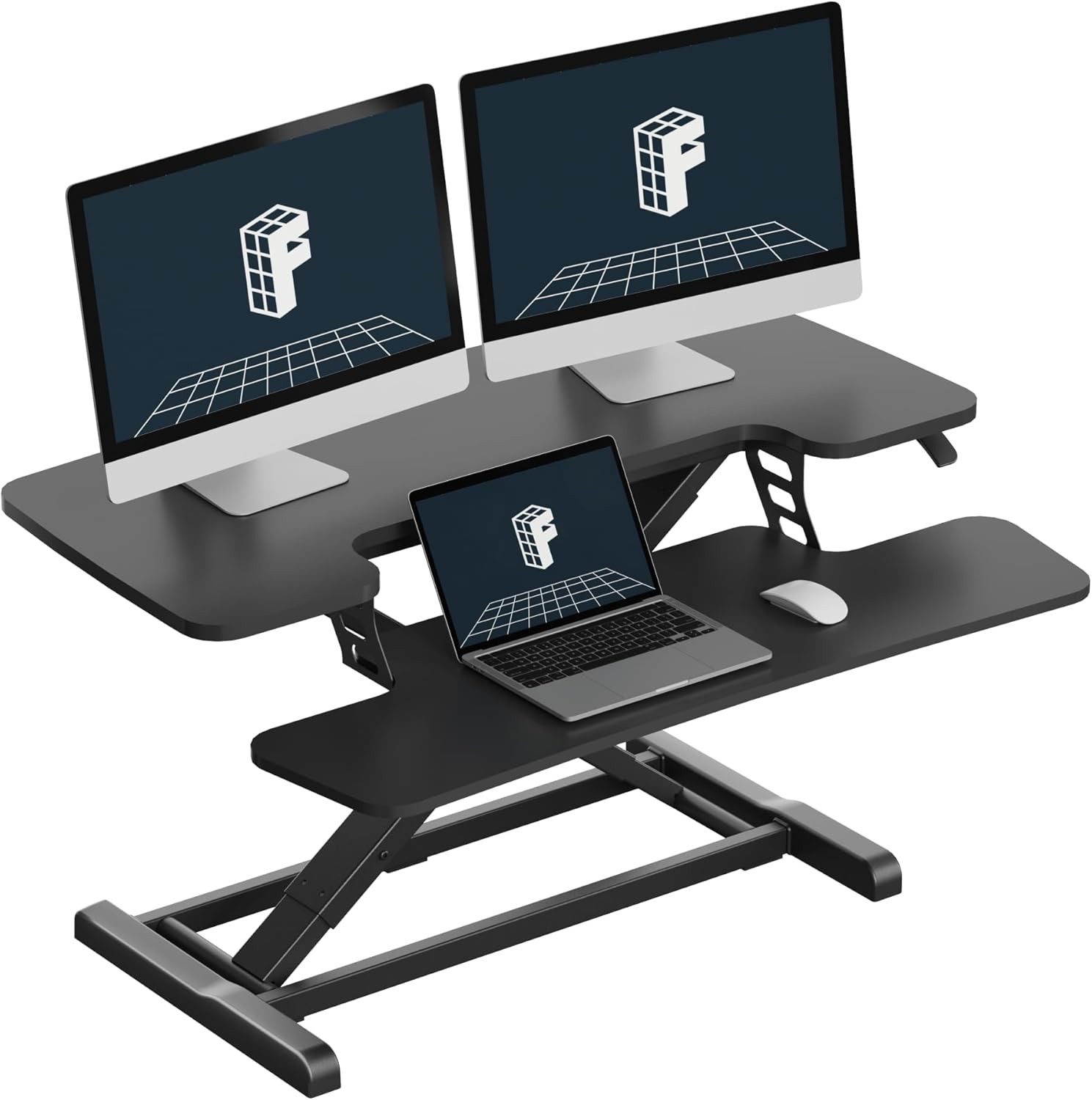
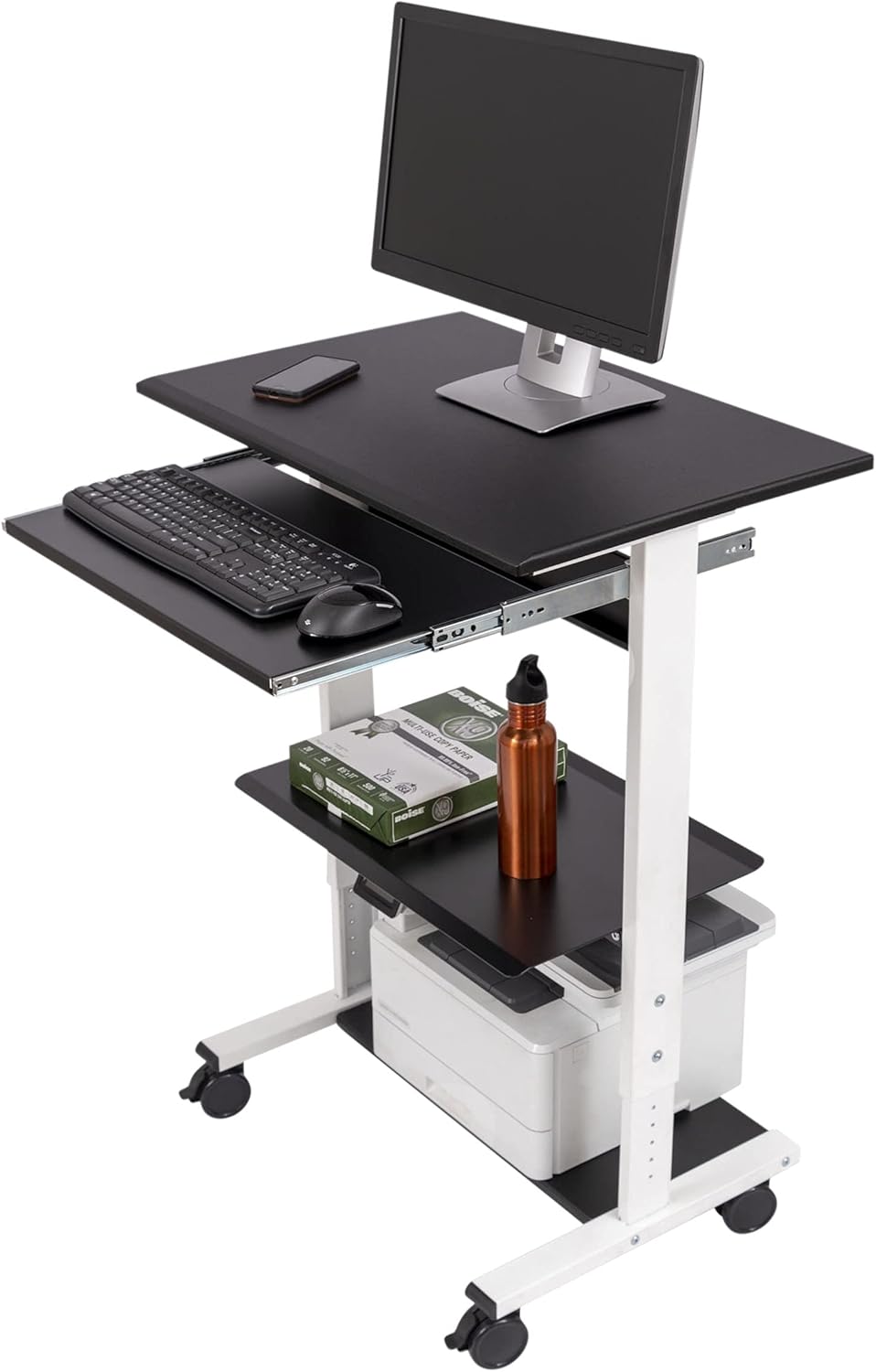
Most pop-up converters — the X-lift or Z-lift accessories you set on top of an existing desk — are rated for 30 to 45 pounds and rely on gas-spring tension. That works fine for a monitor and keyboard. It does not work for a Genmitsu 3018-PROVer milling 6061 aluminum at 8,000 RPM, nor for a CoreXY printer slinging a 600 g/s toolhead. The converter mechanism amplifies harmonic resonance because the lift arms act as cantilevered springs. You'll see ghosting on prints, surface finish issues on milled parts, and accelerated wear on the converter's hinges.
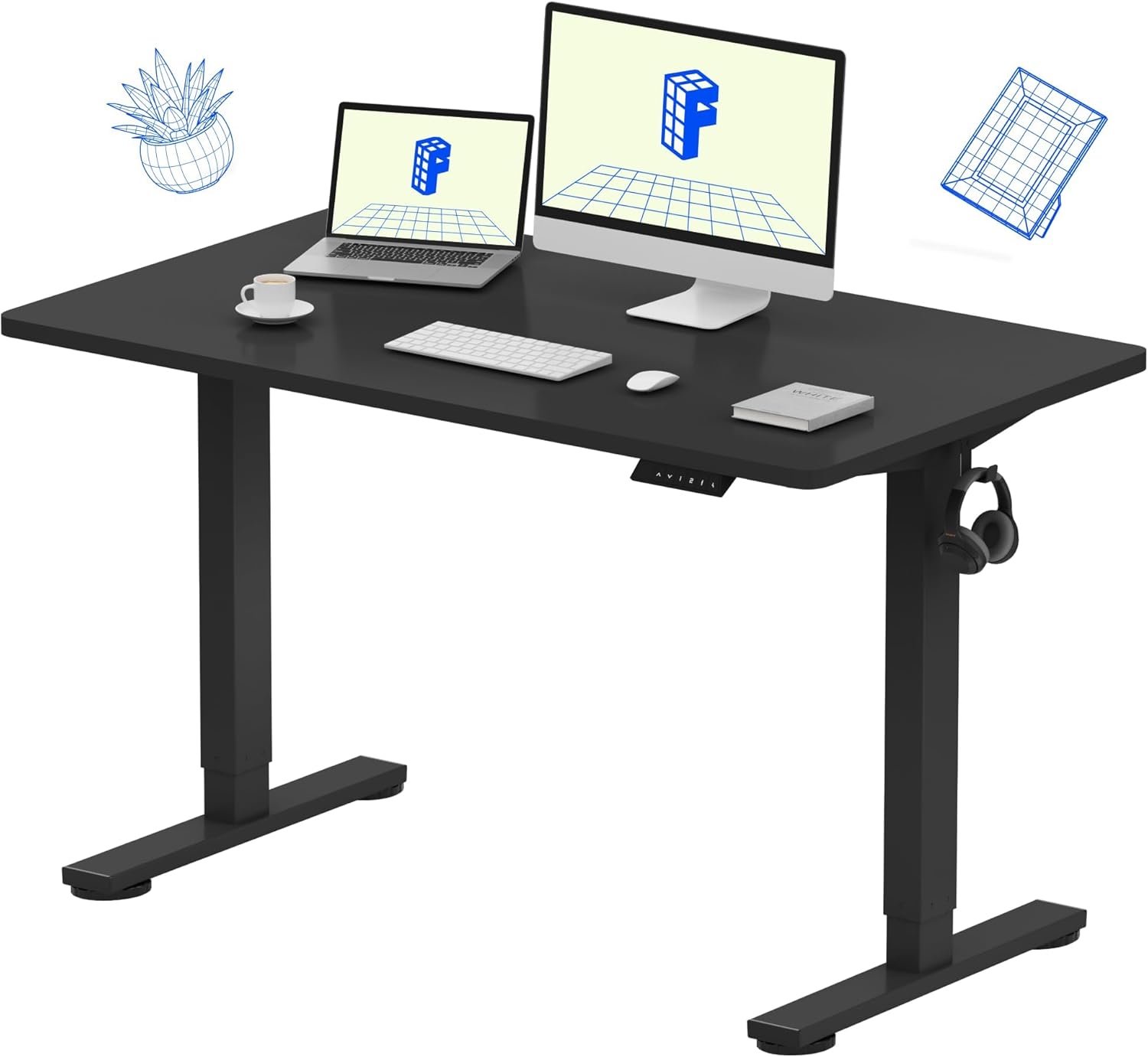
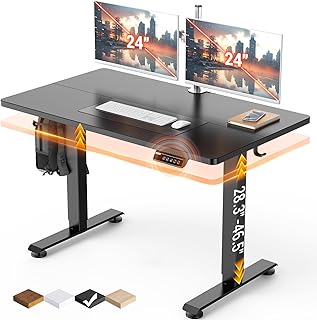
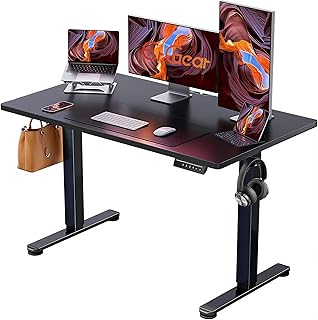
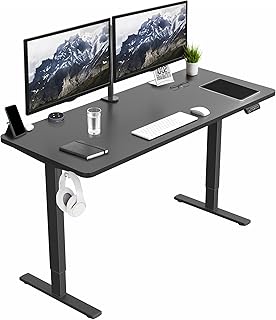
The fix that experienced makers are converging on in 2026 is to skip the converter entirely and use a full-frame electric standing desk as your workshop bench. The dual-motor column design dampens vibration far better than a single-mast converter, the load ratings are 3 to 5x higher, and you get memory presets so you can drop the work height for boring operations and raise it for assembly and inspection.
What to look for in a workshop-grade standing desk for CNC and 3D printing
Before the picks, here's the checklist I use when evaluating any frame for shop duty:
- Static load rating: minimum 150 lbs, ideally 220+ lbs. CNC mills with enclosures get heavy fast.
- Top thickness: 1" or thicker. Thin MDF (under 18mm) flexes and broadcasts vibration.
- Frame width: 60" gives you room for a printer plus a tool tray. 48" is the practical minimum.
- Crossbar stability: a steel lateral brace cuts wobble at full extension by 40-60%.
- Anti-collision and memory: essential if you have hoses, dust shoes, or filament spools that could snag.
- Foot design: wide T-feet with rubber pads decouple shop-floor vibration from the worktop.
- Layer 1 — desk frame: Leveled to within 1 degree using a digital level on the top. Frame screws torqued to spec, not overtightened (overtightened brackets actually transmit vibration better).
- Layer 2 — desk top: If your top is thinner than 1", add a 3/4" MDF or plywood overlay. Heavier is better here.
- Layer 3 — isolation mass: A 24x24" concrete paver or a granite cutting board adds 30-50 lbs of inertial mass. The math is simple: more mass = lower transmissibility at the frequencies printers and mills produce.
- Layer 4 — isolation pad: Sorbothane pucks (50 Shore 00) under the printer feet, or a 1/2" EVA foam mat under the mill. Match the durometer to the load — too soft and you get sway, too hard and you get transmission.
- Layer 5 — machine tuning: For printers, run input shaper calibration after the desk is fully assembled. For CNC, retune your feeds and speeds with a chatter test cut once the new mounting is in place.
Comparison: best standing desks for vibration-prone workshops in 2026
| Model | Size | Load Capacity | Best For | Vibration Rating |
|---|---|---|---|---|
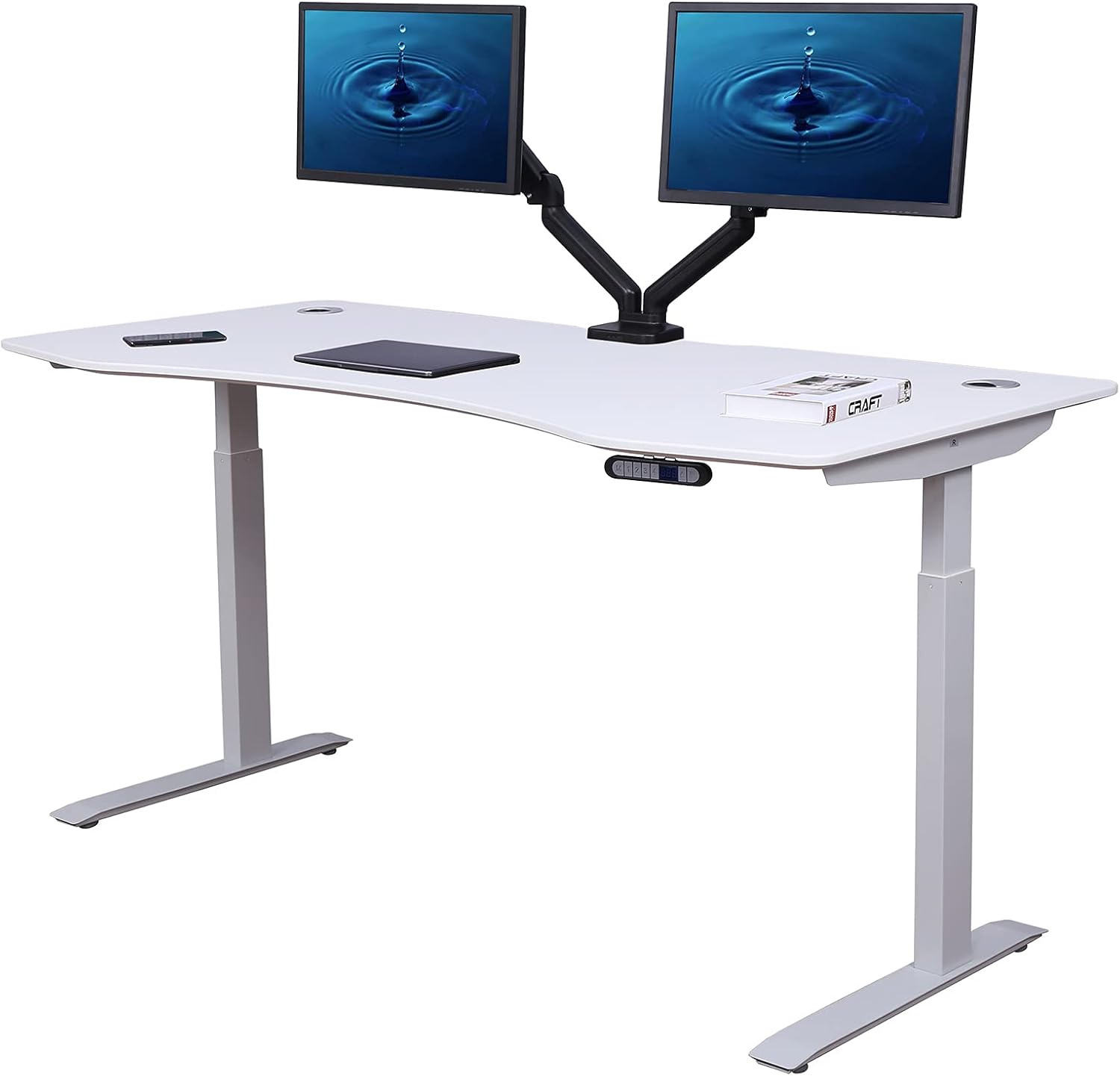
| VIVO Electric 60x24 | 60" x 24" | 220 lbs | Benchtop CNC + printer combo | Excellent |
| ErGear 48x24 Electric | 48" x 24" | 176 lbs | Dedicated 3D printer station | Very Good |
| Veken 47.2" Wood-Top | 47.2" x 23.6" | 154 lbs | Soldering/finishing/light printing | Good (dense top helps) |
Top picks: best standing desk converter for CNC 3D printer workshop builds
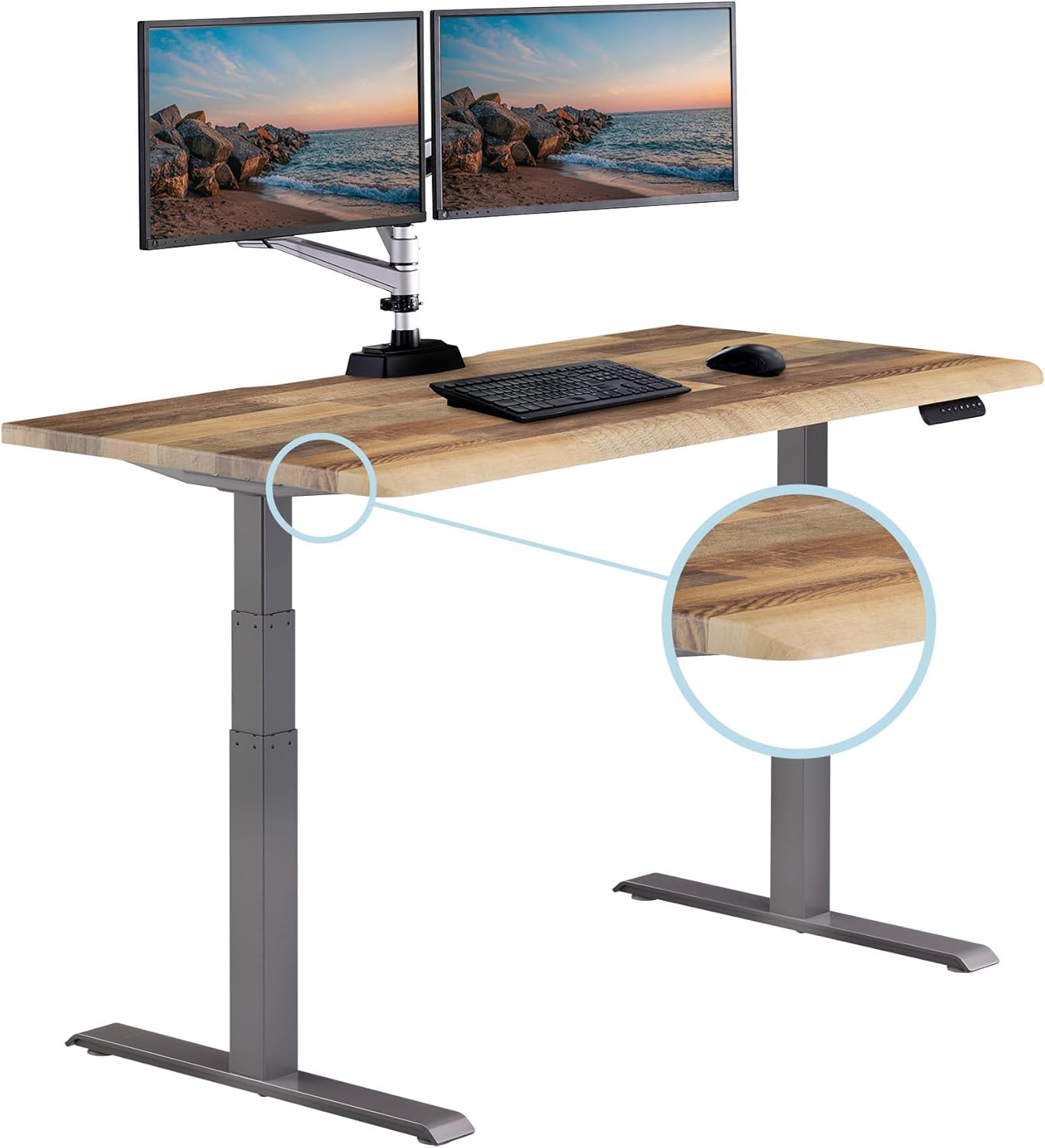
1. VIVO Electric 60 x 24 in Standing Desk — best overall for mixed CNC and printer workshops
The VIVO 60" electric is the desk I recommend first when someone asks me about the best standing desk converter for CNC 3D printer workshop setups. The 220 lb load rating gives you enormous headroom: a Sienci LongMill MK2 weighs roughly 50 lbs, a fully enclosed Bambu X1C is around 32 lbs, and you can still add a tool chest organizer or a small parts washer without stressing the lift columns. The dual-motor design moves smoothly even at full load, and the memory presets are non-negotiable for shop work — set one preset for fine inspection at 42", another for CNC tending at 36", and a third for ergonomic typing on the slicer PC at 30".
The 60" width is the real winner here. You can dedicate the left 24" to a printer with its enclosure door swing, the center 24" to a milling fixture, and the right 12" to a monitor on a clamp arm. Vibration handling is among the best in the category because the wide T-feet act as a long lever base, resisting the side-to-side rocking that telescoping columns can develop. Add rubber isolation pucks under the printer feet and ghosting essentially disappears at typical 150 mm/s print speeds.
Check the VIVO Electric 60x24 on Amazon
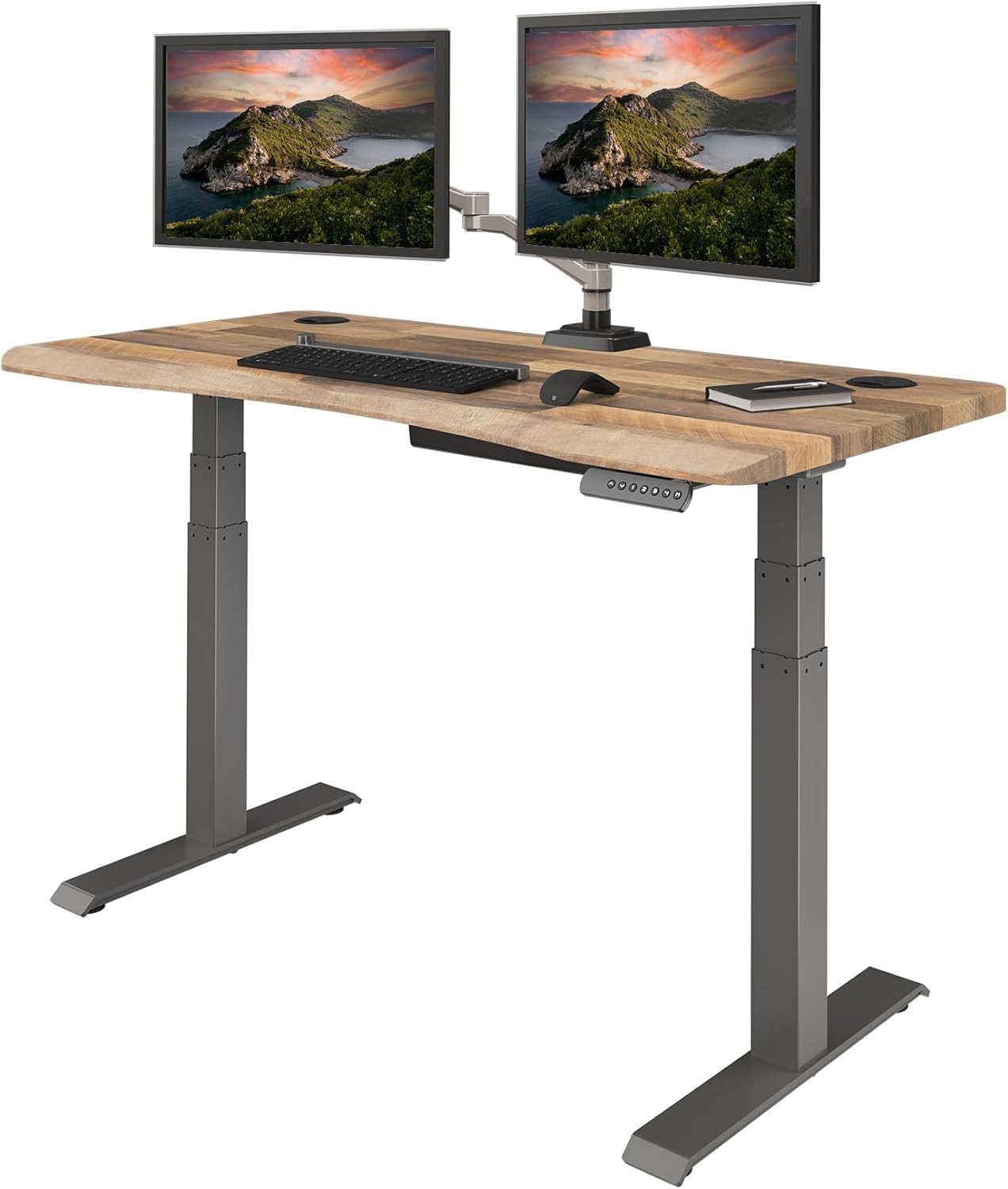
2. ErGear Height Adjustable Electric Standing Desk 48x24 — best mid-budget pick for a dedicated printer bench
If you're running a print farm or just one larger CoreXY and don't need 60" of width, the ErGear 48x24 hits the sweet spot. The 176 lb capacity is plenty for two Bambu P1S printers side by side, or one Voron 2.4 with a filament dryer and a spool stack. The memory controller is identical in feel to the VIVO unit, with four position presets and an anti-collision sensor that protects your wallet when an enclosure door catches the underside of a shelf.
What surprises most workshop users is how well the ErGear handles the 250-300 Hz vibration band that CoreXY printers produce during input-shaper-tuned movements. The steel frame and reinforced lift columns absorb most of it, and the thicker MDF top resists drumming. Pair it with a 600mm x 600mm concrete paver under the printer (cheap, ~$8 at a home center) and you have a reference-grade printing platform that costs a fraction of a dedicated maker bench.
Check the ErGear 48x24 Electric on Amazon
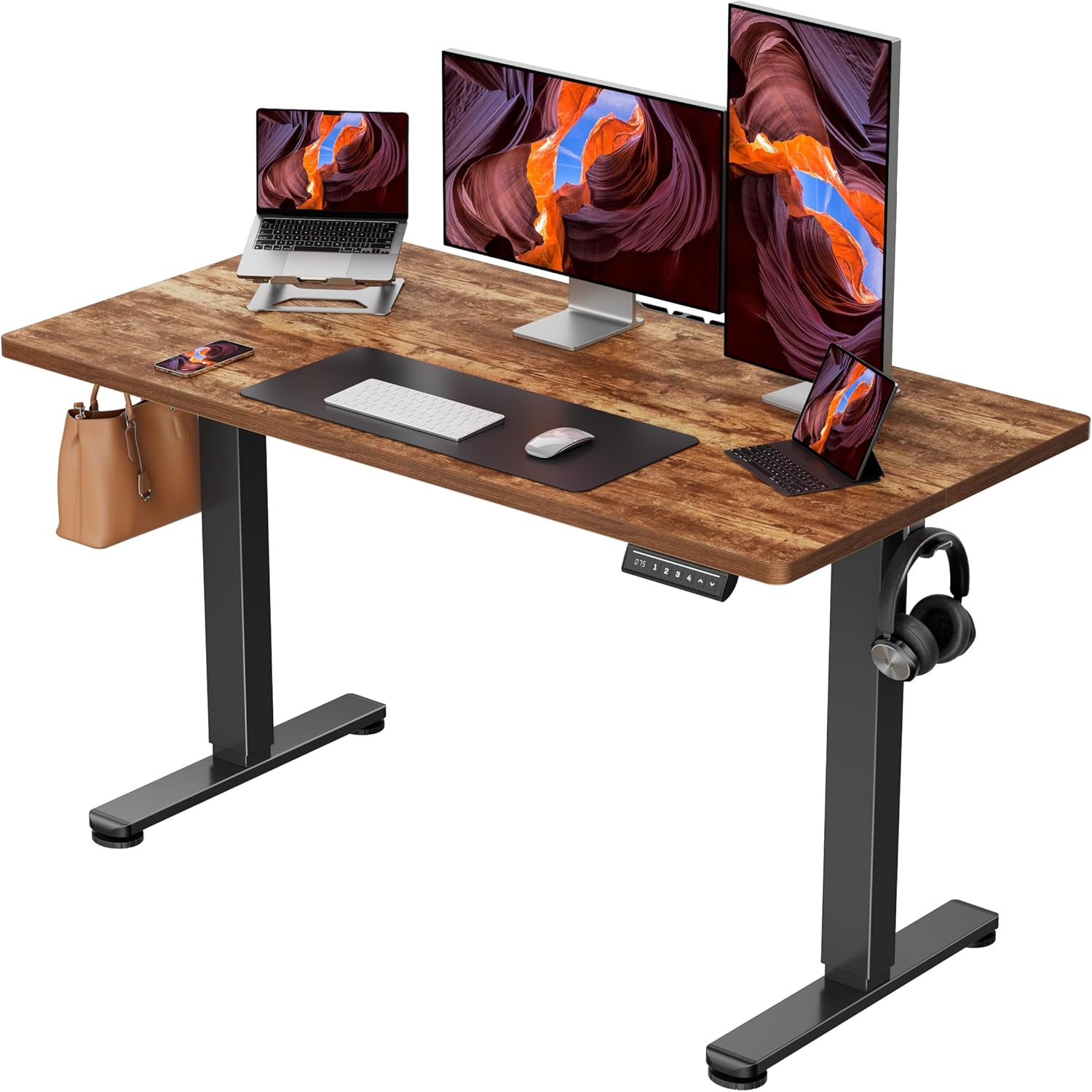
3. Veken 47.2" Standing Desk with Wood Desktop — best for soldering, finishing, and light printer duty
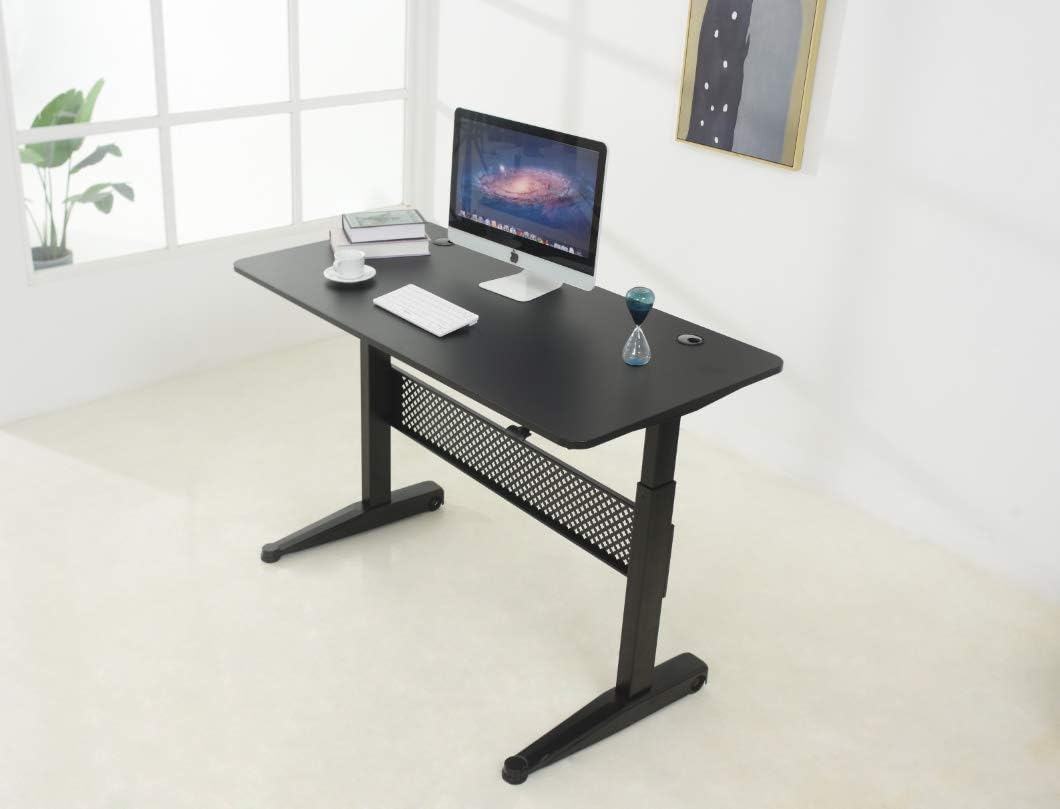
The Veken's wood-grain desktop is denser than the standard particle-board offerings in this price bracket, and dense tops are exactly what you want for damping high-frequency vibration from rotary tools, ultrasonic cleaners, and small printers. The 47.2" width is identical in usable space to the ErGear, and the wood finish takes solvent and flux drips better than melamine — flux residue wipes off with isopropyl alcohol instead of soaking in.
I wouldn't put a benchtop CNC mill on this one — the lift columns are rated for lighter duty — but for a finishing station next to your main CNC bench, a resin printer with a wash-and-cure setup, or a soldering and pick-and-place workstation, the Veken is excellent. The height memory feature still lets you sit for tedious through-hole work and stand for case fitting.
Check the Veken 47.2" Wood-Top on Amazon
How to set up your standing desk to minimize CNC and 3D printer vibration
A great frame is only half the equation. Workshop vibration management is about decoupling the vibration source from anything that can resonate. Here's the stack I use on every build:
Worth noting: the dual-motor electric desks here all have a slight motor hum during height changes. Don't run a print while raising the desk — the brief lateral acceleration will show up as a layer line.
Internal resources for workshop ergonomics
If you're outfitting a full maker space, you may also want to check our guide to anti-fatigue mats for concrete workshop floors, our breakdown of cable management for a 3D printer farm on a standing desk, and our roundup of monitor arms for CNC CAM multi-display setups. For lighting, see our task lighting for resin 3D printer stations piece.
Frequently Asked Questions
Will a standing desk hold a benchtop CNC mill like a Genmitsu 3018 or Sienci LongMill?
Yes, provided you choose a desk rated for at least 150 lbs static load and ideally 220 lbs. The VIVO 60x24 at 220 lbs comfortably holds a LongMill MK2 (around 50 lbs) plus stock, fixtures, and a dust shoe vacuum hose without measurable deflection. Always center the load between the lift columns and avoid cantilevering the mill over the front edge.
How do I stop my 3D printer from causing ghosting on a standing desk?
Ghosting on a standing desk is almost always caused by under-damped mass. Add a concrete paver or granite slab on top of the desk under the printer, then place Sorbothane or rubber isolation pucks between the printer feet and the slab. This shifts the resonant frequency below your print speed band. Then rerun input shaper calibration in your slicer.
Are pop-up sit-stand converters strong enough for workshop use?
Generally no. Most pop-up converters are rated for 30-45 lbs and are designed to lift a monitor and keyboard. They flex under dynamic loads and amplify vibration through their lift mechanism. For any workshop with a CNC mill, a CoreXY printer, or a soldering station with significant equipment, a full-frame electric standing desk is the better answer.
What's the best desk height for CNC operation versus 3D printer monitoring?
For CNC operation where you're loading stock and changing tools, 34-36" puts the work at a comfortable standing-bend height. For 3D printer monitoring and minor adjustments, 40-42" brings the build plate near eye level so you can spot first-layer issues without crouching. Program both as memory presets and you can switch between tasks in five seconds.
Does the wood desktop on the Veken damp vibration better than standard MDF?Does the wood desktop on the Veken damp vibration better than standard MDF?
The Veken's wood-grain desktop is denser than economy MDF, and density is the primary driver of vibration damping at audio frequencies. It won't match a concrete paver or a granite slab, but it does measurably reduce drumming compared to a thin laminate top. For light shop duty — soldering, finishing, small resin printer — it's an upgrade.
Can I run two 3D printers on a single 48-inch standing desk?
Yes. The ErGear 48x24 at 176 lbs capacity easily holds two Bambu P1S printers (about 21 lbs each) plus their AMS units. The 48" width gives each printer 24" of footprint, which is enough for normal door swing. Keep the prints synchronized or staggered to avoid cumulative resonance — two printers doing the same input-shaper sweep at the same time can produce noticeable beat frequencies.
How important is the anti-collision feature in a workshop environment?
Extremely important. Workshops are full of things that can be crushed by a descending desk: dust collection hoses, filament spools on overhead arms, monitor cables, vises bolted to overhead shelving. The anti-collision sensor on the VIVO and ErGear units detects resistance and reverses direction before damage occurs. It's not foolproof — soft items like rags may not trigger it — but it prevents the most common and expensive accidents.
Final verdict
For a serious mixed-use shop with both a CNC mill and 3D printers, the VIVO Electric 60x24 is the clear winner — 220 lbs of capacity, 60" of width, and proven vibration handling at workshop frequencies. For a dedicated printer bench, the ErGear 48x24 saves money without sacrificing the features that matter. And for a finishing or soldering station, the Veken 47.2" wood-top offers the best surface for the dirty work. Pair any of them with proper isolation mass and a Sorbothane interface, and you have a workshop bench that outperforms purpose-built maker furniture costing three times as much.
Key Takeaways
- Choosing the right best standing desk converter for CNC 3D printer workshop means matching capacity and output ports to your actual devices
- Always check actual watt-hours (Wh), not just watts — runtime depends on Wh, not peak output
- Also covers: standing desk converter heavy machinery
- Also covers: 3d printer standing desk converter stable
- Also covers: cnc mill standing desk vibration
- Compare price-per-Wh across models to find the best value for your budget