If you're a court reporter shopping for a standing desk converter for court reporters that actually accommodates a stenograph machine tray, you need three things: a tray or lower keyboard shelf that drops to roughly 24-26 inches off the floor (stenotype writing height), a stable lift mechanism that won't wobble when your fingers fly at 225+ words per minute, and enough depth to hold both your writer and a laptop running CAT software like Eclipse or Case CATalyst. Most generic converters fail court reporters because the keyboard tray sits too high or the tray depth is too shallow for a Luminex or Wave writer. Below, we break down what to look for, why a full electric sit-stand desk often beats a converter for steno work, and the best 2026 picks that genuinely fit a stenograph machine tray setup.
Why Most Standing Desk Converters Fail Court Reporters
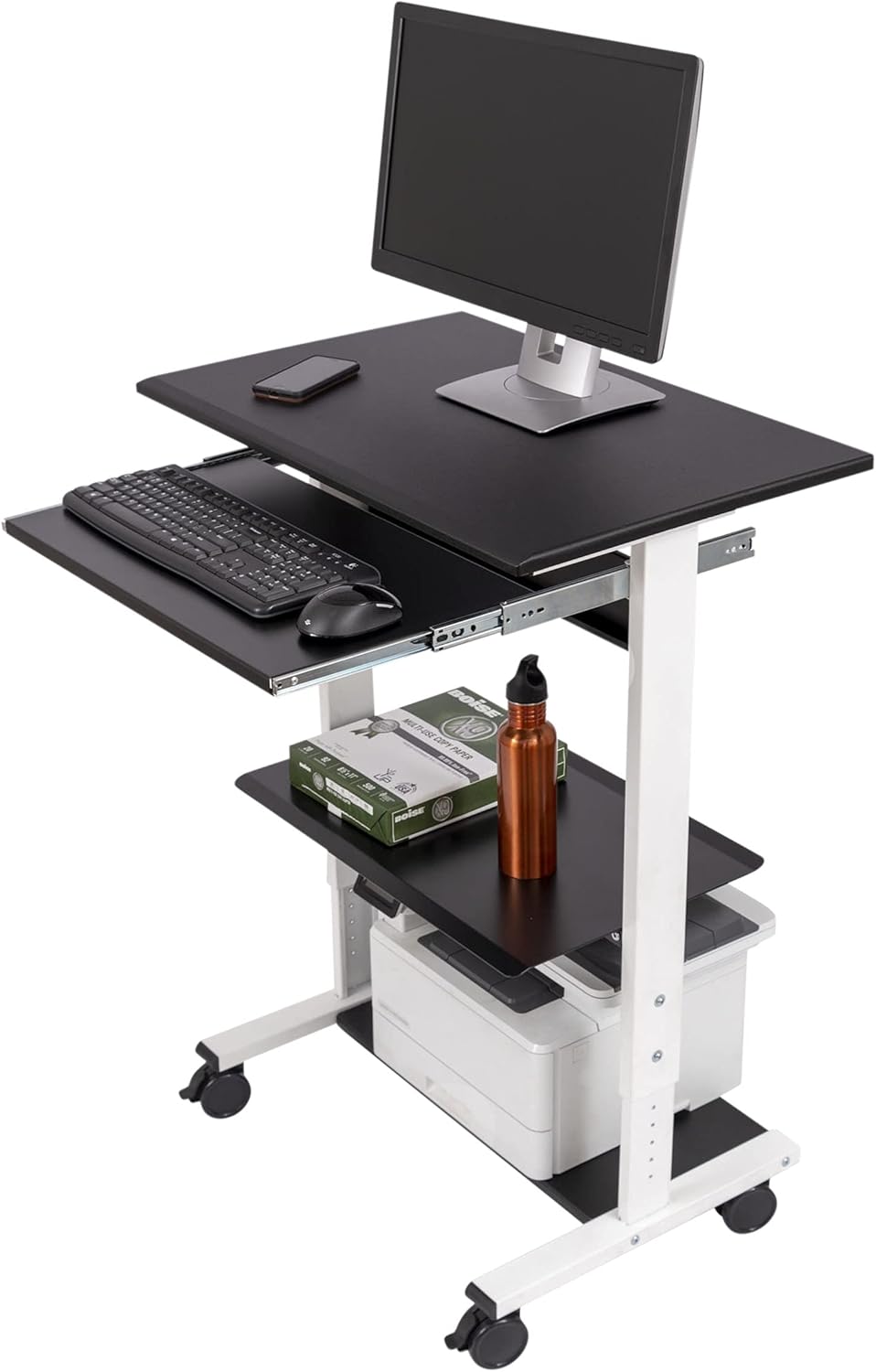
The typical Z-lift or X-lift converter is engineered for laptops and external keyboards at roughly 28-30 inches when seated. A stenograph machine, however, sits on a tripod or tray at 22-26 inches because the wrists must remain neutral over a contoured 22-key bank. If you drop a Stenograph Luminex II or Stentura onto a standard converter keyboard tray, the writer either tilts forward, slides during transcription, or forces your shoulders into a shrugged position that triggers cubital tunnel within a week.
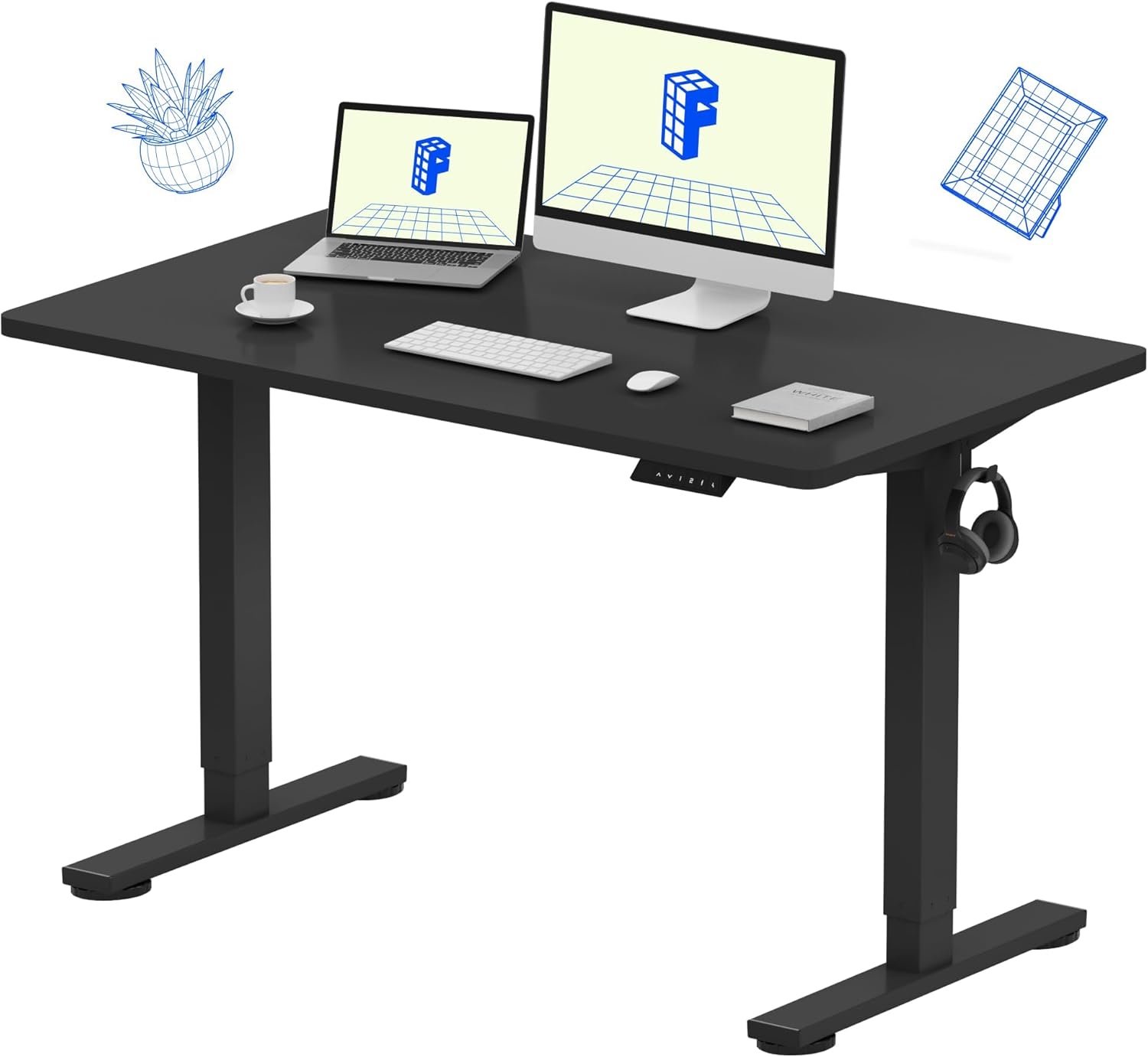
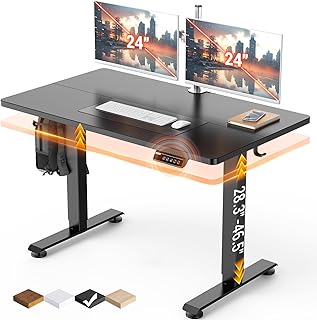
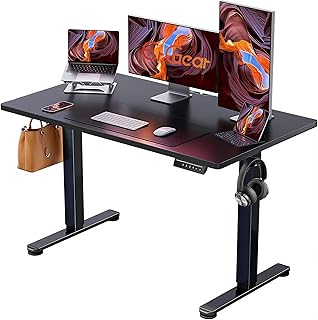
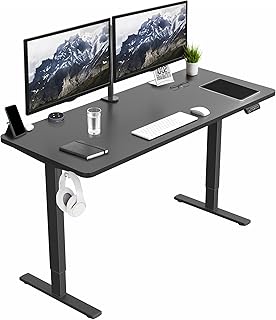
The fix is usually one of two routes: (1) a converter with a deeply adjustable, independent keyboard tray that can drop below 24 inches, or (2) skipping the converter entirely and using a programmable electric sit-stand desk with a dedicated steno tray clamped underneath. For most working reporters covering depositions, courtroom proceedings, or CART assignments, the full electric desk wins on stability, memory presets, and long-term wrist health.
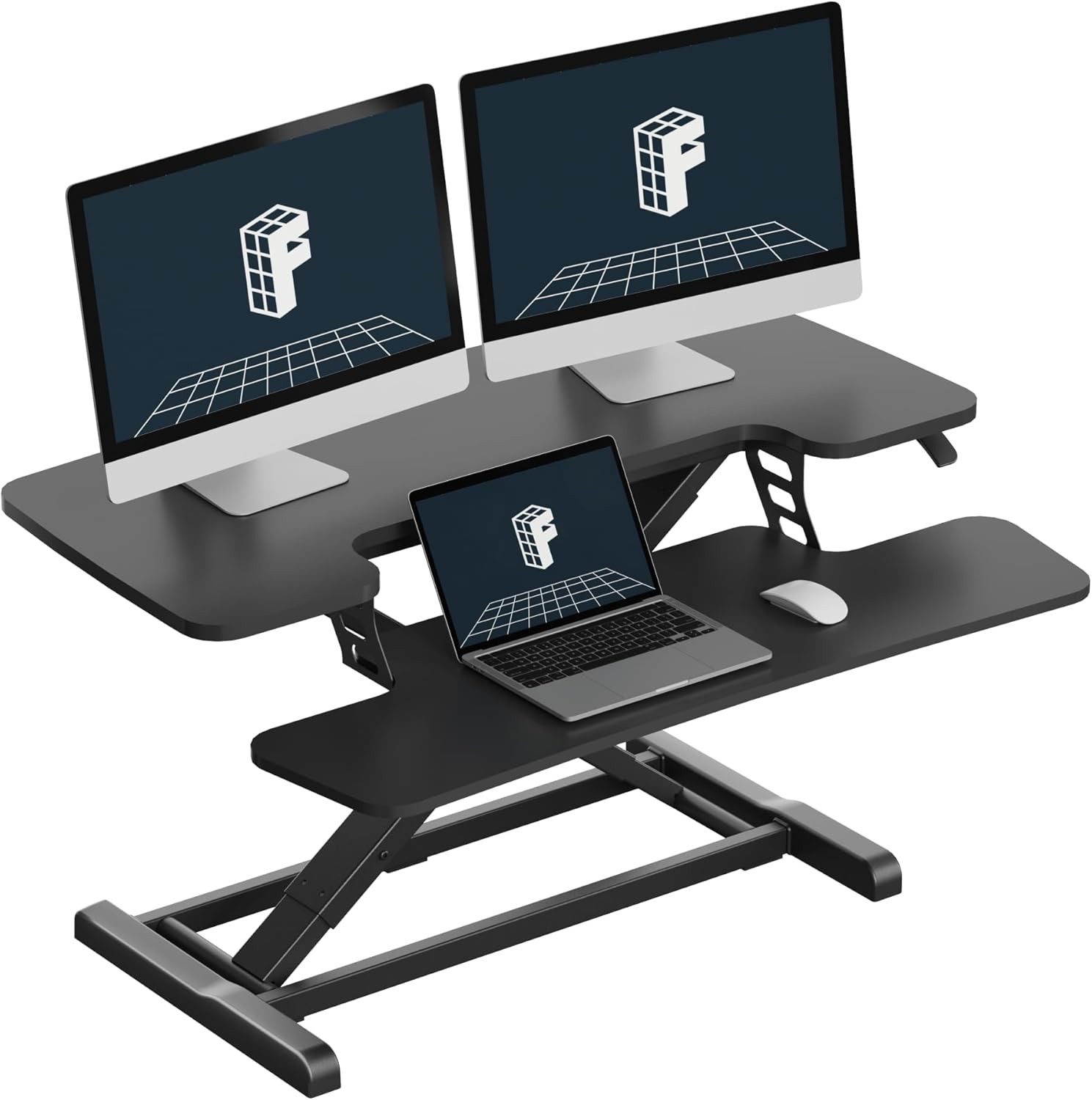
What to Look for in a Standing Desk Converter for Court Reporters
- Independent keyboard tray drop: The tray should descend at least 4 inches below the main monitor deck so your steno writer sits lower than your laptop screen.
- Depth of 22+ inches: A Stenograph Wave is around 9.5 inches deep, but you also need room for the cable, paper tray (if using paper), and your hands to rest naturally.
- Weight capacity above 30 lbs: A writer plus a 15-inch laptop plus a second monitor adds up fast.
- Lateral stability: Steno strokes generate vibration. Gas-spring converters with single-post designs wobble. Dual-post or four-leg electric lifts don't.
- Memory presets: When you switch between sitting realtime work and standing during witness breaks, you want one-button height recall.
2026 Comparison: Best Sit-Stand Options for Stenograph Setups
| Model | Surface Size | Weight Capacity | Memory Presets | Best For |
|---|---|---|---|---|
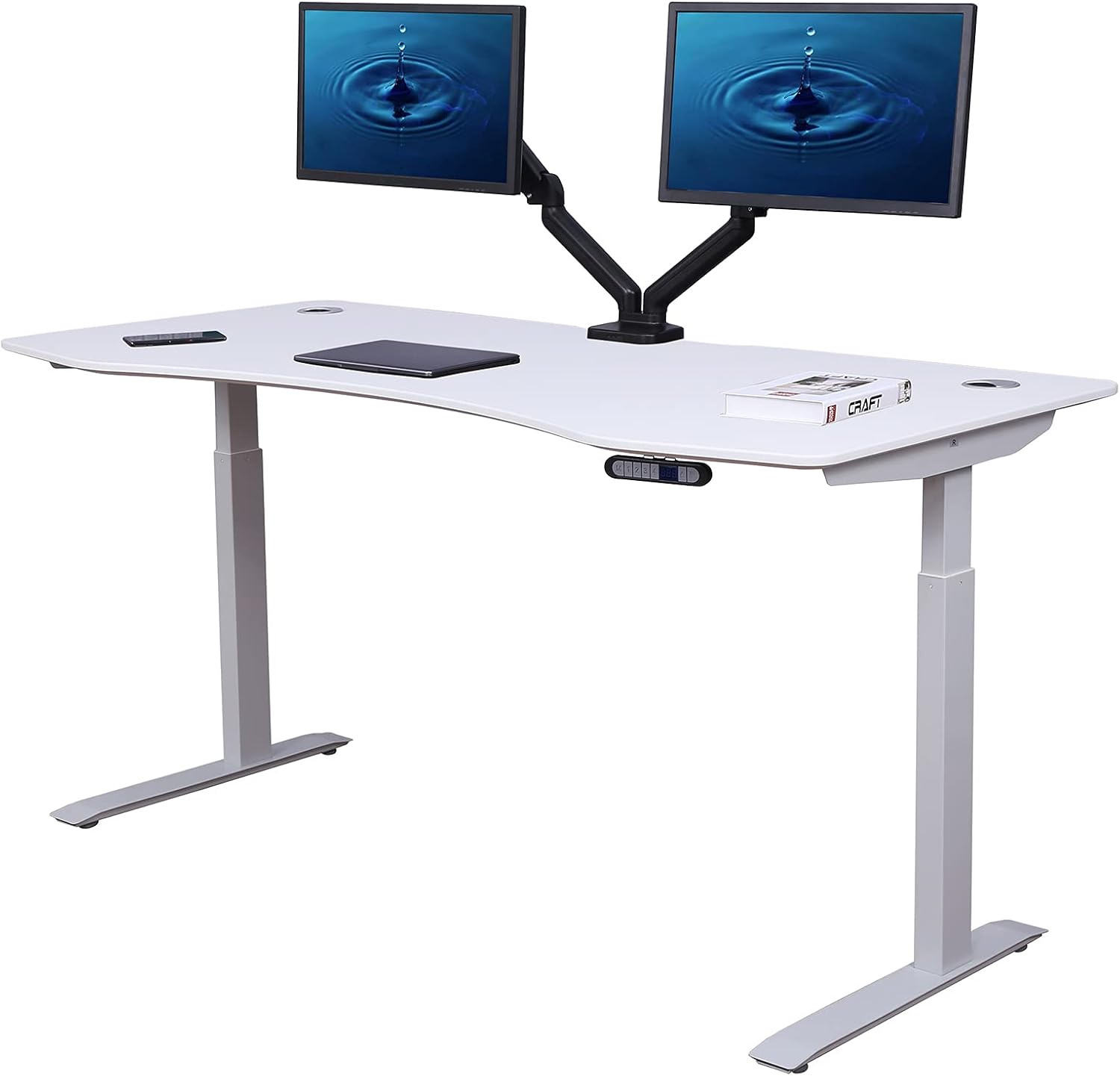
| VIVO Electric 60x24 | 60" x 24" | 220 lbs | Yes (4) | Realtime reporters with dual monitors + writer |
| ErGear 48x24 Electric | 48" x 24" | 176 lbs | Yes | Freelance reporters, deposition setups |
| Veken 47.2" Standing Desk | 47.2" wide | Standard | Yes | Home office CART captioners |
Below we cover each pick in detail, including how to mount a stenograph machine tray to the underside and why a full electric desk often outperforms a dedicated standing desk converter for court reporters who work 6-8 hour depositions.
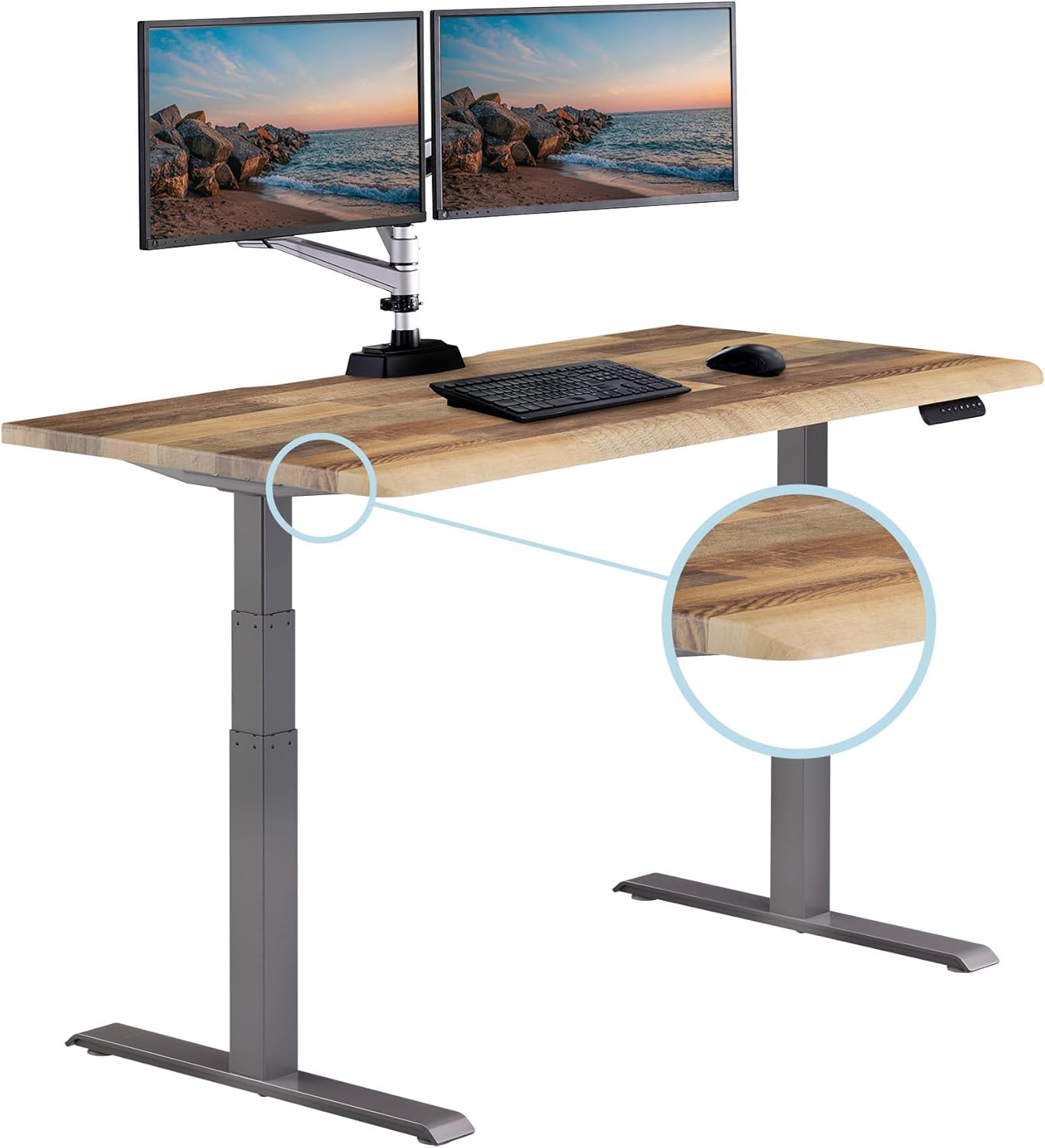
1. VIVO Electric 60 x 24 in Standing Desk — Best Overall for Court Reporters
For reporters running a full realtime rig (writer, primary laptop, second monitor for the attorney feed, and a backup audio recorder), the VIVO 60x24 electric is the strongest pick in 2026. The 60-inch wide surface gives you room to mount an aftermarket steno tray on the left or center while keeping your laptop and monitor at standing eye level. The 220 lb capacity easily absorbs a Luminex II (around 6 lbs), two monitors, a docking station, and your beverage. The four memory presets are critical: one for seated steno, one for standing realtime, one for standing-only review, and one for breakdown. The dual-motor lift moves smoothly between 28.7 and 48 inches, which covers everything from a tripod-mounted writer to a full standing posture.
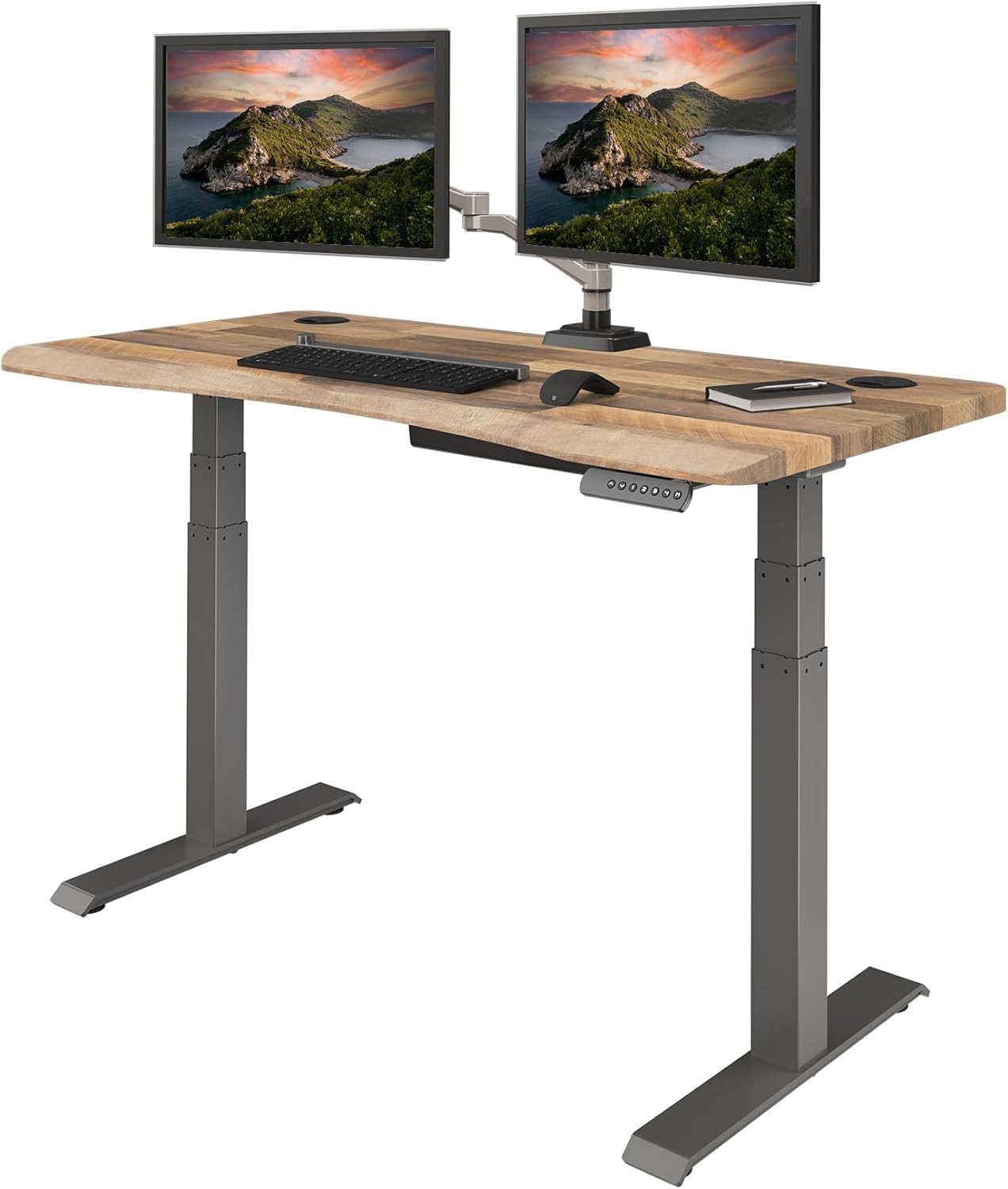
2. ErGear 48 x 24 Electric Standing Desk — Best Compact Pick
If you work primarily from a home office or travel between courtrooms with a smaller setup, the ErGear 48x24 is the value choice. It's narrower than the VIVO but still deep enough (24 inches) to accommodate a stenograph tray clamp and a 15-inch laptop without crowding. The memory presets let you switch between your seated tripod position and a standing setup for breaks. The lift is single-motor, which means it's slightly slower and slightly less rigid than dual-motor desks, but for reporters under 30 lbs of total gear it's more than sufficient. Many CART captioners and freelance reporters use this exact model because it fits in a guest bedroom or basement office without dominating the space.
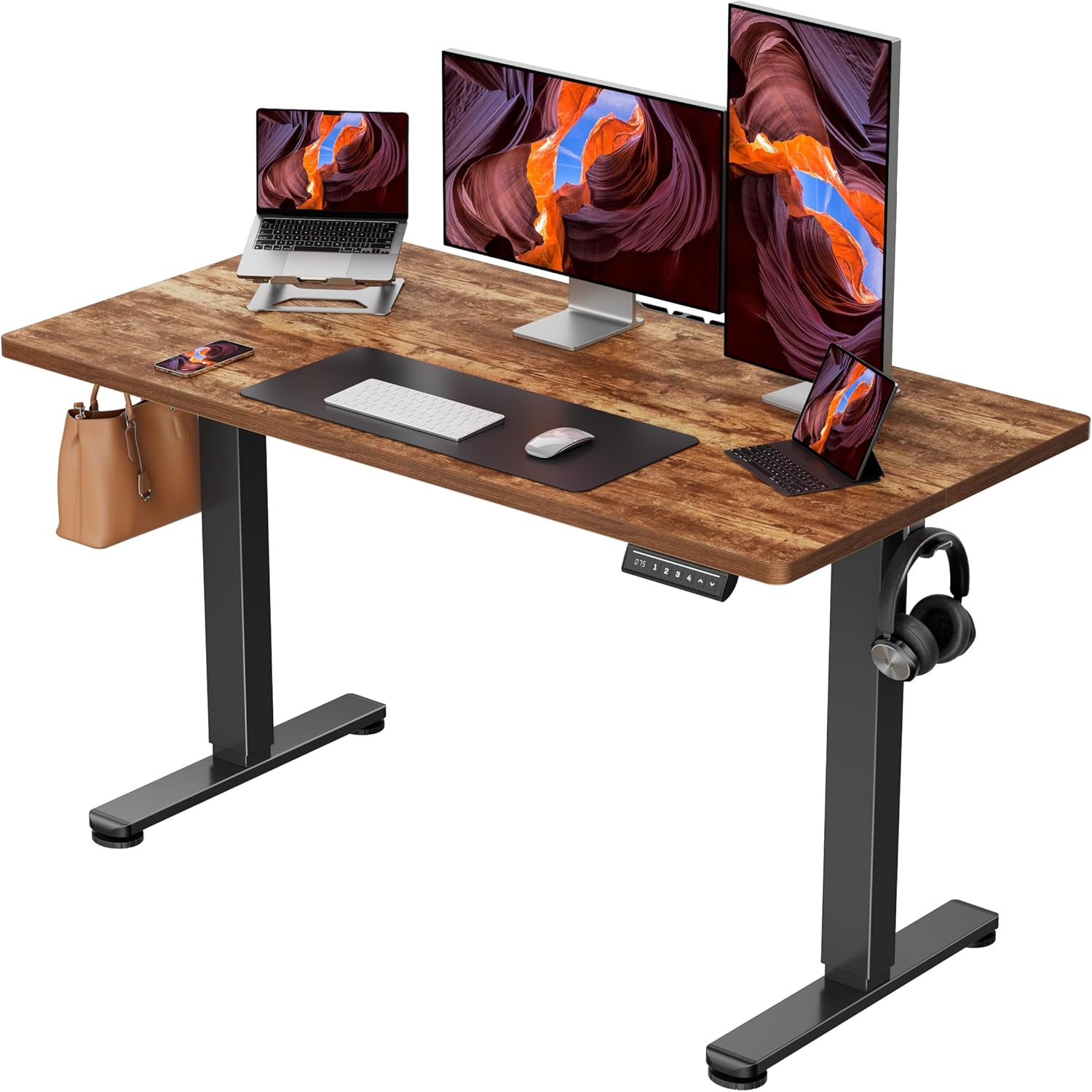
3. Veken 47.2" Adjustable Height Office Desk — Best Looking for Home Offices
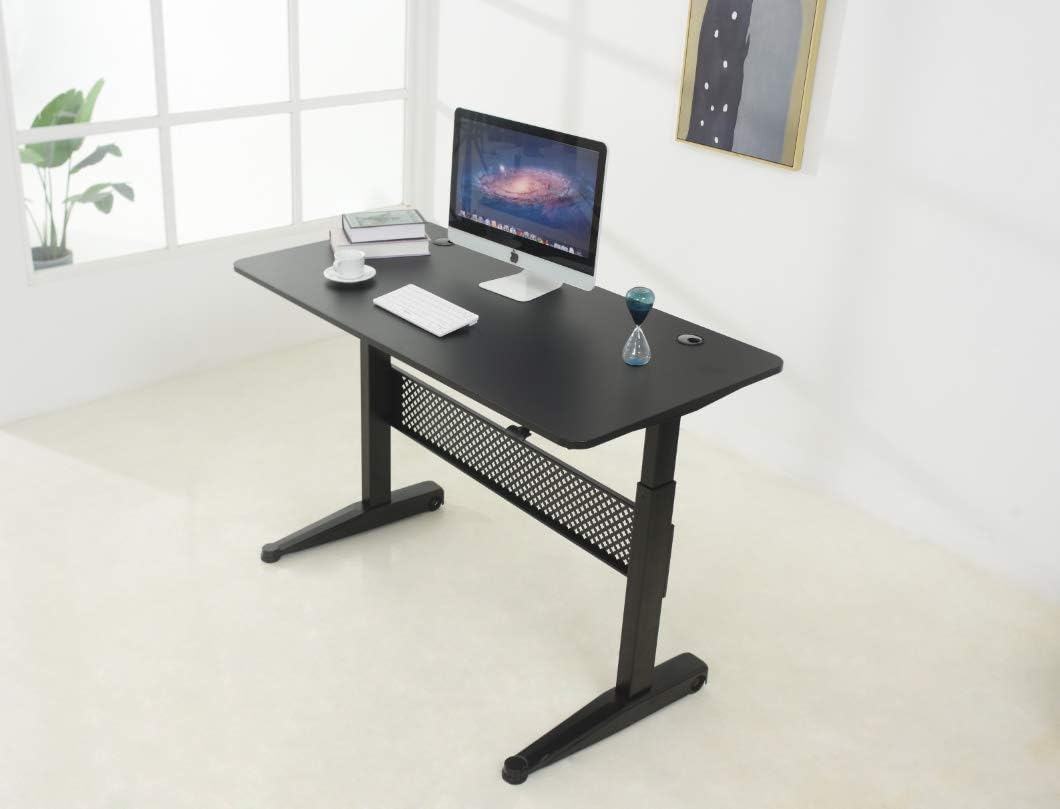
The Veken 47.2" wood-top standing desk is the pick for reporters who want their office to look like a real office, not a tech lab. The wood desktop is warmer than the laminate surfaces on most budget desks, and the 47.2-inch width matches the ErGear in workable area. For CART captioners who appear on Zoom during proceedings (or anyone who shoots social media from their workspace), the aesthetics matter. Functionally, it gives you adjustable height for the realtime standing desk converter for court reporters use case, plus enough depth to clamp a steno tray underneath the front edge.
How to Mount a Stenograph Machine Tray to a Standing Desk
The simplest approach is a clamp-on under-desk keyboard tray rated for 25+ lbs, mounted to the front edge so the tray sits 4-6 inches below the desktop. You then place a non-slip silicone mat on the tray and set your writer directly on it. Some reporters prefer to bolt a custom plywood platform to the existing tripod plate from their Stenograph case, then clamp that platform under the desk. Either way, the goal is to keep the keys of the writer at 24-26 inches off the floor when seated, and 41-43 inches when standing (for reporters around 5'8").
If you need help with the mounting hardware, see our guide to under-desk keyboard trays compatible with stenograph writers and our breakdown of anti-fatigue mats for long depositions.
Sit-Stand Discipline for Court Reporters
Realtime reporters cannot stand during active testimony — the micro-movements of standing introduce vibration that shows up in your stroke accuracy and can throw off your audio sync. The practical sit-stand routine for reporters is: sit during active questioning, stand during sidebars and recesses, and stand during transcript review and scoping. A programmable desk with memory presets lets you switch positions in seconds without breaking the flow of the proceeding.
For more on long-form posture during proceedings, see our ergonomic chair recommendations for court reporters.
Frequently Asked Questions
What is the ideal desk height for a stenograph machine?
The keys of the writer should sit at 24-26 inches off the floor when you are seated with your feet flat and elbows at roughly 90 degrees. Because the writer itself adds 3-4 inches of height from the tray surface to the keys, your actual tray surface needs to be at approximately 21-23 inches — which is below the standard 28-30 inch desk height. This is why a dedicated under-desk tray or a height-adjustable desk is non-negotiable for court reporters.
Can I use a regular standing desk converter with a Stenograph Luminex?
Most off-the-shelf converters cannot drop the keyboard tray low enough for a Luminex or Wave writer to sit at proper steno height. You can use the converter's main deck for your laptop and monitor, but you'll still need a separate under-desk tray or tripod for the writer itself. For this reason, a full electric sit-stand desk with a clamp-on steno tray is usually a better long-term solution than a converter.
How much weight does a court reporter's standing desk need to support?
Plan for at least 50 lbs of capacity: a writer (5-7 lbs), a laptop (4-6 lbs), an external monitor (8-15 lbs), a docking station and cables (3 lbs), plus reference books, audio recorder, and personal items. The VIVO 60x24 at 220 lbs and the ErGear at 176 lbs both have ample headroom.
Is standing during depositions actually feasible for a court reporter?
Not during active testimony — the micro-vibrations and weight shifts will affect your accuracy and audio sync. Standing is best used during recesses, sidebars, transcript review, scoping, and proofreading. The benefit of a sit-stand desk is the easy switch between positions throughout an 8-hour day, not standing through the entire proceeding.
What's the difference between a desk converter and an electric standing desk for steno work?
A converter sits on top of your existing desk and lifts a portion of your workspace. An electric standing desk replaces the whole desk and raises the entire surface. For court reporters, the full electric desk wins because it provides uniform stability, accommodates an under-desk steno tray more easily, and has stronger memory preset systems for switching between seated and standing positions multiple times per day.
How wide should my desk be if I run dual monitors plus a stenograph writer?
At least 48 inches, and 60 inches is more comfortable. With dual monitors centered, you need lateral room on the left or right for your writer or for a tray mount. The VIVO 60x24 is the sweet spot for full realtime rigs; the 47-48 inch options work for laptop-plus-writer setups.
Does standing help with the carpal tunnel and back pain common in court reporters?
Standing changes the load on your lower back and hips, which can reduce the cumulative strain of 6-8 hour seated sessions. It does not directly help carpal tunnel — that comes from wrist position and stroke ergonomics on the writer itself. Pair your sit-stand desk with a properly positioned steno tray, an anti-fatigue mat, and regular micro-breaks for the best outcome. The goal of a quality standing desk converter for court reporters setup is reducing the cumulative load of a multi-decade reporting career, not eliminating any single symptom.
Final Recommendation
For most working court reporters in 2026, skip the converter and go straight to a full electric sit-stand desk paired with an under-desk steno tray. The VIVO Electric 60x24 is the strongest all-around pick for realtime rigs, the ErGear 48x24 is the value compact choice, and the Veken 47.2" is the best-looking option for home offices and CART captioners on camera.
Key Takeaways
- Choosing the right standing desk converter for court reporters means matching capacity and output ports to your actual devices
- Always check actual watt-hours (Wh), not just watts — runtime depends on Wh, not peak output
- Also covers: stenograph compatible desk riser
- Also covers: steno machine standing workstation
- Also covers: court reporter ergonomic converter
- Compare price-per-Wh across models to find the best value for your budget