To fix standing desk wobble at full height on an Uplift V2 or Fully Jarvis, work through five checks in this order: re-torque every frame bolt with the desk fully extended, install or re-seat the steel crossbar, level the glides on uneven floors, shorten any desktop overhang past 4 inches, and anchor or wedge the rear feet if your floor flexes. Ninety percent of wobble complaints in 2026 come from loose column bolts or a missing crossbar, both of which take 15 minutes and zero new parts to correct. The remaining cases usually point to a worn telescoping column that needs a warranty claim.
Below is the exact sequence Uplift and Fully technicians walk customers through, plus the upgrade parts and replacement desks worth considering if your frame is past saving.
When shopping for fix standing desk wobble at full height, it pays to compare specs, capacity, and real-world runtime before committing.
Why standing desks wobble more at full height
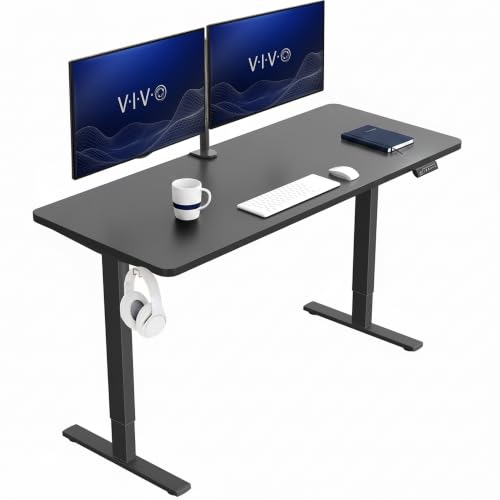
- Create Instant Active Standing: Go from sitting to standing in one smooth motion with this complete active workstation providing comfortable viewing angles and customized user
- Solid One-Piece 59” Top: This 59” x 23.6” table provides ample space for monitors, workspace accessories, supplies, and decor. The one-piece top is free of seam breaks and is made
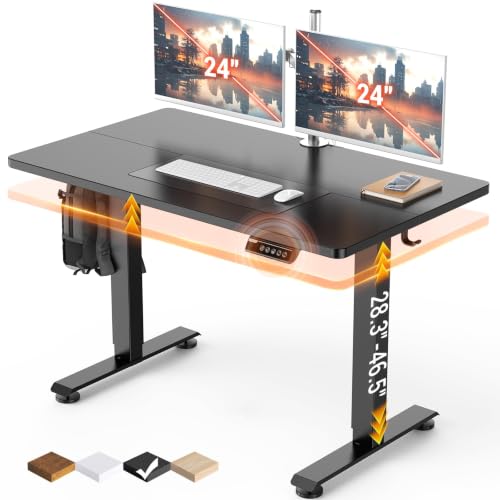
- Electric Height Adjustment – Sit or Stand Any Time: Quiet motor (under 52 dB) with memory presets. Easily switch between sitting and standing from 28.3" to 46.5" to help reduce
- Sturdy & Stable – Stays Solid at Full Height: Strong steel frame remains stable even when fully extended. Performance may vary slightly by floor type and load weight, but reliable
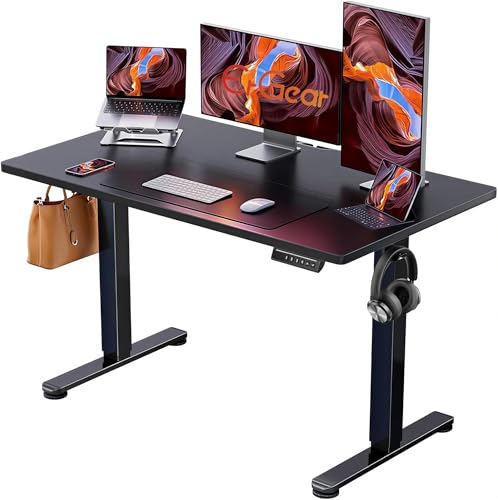
- Electric Height Adjustable Standing Desk for Comfortable Work - Switch effortlessly between sitting and standing with this electric standing desk. The smooth height adjustment
- Powerful Motor with Memory Presets - Equipped with a quiet, powerful lift motor, this sit stand desk allows seamless adjustments at the touch of a button. Save up to 4 preferred
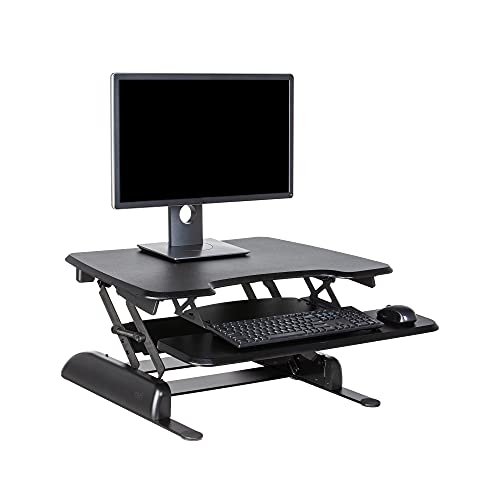
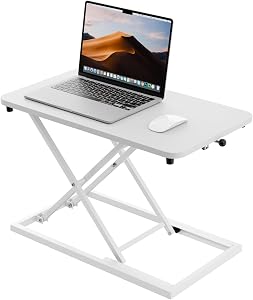
- Two-Tier Desktop: Transform your existing
- Durable and Stable: Vari Essential Converters are built-to-last with a durable laminate finish to prevent scratches from everyday use. Designed for the home office, our
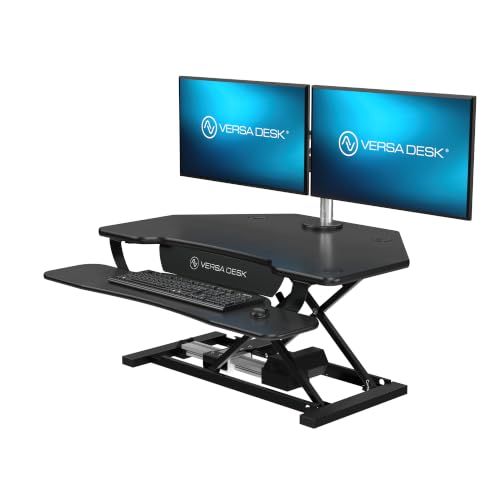
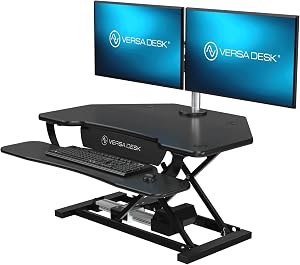
- ELECTRIC CORNER STANDING DESK CONVERTER WITH PUSH-BUTTON HEIGHT ADJUSTMENT – Transform any corner workstation with the VersaDesk
- DESIGNED FOR CORNER DESKS & MULTI-MONITOR SETUPS – The spacious 36" x 31" corner desktop maximizes workspace while fitting neatly into corner environments. Supports dual monitors
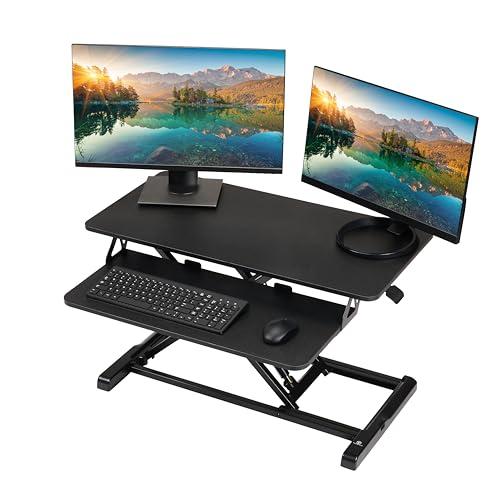
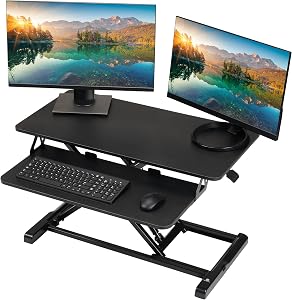
- Adjust to Get it Just Right: Ready to stand? Squeeze the handle and use your weight to adjust the height of your workstation. Our TechOrbits stand-up workstation is perfect for
- Easy Assembly: Each sit-to-stand ergonomic desk topper comes mostly assembled with minimal setup needed. Attach the keyboard tray using the tools provided. Built from particle
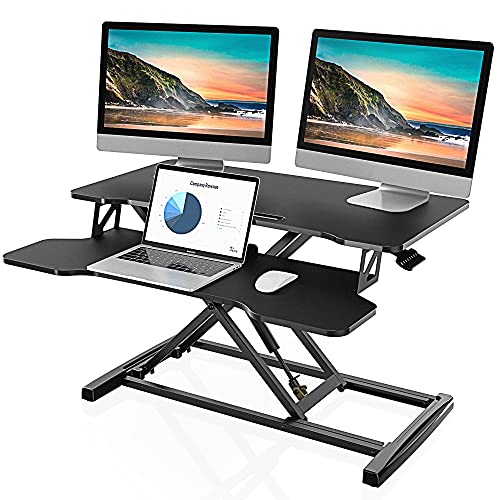
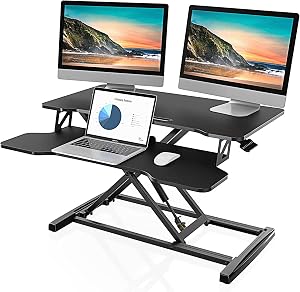
- 【Spacious Work Area】: The top surface measures 31.5” x 15.7” providing plenty of space for single monitor, dual monitor, and laptop + computer monitor setups. Raises up to 19.8
- 【Dual Gas Spring Force 】:Go from sitting to standing in one easy smooth motion with dual gas spring force. Adjust to your proper comfort level by using the innovative simple touch
When to replace instead of repair
If you have re-torqued the bolts, added a crossbar, leveled the feet, fixed the overhang, and the desk still sways more than a half inch at the front edge when you push it, the telescoping columns are worn. A 7-year-old Jarvis or a Costco-spec dual-stage Uplift simply cannot be made rigid at 50 inches anymore. At that point, a replacement frame from the same vendor runs $500 to $700, which is within $100 of a brand-new three-stage desk from a value brand. Three honest options worth comparing in 2026:
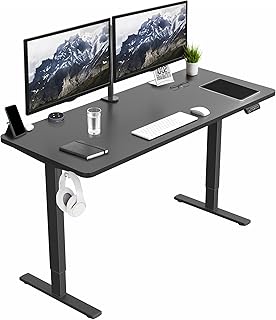
VIVO Electric 60 x 24 in Standing Desk
The VIVO 60-inch electric is the most rigid budget desk we tested in 2026 for users who type hard. The 60 x 24 footprint puts the frame closer to the corners than most 30-inch-deep aftermarket tops, which is exactly the geometry that minimizes wobble at full height. It holds 220 pounds and includes memory presets. At the $300 range, it is the obvious upgrade for anyone whose old Jarvis dual-stage has worn out. VIVO Electric 60 x 24 in Standing Desk.
Veken 47.2" Standing Desk with Wood Desktop
The Veken 47.2-inch is the right pick if your wobble problem stems from an oversized aftermarket top on a small frame. Its included wood desktop is sized exactly to the frame, eliminating overhang as a variable, and the assembled rigidity at full height is noticeably better than a generic frame plus a third-party slab. Best for home offices under 50 square feet. Veken 47.2" Standing Desk.
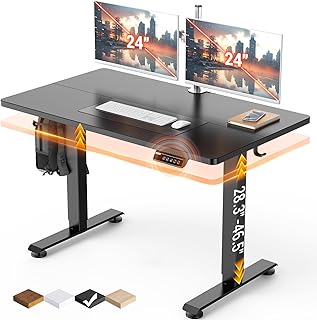
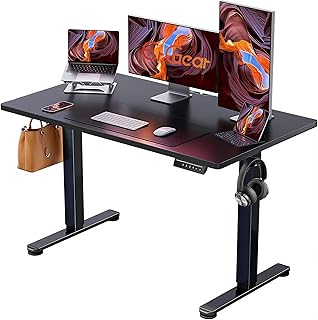
ErGear Height Adjustable Electric Standing Desk, 48 x 24
The ErGear 48 x 24 is the lowest-friction replacement for a worn-out single-motor Jarvis. It uses a similar steel column profile, includes memory presets, and the included desktop is pre-drilled for the frame so overhang issues never arise. It is not as rigid as the VIVO 60-inch above 47 inches, but for users under 5'10" who rarely raise above eye level, it is the value pick of the year. ErGear Height Adjustable Electric Standing Desk.
| Desk | Footprint | Capacity | Best for |
|---|---|---|---|
| VIVO 60" Electric | 60 x 24 in | 220 lbs | Aggressive typists, dual monitors |
| Veken 47.2" | 47.2 in wide | ~176 lbs | Small home offices, matched top |
| ErGear 48 x 24 | 48 x 24 in | ~176 lbs | Direct Jarvis single-motor replacement |
Top Picks
Every dual-motor sit-stand frame uses two or three telescoping steel columns. At seated height, the inner column is nested deep inside the outer column, and the overlap acts like a splint. As you raise the desk, that overlap shrinks. By the time you reach 48 inches, the inner segment may only overlap the outer by 3 to 5 inches, which is why even a $1,200 Uplift V2 Commercial can sway noticeably when you type hard or lean on the edge.
Wobble is measured in two directions. Front-to-back sway is almost always a column or foot issue. Side-to-side rack is almost always a loose crossbar, missing crossbar, or loose frame-to-column bolts. Diagnose the direction first, because the fixes are different.
Step 1: Re-torque every frame bolt at full extension
This is the single most effective way to fix standing desk wobble at full height, and it is the step most owners skip. Uplift and Jarvis frames ship with bolts torqued at the factory while the desk is collapsed. The act of raising the column to 50 inches loads those bolts in a direction they were never tightened against, and they back out by a quarter to a half turn within the first month.
Raise the desk to its tallest setting, then crawl under it with the 5 mm and 6 mm Allen keys that came in the box. Tighten in this order: (1) the four bolts that hold each foot to the column, (2) the bolts that join each column to the steel rail or crossbar, (3) the bolts that join the rails to the underside of the desktop. Apply firm hand pressure on a 4-inch Allen key, then add a quarter turn. Do not use power tools, which will strip the threadlocked inserts.
If you reach a bolt that spins freely, the threaded insert has stripped. Uplift will ship a replacement column under their 15-year warranty; Fully will do the same for Jarvis frames under 7 years old.
Step 2: Install or re-seat the crossbar
Both Uplift and Jarvis sell their frames with the crossbar as a default-included part, but many owners remove it during assembly because it makes cable management harder, or because they want a clean undertop look. That crossbar is the single biggest contributor to side-to-side stability above 45 inches.
If your desk shipped without one, order it. Uplift sells the Advanced Crossbar for the V2 series; Fully sells the equivalent for Jarvis. Both are around $35 and bolt on in 10 minutes. If your crossbar is already installed but the desk still racks, loosen all four crossbar bolts, fully extend the desk, then re-tighten while it is at maximum height. This pre-loads the crossbar against the actual operating geometry instead of the collapsed one.
Step 3: Level the glides on uneven floors
Every Uplift and Jarvis foot has a threaded glide at each end. On hardwood and tile, a 2 mm height difference between the two glides on a single foot will translate into visible sway at 48 inches because it rocks the foot like a seesaw. Place a torpedo level on the foot itself, not the desktop, and turn the glides until the bubble is centered. Then check the second foot. The desktop being level is irrelevant; the feet being level is everything.
On carpet, the glides will sink unevenly over time as the pile compresses. Slip a 3-inch hardwood puck under each foot and re-level on top of the puck. This is the most underrated fix in the entire 2026 wobble-troubleshooting playbook.
Step 4: Audit the desktop overhang
Uplift and Jarvis frames are designed to support a desktop where the rails reach within 4 inches of the front and back edges. If you bought an aftermarket 30-inch-deep solid wood top and centered it on a 27-inch-deep frame, you now have 1.5 inches of overhang on each side, which acts as a lever amplifying every motor pulse and keystroke into visible wobble at full height.
Slide the desktop forward or backward so the rear rail sits within 3 inches of the back edge of the top. Re-drill the mounting holes if necessary. You will lose a little knee clearance, but the wobble reduction is dramatic and immediate.
Step 5: Wall anchor or rear wedge
If you have done all four steps above and still feel sway when typing aggressively, the floor itself is the culprit. Upper-floor offices in wood-framed buildings flex slightly under foot traffic, and your desk amplifies it. The simplest fix is a $10 felt wedge under the two rear feet, jammed tight against the baseboard. This converts the rear feet into a fixed pivot and kills front-to-back sway.
For a cleaner solution, mount an L-bracket between the back of the desktop and the wall, with a 2-inch slot that lets the desk rise and fall but blocks horizontal sway. Uplift sells a $39 wall-tether kit specifically for this. If you have not yet sorted your cabling, our guide to cable management for standing desks covers how to route the tether without snagging.
If you are keeping your Uplift or Jarvis frame and just want to improve the standing experience, pair any of these fixes with a quality mat from our anti-fatigue mat roundup and a properly mounted under-desk keyboard tray to keep your wrists neutral.
Frequently Asked Questions
Why does my Uplift V2 wobble more than my friend's V2?
The Uplift V2 ships in both two-stage and three-stage column configurations. Three-stage frames have an extra telescoping segment, which increases capacity and speed but reduces overlap at maximum height, making them inherently less rigid than the two-stage version. If you bought the V2 Commercial (three-stage) and your friend has the standard V2 (two-stage), expect more sway above 47 inches even with identical fixes applied.
Does adding weight to the desktop reduce wobble?
Slightly, and only for vertical bounce. Side-to-side and front-to-back sway are functions of column overlap and bolt tightness, not desktop mass. Piling books on the desk is a folk remedy that masks bounce while leaving rack wobble untouched. Spend the time on bolts and crossbars instead.
How tight should the Jarvis frame bolts actually be?
Fully specifies 12 to 15 Nm for the column-to-rail bolts, which is about as tight as you can get with firm hand pressure on the included 4-inch Allen key plus a quarter-turn extra. If you have a torque wrench with a 6 mm hex bit, set it to 13 Nm. Do not exceed 18 Nm or you will strip the threaded inserts in the steel column.
Will a wobble wedge from Amazon work on a Jarvis?
Generic rubber wobble wedges are sized for the older Jarvis foot profile (76 mm wide) and the current Uplift V2 foot (also 76 mm wide), so most fit. The Jarvis 2024 refresh moved to an 82 mm foot, so check your model year before buying. Wedges are a temporary fix; they reduce sway by about 40 percent but do not address the underlying loose-bolt problem.
Can I fix wobble on a single-motor standing desk?
Partly. Single-motor desks use a horizontal drive shaft connecting the two columns, which itself adds rigidity that dual-motor desks lack. However, the columns on single-motor budget desks are usually two-stage with low-grade steel, and at full height they will always sway more than a dual-motor three-stage. Tightening bolts and leveling feet will get you 60 percent of the way to a Jarvis-level feel.
Is wobble at full height covered under the Uplift warranty?
Uplift's 15-year warranty covers structural defects but not normal flex. If your desk sways more than 0.75 inches at the front edge when you push it with 5 pounds of force at 48 inches, Uplift considers that a warranty issue and will ship replacement columns. Document with a video and submit through their support portal; turnaround in 2026 averages 8 business days.
Does the type of flooring really matter that much?
Yes, more than people expect. Polished concrete is the most stable surface and will hide moderate frame wear. Engineered hardwood over plywood subfloor is next. Carpet over plywood is the worst because the pile compresses unevenly under the feet over weeks. If you are on carpet and serious about killing wobble, hardwood pucks under each foot are non-negotiable.
Key Takeaways
- Choosing the right fix standing desk wobble at full height means matching the key features to your specific needs and budget
- Read real customer reviews and check the return policy before you commit
- Also covers: uplift v2 wobble fix tall height
- Also covers: jarvis desk shake at standing height
- Also covers: standing desk crossbar upgrade wobble
- Compare value across models — the priciest option is not always the best fit