Quick answer: For coastal Florida's sustained 70–90% relative humidity, the laminate top is generally the safer pick in the uplift v2 bamboo vs laminate humid climate debate. Laminate's sealed thermofused surface resists moisture absorption, swelling, and mildew, while bamboo — although naturally resilient — needs regular oiling and tight climate control to avoid cupping or edge warping near the Gulf or Atlantic coast. If your home office runs AC year-round and stays under 60% RH, bamboo remains a viable, warmer-looking option. Below we break down warranty implications, surface care, real-world Florida owner reports, and three budget alternatives if the Uplift V2 isn't shipping to your zip code in 2026.
Why coastal Florida humidity is a unique problem for desk tops
Cities like Miami, Tampa, Naples, Fort Myers, and Pensacola routinely sit at 75–85% relative humidity from May through October, and dew points above 75°F are normal. Even with central air, garages, lanais, and home offices on the first floor of slab-on-grade houses can drift above the 50–55% RH threshold that most wood-product manufacturers list as their warranty sweet spot. The result: surfaces that were perfectly stable in a Denver showroom can cup, swell at the edges, or develop dark mildew spots within the first summer.
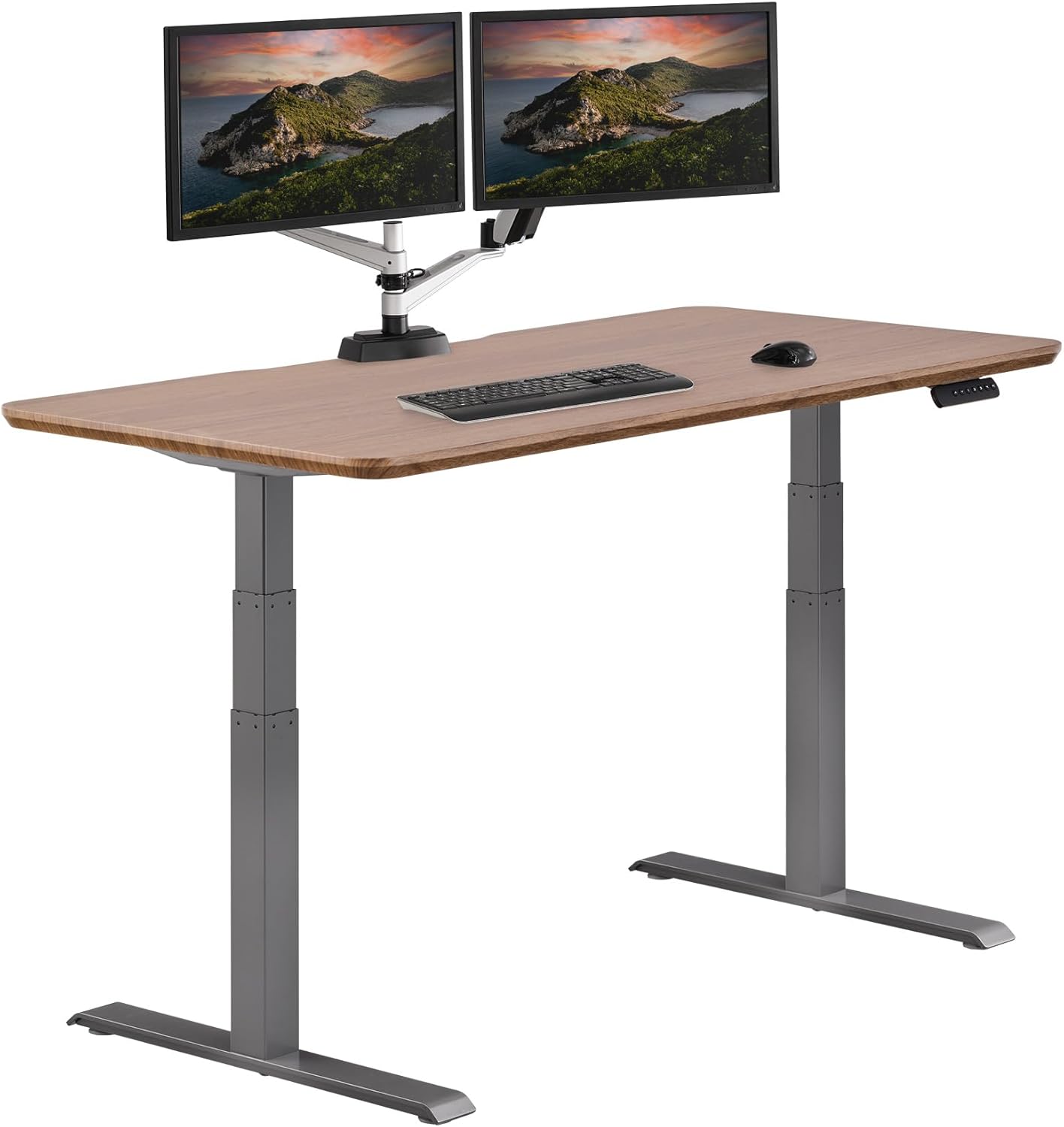
This is the core tension behind the uplift v2 bamboo vs laminate humid climate question. Bamboo is a grass, not a hardwood, but it is still a hygroscopic organic material — it absorbs and releases moisture with the ambient air. Laminate (specifically high-pressure laminate or thermofused laminate over particleboard) is sealed top and bottom with a melamine or HPL skin, so the top surface itself does not move with day-to-day humidity. The substrate underneath can still swell if water gets into a screw hole or a routed edge, but the visible surface is essentially inert.
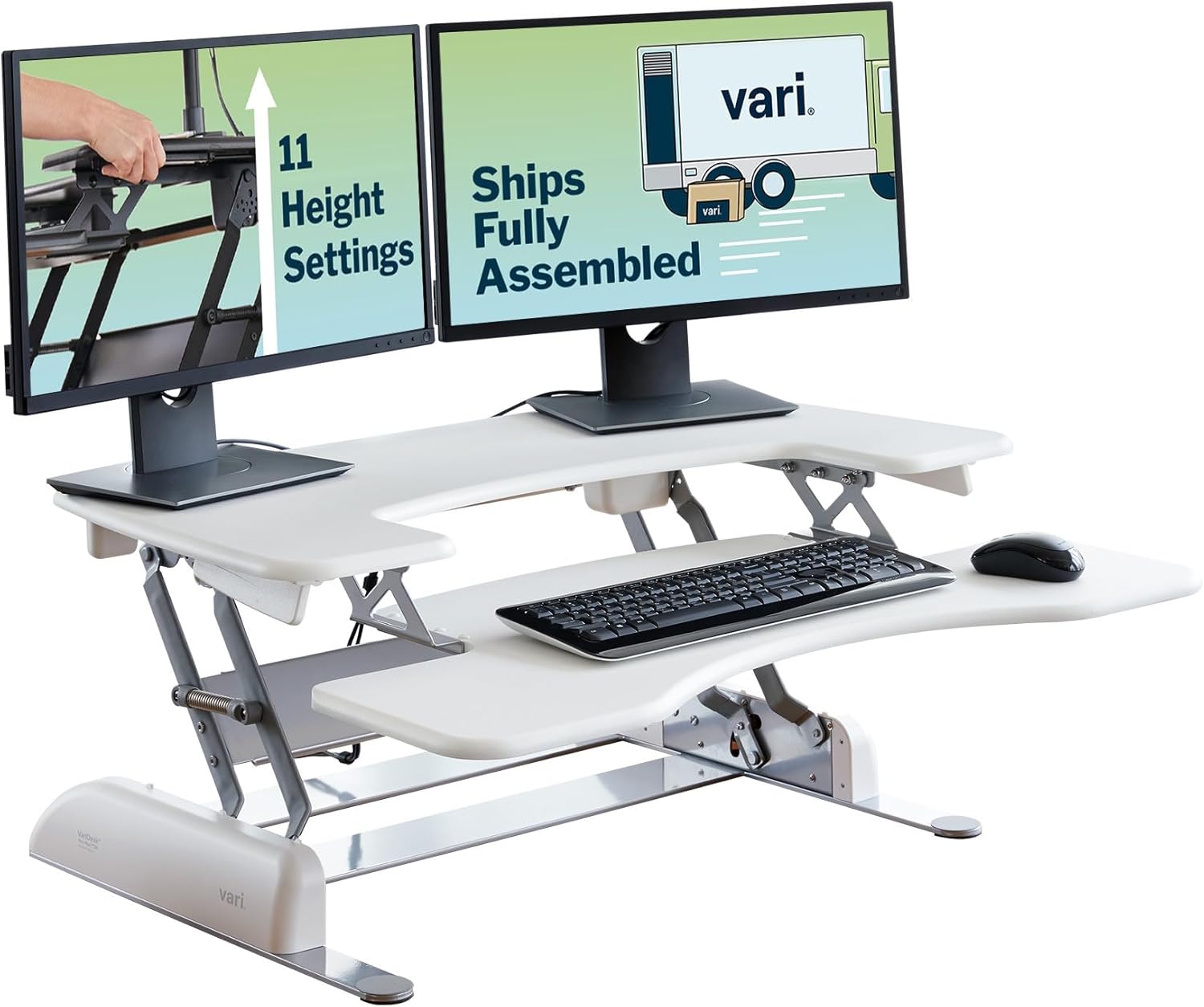
Uplift V2 bamboo: what you gain and what you risk in Florida
The Uplift V2 bamboo top is a strand-woven bamboo built from compressed fibers and resin. Strand-woven bamboo is dimensionally more stable than traditional flat-grain bamboo flooring, and Uplift seals all six sides at the factory. Owners love the look — warm, golden, with a subtle linear grain — and the feel, which is noticeably warmer than cold laminate when you rest your wrists on it in an AC-cooled office.
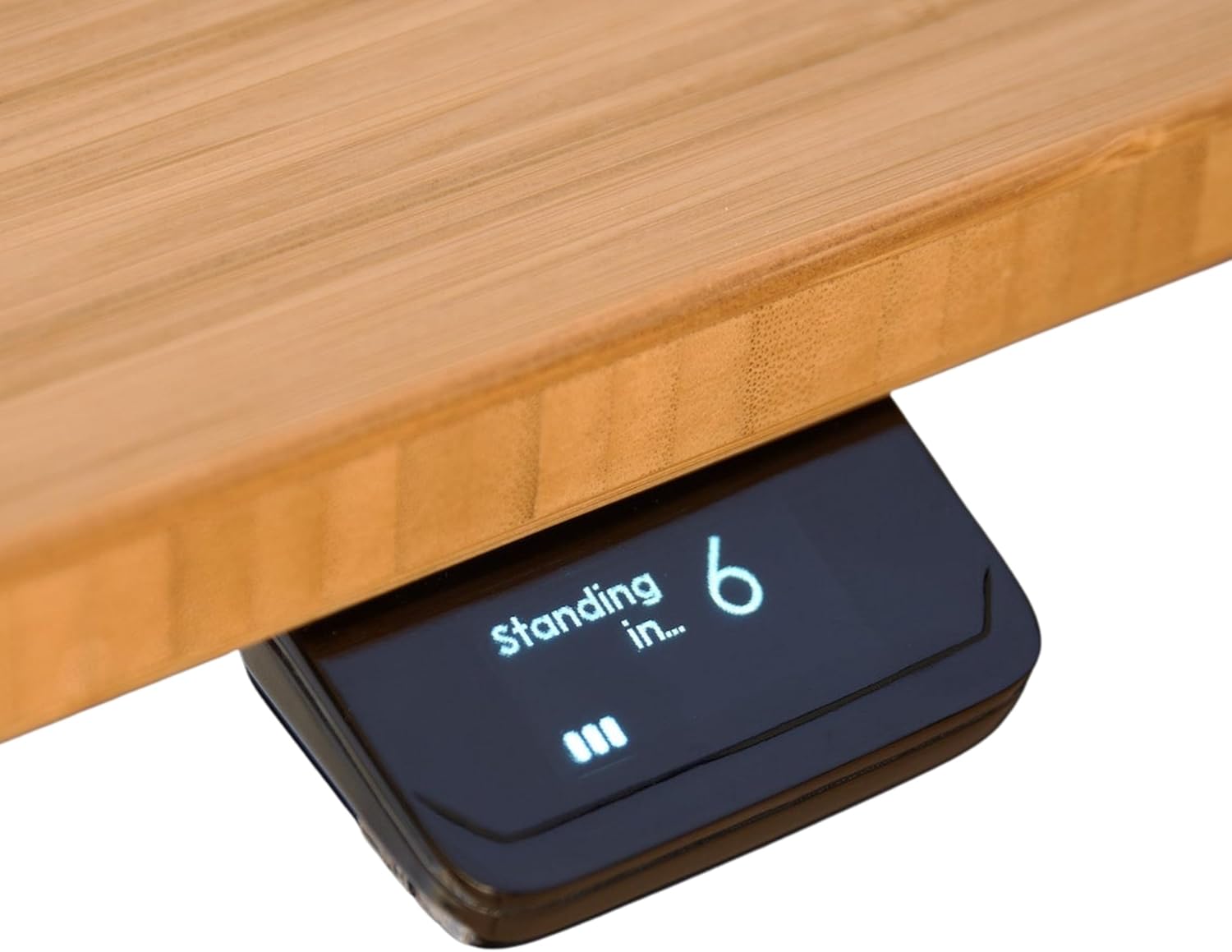
The risks specific to coastal Florida:
- Cupping at the long edges if RH cycles between 45% (winter, AC running cold) and 80% (summer, hurricane season, power outages).
- Surface checking — tiny hairline cracks — when the desk sits in direct sun from an east- or west-facing window.
- Mildew under monitor arms and CPU holders where airflow is restricted and condensation can pool during humidity spikes.
- Warranty friction if Uplift's service team determines damage was caused by ambient humidity outside their stated range. Read the fine print before you file.
The upside: with a yearly application of a food-safe mineral oil or Uplift's bamboo conditioner, plus a dehumidifier that holds your office at 50–55% RH, owners in Sarasota and St. Pete report years of trouble-free use. Bamboo is also more repairable than laminate — sand and re-oil a scratch and it disappears.
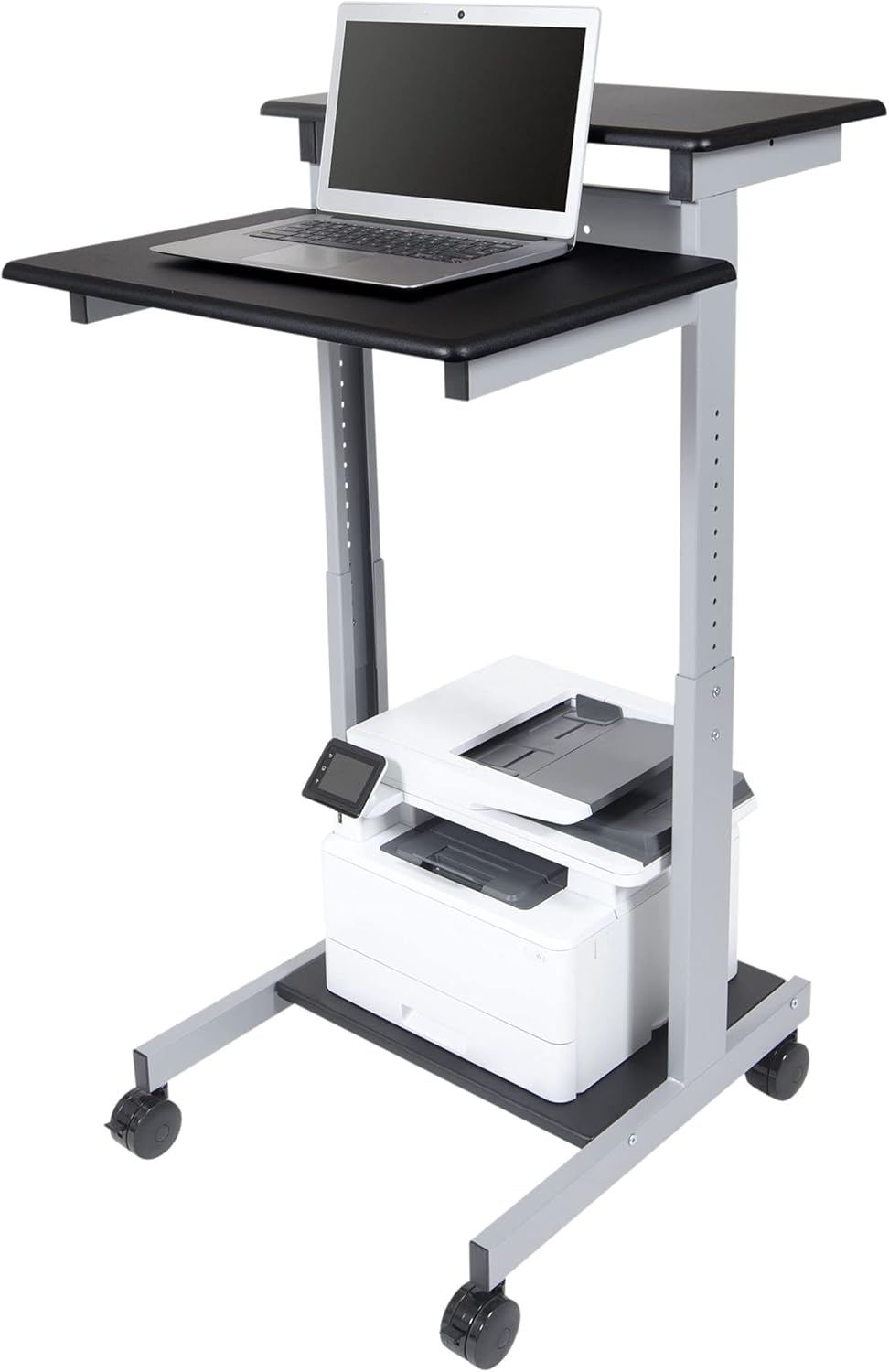
Uplift V2 laminate: the low-maintenance Florida pick
The Uplift V2 laminate top is a thermofused laminate bonded to a CARB-2 compliant particleboard core, with a 2mm PVC edge band. It is available in over a dozen colors, including white, black, dark walnut, and a light oak that mimics the bamboo look without the maintenance overhead.
For the uplift v2 bamboo vs laminate humid climate decision, the laminate's advantages stack up fast in a coastal environment:
- Sealed top, bottom, and edges — no exposed wood fiber under normal use.
- Wipe-clean surface — spilled iced coffee or condensation rings from a cold drink do not leave water marks.
- No yearly oiling — set it up and forget it.
- Lower price — typically $80–$150 cheaper than the bamboo equivalent in the same size.
- Better resale value in Florida — laminate desks move faster on local marketplaces because buyers know what they are getting.
The trade-offs: laminate can chip at the edges if you bang a heavy monitor into it, and a deep gouge cannot be sanded out — you live with it or replace the top. The surface also feels colder and harder under bare wrists, though a fabric desk pad solves that for under $30. See our desk pad picks for laminate tops for options that hold up in humid environments.
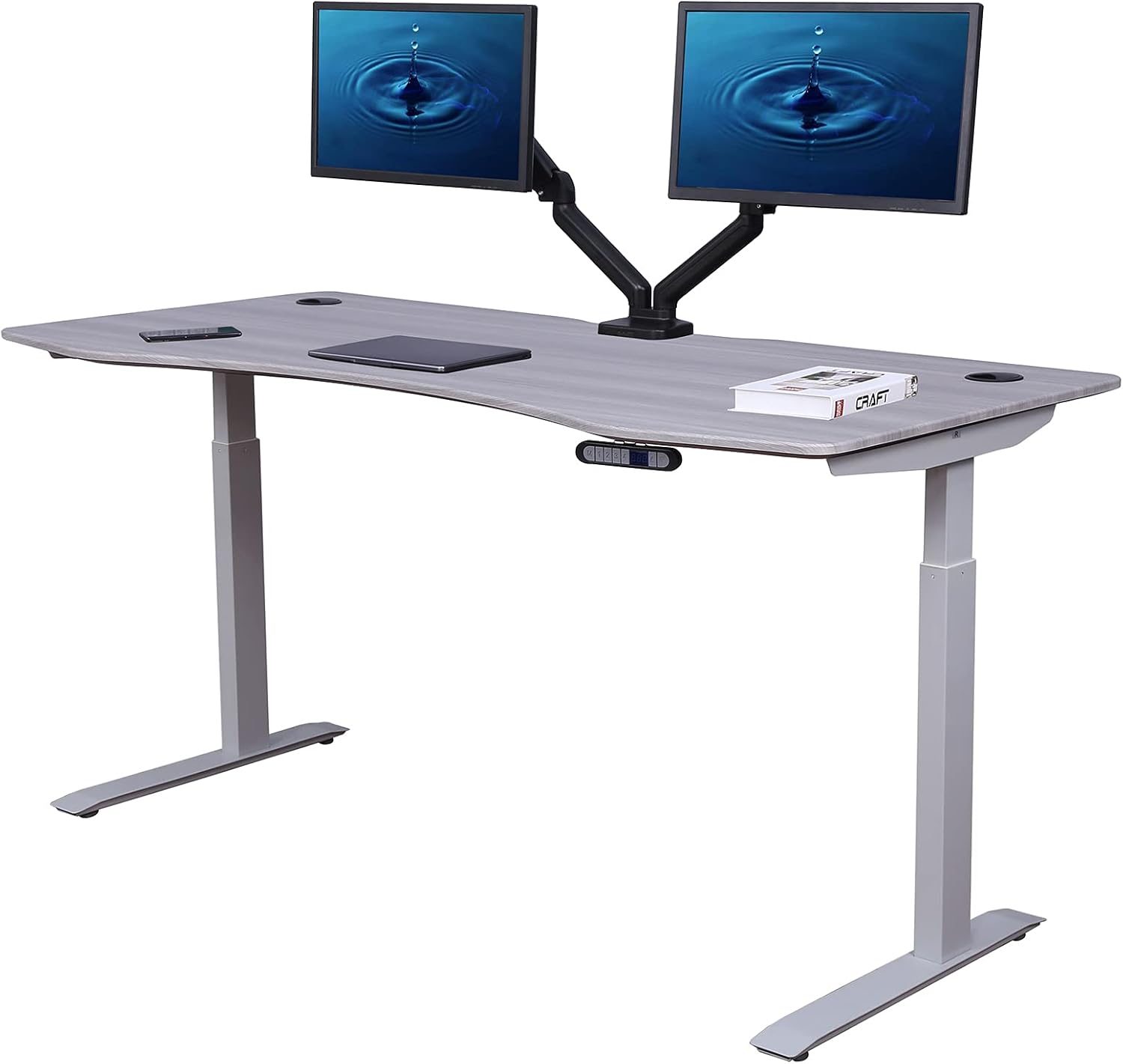
Side-by-side: Uplift V2 bamboo vs laminate for humid climates
| Factor | Uplift V2 Bamboo | Uplift V2 Laminate |
|---|---|---|
| Humidity tolerance (45–80% RH swings) | Moderate — needs RH control | High — sealed surface |
| Yearly maintenance | Oil/condition 1–2x per year | None required |
| Scratch repair | Sand and re-oil | Cannot be repaired |
| Mildew risk under accessories | Higher | Low |
| Warranty in high-humidity zip codes | Conditional on care | Standard coverage |
| Approximate 2026 price (60×30) | $799–$899 | $649–$749 |
| Aesthetic | Warm, natural grain | Uniform, many colors |
| Best for | Climate-controlled home office | Garage, lanai, or coastal first floor |
What Florida Uplift owners actually report in 2026
Threads on standing-desk forums and the Uplift subreddit are full of Florida-specific data points. A few patterns are consistent:
- Bamboo owners in Jacksonville and Orlando (inland, drier) report very few problems through year three.
- Bamboo owners in Key West, Naples, and Marathon report visible edge cupping within 18 months unless they run a dedicated dehumidifier.
- Laminate owners across the state report essentially zero humidity-related complaints, with the most common failure being chipped edges from moving the desk.
- Both groups agree the V2 frame itself (motors, controller, cabling) handles humidity fine; the issue is almost always the top.
If you are inland and run your AC at 72°F year-round, bamboo is fine. If you are within 10 miles of the coast, or your office is on a screened porch or in a converted garage, lean laminate.
Budget alternatives if you cannot wait for Uplift shipping
Uplift's lead times in 2026 have been running 3–6 weeks to Florida zip codes, and freight surcharges to the Keys can add $200 or more. If you need something sooner, or want a smaller secondary desk, three Prime-shipped options handle humid climates well — all three use sealed laminate tops over steel frames, which is exactly what the laminate side of this comparison recommends.
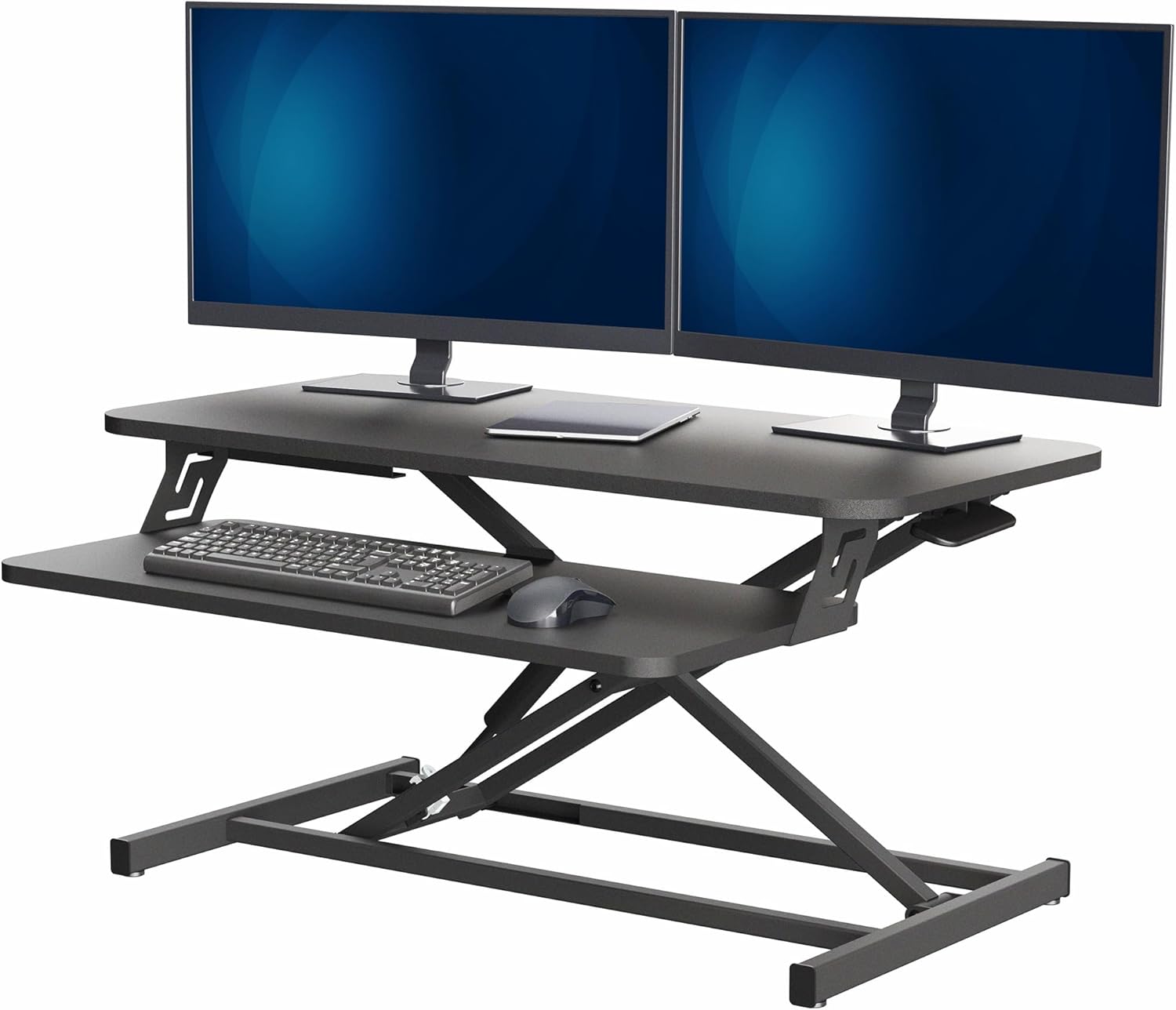
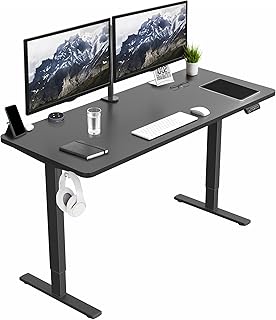
VIVO Electric 60 x 24 in Standing Desk (Black Laminate)
The VIVO Electric in 60×24 is the closest dimensional match to the Uplift V2's most popular size. The all-black laminate top is fully sealed and the 220-lb lift capacity handles dual 32-inch monitors, a heavy mechanical keyboard, and a laptop arm without complaint. Memory presets save four heights, useful if multiple household members share the desk. For coastal Florida, the black laminate is the standout feature — it shows zero water spotting and wipes clean with a damp microfiber. Check the VIVO 60×24 on Amazon.
Veken 47.2" Standing Desk with Wood Desktop
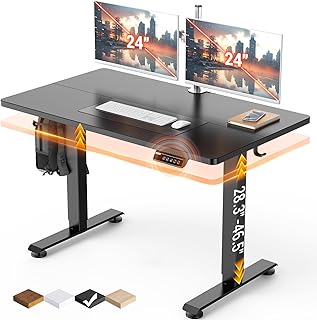
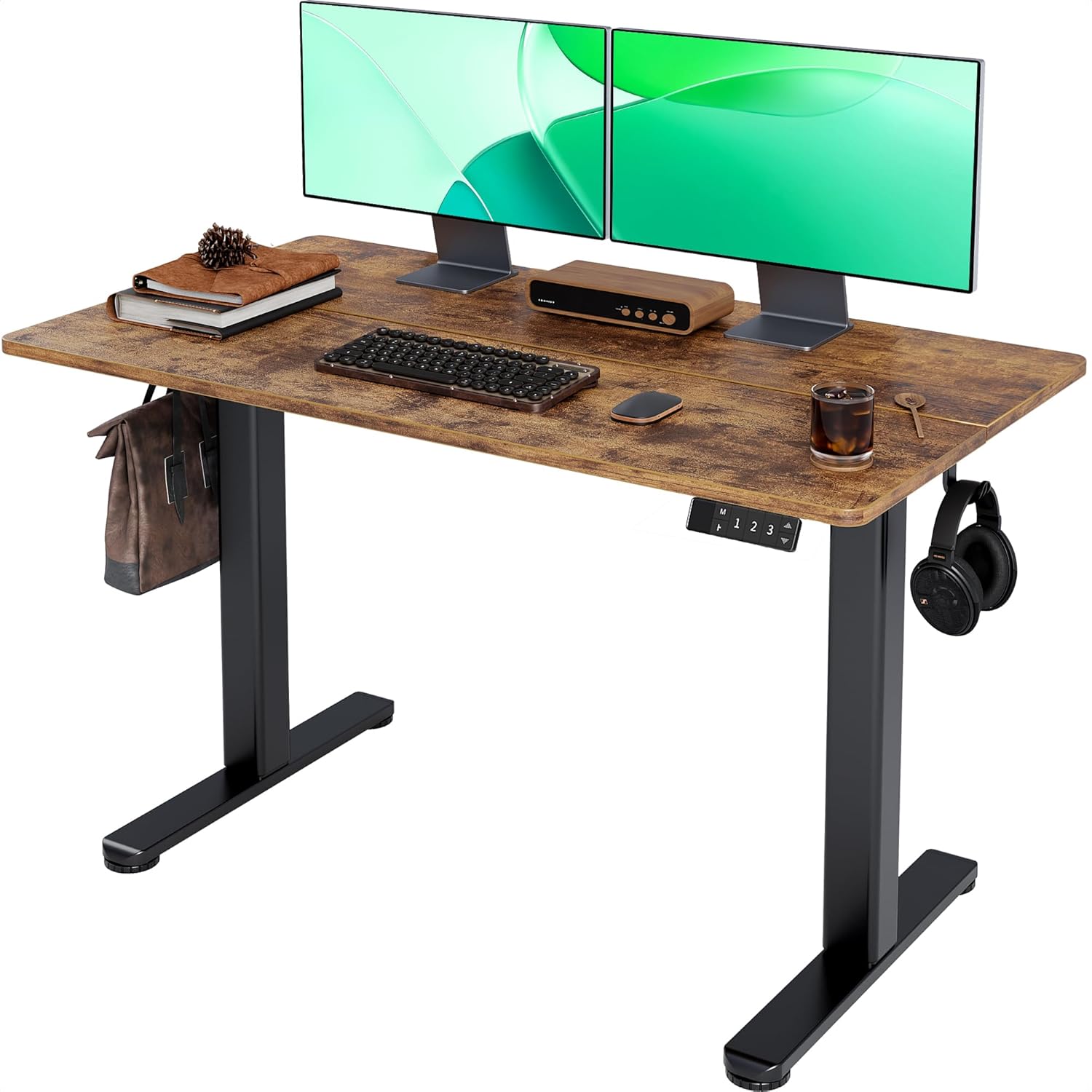
The Veken 47.2-inch is a smaller footprint — better for a guest room office or a secondary writing desk in a Florida room. The wood-look top is a thermofused laminate over MDF, not real wood, which actually works in your favor for humidity. It is the lightest of the three at around 55 pounds assembled, which matters if you are moving it up to a second-floor office or hurricane-prepping by sliding it into an interior closet. See the Veken 47.2" on Amazon.
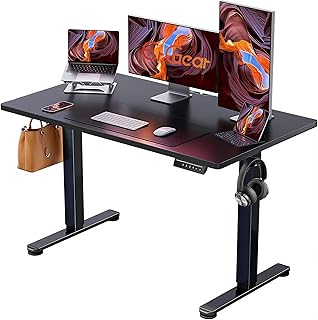
ErGear 48 x 24 Inches Electric Standing Desk with Memory
The ErGear 48×24 splits the difference: bigger than the Veken, smaller than the VIVO, with memory presets and a sealed laminate top. It is the lightest-duty motor of the three, rated to about 154 pounds, so it is not the pick for a triple-monitor video editing rig. But for a single ultrawide and a laptop, it works fine — and the price typically lands $100–$150 below the VIVO. View the ErGear 48×24 on Amazon.
How to protect any desk top in coastal Florida
Whether you go bamboo, laminate, or one of the budget picks above, a few habits keep the top looking new through hurricane season:
- Run a dehumidifier in the office and keep RH between 45% and 55%. A $200 unit pays for itself in saved furniture.
- Use a full-coverage desk pad under your keyboard, mouse, and any sweating cold drinks. This is the single biggest protection against water rings on bamboo.
- Do not park the desk under an AC vent — the localized cold spot causes condensation cycling that stresses any top.
- Re-oil bamboo every 6 months if you went that route. Mark it on your calendar before hurricane season starts.
- Inspect screw holes and grommets twice a year. Re-seal any exposed substrate with a dab of clear silicone.
For Florida buyers specifically, our standing desk warranty comparison for 2026 goes deeper on which brands honor claims in high-humidity zip codes — Uplift is among the better ones, but the bamboo top is effectively treated as a consumable.
Verdict: which Uplift V2 top wins for coastal Florida?
For the vast majority of coastal Florida buyers in 2026, the Uplift V2 laminate top is the right call. You get the full V2 frame quality — the same motors, controller, and stability — without the yearly oiling routine and without the warranty asterisk. Save the $100–$150 difference and put it toward a desk pad, monitor arm, or the dehumidifier that will protect every piece of wood furniture in your house. Choose bamboo only if your office is fully climate-controlled, not in direct sun, and you genuinely enjoy the ritual of conditioning the top once or twice a year. For related decisions, see our Uplift V2 frame color guide for 2026.
Frequently Asked Questions
Does the Uplift V2 bamboo top warp in Florida humidity?
It can, particularly along the long edges, if ambient humidity routinely exceeds 65% RH. Owners within 10 miles of the coast report edge cupping in 12–24 months without a dehumidifier. Inland Florida (Orlando, Gainesville) with consistent AC sees few problems. The strand-woven construction is more stable than traditional bamboo, but it is still organic material that breathes with the air around it.
Is the Uplift V2 laminate top waterproof?
The top surface is water-resistant, not waterproof. The thermofused melamine skin wipes clean and will not stain from a spill caught within a minute or two. The particleboard core underneath will swell if water sits in a screw hole or routed edge for hours. Treat it like a kitchen countertop: spills are fine, standing water is not.
Can I use the Uplift V2 bamboo top in a Florida garage office?
Not recommended. Garage humidity in Florida regularly hits 90% or more in summer, and even sealed bamboo will absorb moisture through the bottom face and warp. Use the laminate top, or better yet, a fully sealed melamine surface from one of the alternatives above.
How often should I oil the Uplift V2 bamboo top in a humid climate?
Every 6 months at minimum if you are in coastal Florida, versus the once-a-year schedule Uplift recommends as default. Use a food-safe mineral oil or the bamboo conditioner sold by Uplift. Apply with a lint-free cloth, let it sit 20 minutes, then buff dry. Doing this before hurricane season (May) and after (November) is a reasonable cadence.
Does Uplift's warranty cover humidity damage to the bamboo top?
Partially. The 10-year warranty covers manufacturing defects but explicitly excludes damage from environmental conditions outside normal indoor range, which Uplift defines as roughly 35–55% RH. Document your indoor humidity with a cheap hygrometer if you want to preserve a future claim. The laminate top has the same warranty language but is far less likely to fail in the first place.
What is the best desk top color to hide humidity damage in Florida?
For laminate, mid-tone walnut or oak patterns hide minor surface wear better than solid black or solid white. For bamboo, the natural light bamboo finish shows water spots more than the darker java bamboo. If aesthetics tie, pick java bamboo or a textured laminate for the most forgiving long-term look.
Is Uplift V2 bamboo eco-friendly enough to justify the humidity risk?
Bamboo is genuinely more sustainable than particleboard laminate — it is a rapidly renewable grass and Uplift's strand-woven top is Greenguard Gold certified. If sustainability is a top priority and you can commit to the maintenance routine, bamboo is a defensible choice. If you are picking purely on environmental grounds and live coastal, consider a reclaimed solid wood top from a local maker instead, properly sealed for marine humidity.
Key Takeaways
- Choosing the right uplift v2 bamboo vs laminate humid climate means matching capacity and output ports to your actual devices
- Always check actual watt-hours (Wh), not just watts — runtime depends on Wh, not peak output
- Also covers: bamboo desktop warping humidity
- Also covers: laminate top standing desk florida
- Also covers: best uplift desktop coastal climate
- Compare price-per-Wh across models to find the best value for your budget